Public-health witness urges limits on free tastings and warns expanded sale hours could increase crime
February 06, 2026 | Government Operations & Military Affairs, HOUSE OF REPRESENTATIVES, Committees, Legislative , Vermont
This article was created by AI summarizing key points discussed. AI makes mistakes, so for full details and context, please refer to the video of the full meeting. Please report any errors so we can fix them. Report an error »
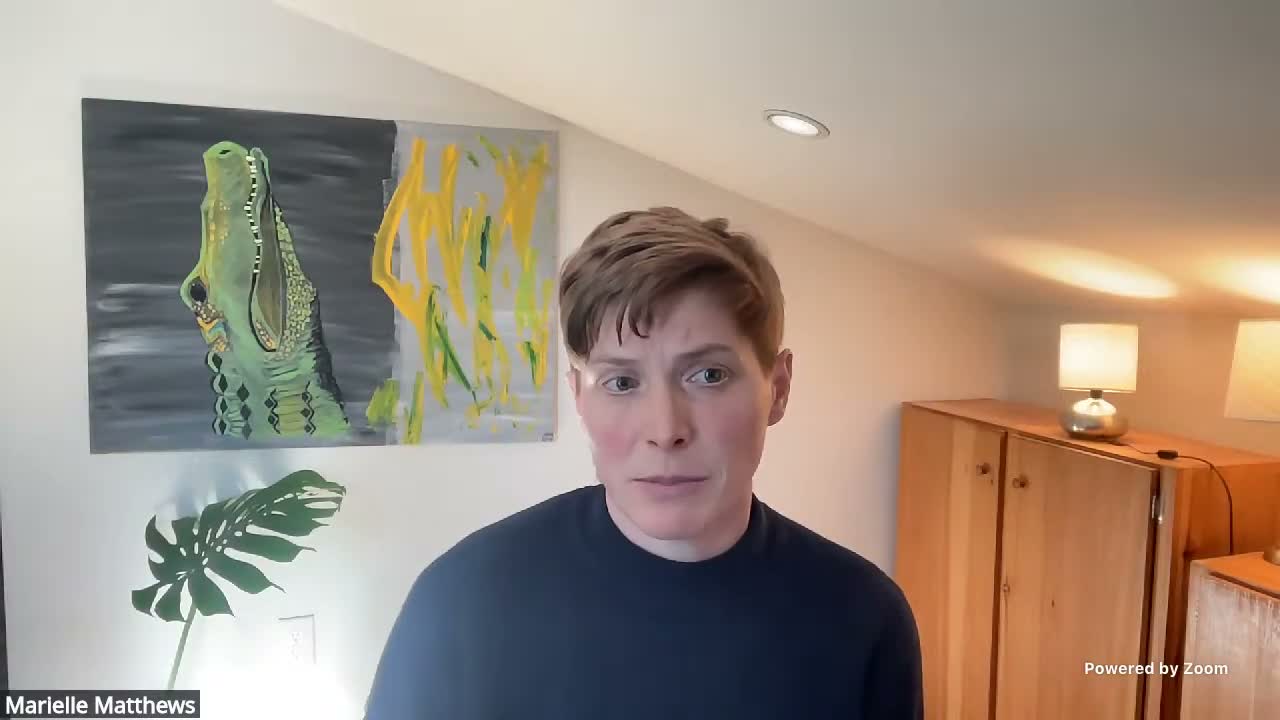
The Government Operations & Military Affairs committee received public-health testimony on multiple draft alcohol provisions, with a consultant urging the panel to tighten tasting limits and to be cautious about extending retail sale hours.
Mariel Matthews, a health-behavior consultant appearing in a personal capacity, told the committee she works with local health departments and has consulted with the state. Reviewing H647, which revises tasting rules for certain licensees and venues, Matthews urged that free tastings be limited and proposed setting tasting limits in U.S. standard-drink units rather than volumes alone.
Matthews told the committee, "the real cost per drink in Vermont, to taxpayers, is $2.33 per drink in health expenditures alone," and asked the panel to consider requiring payment for tastings over 5 ounces and to use standard-drink metrics so an alcoholic beverage’s ABV is considered.
On H655 — a draft provision that would remove tighter, COVID-era hours in favor of underlying license-hour rules — Matthews warned that longer hours for off-premise sales can be associated with increases in serious crimes. She cited a 2024 Baltimore example where restricted late-night service was followed by an immediate 51% drop in homicides in the surrounding area and a reduction in violent crimes the following year. She recommended the committee retain or tighten hours of sale for both on- and off-premise outlets to limit downstream law-enforcement and public-health costs.
Legislative counsel clarified that underlying license types already set hours (first/third class 8 a.m.–2 a.m.; second/fourth class 6 a.m.–midnight) and that the draft relies on those statutory restrictions rather than the temporary COVID-era exceptions it had used previously.
The committee thanked Matthews and requested copies of the studies and sections she referenced to inform further drafting and deliberations.
Mariel Matthews, a health-behavior consultant appearing in a personal capacity, told the committee she works with local health departments and has consulted with the state. Reviewing H647, which revises tasting rules for certain licensees and venues, Matthews urged that free tastings be limited and proposed setting tasting limits in U.S. standard-drink units rather than volumes alone.
Matthews told the committee, "the real cost per drink in Vermont, to taxpayers, is $2.33 per drink in health expenditures alone," and asked the panel to consider requiring payment for tastings over 5 ounces and to use standard-drink metrics so an alcoholic beverage’s ABV is considered.
On H655 — a draft provision that would remove tighter, COVID-era hours in favor of underlying license-hour rules — Matthews warned that longer hours for off-premise sales can be associated with increases in serious crimes. She cited a 2024 Baltimore example where restricted late-night service was followed by an immediate 51% drop in homicides in the surrounding area and a reduction in violent crimes the following year. She recommended the committee retain or tighten hours of sale for both on- and off-premise outlets to limit downstream law-enforcement and public-health costs.
Legislative counsel clarified that underlying license types already set hours (first/third class 8 a.m.–2 a.m.; second/fourth class 6 a.m.–midnight) and that the draft relies on those statutory restrictions rather than the temporary COVID-era exceptions it had used previously.
The committee thanked Matthews and requested copies of the studies and sections she referenced to inform further drafting and deliberations.
Don't Miss a Word: See the Full Meeting!
Go beyond summaries. Unlock every video, transcript, and key insight with a Founder Membership.
✓
Get instant access to full meeting videos
✓
Search and clip any phrase from complete transcripts
✓
Receive AI-powered summaries & custom alerts
✓
Enjoy lifetime, unrestricted access to government data
30-day money-back guarantee
