Georgetown County Clerk of Court describes jury summons, e‑filing and courthouse changes
February 06, 2026 | Georgetown County, South Carolina
This article was created by AI summarizing key points discussed. AI makes mistakes, so for full details and context, please refer to the video of the full meeting. Please report any errors so we can fix them. Report an error »
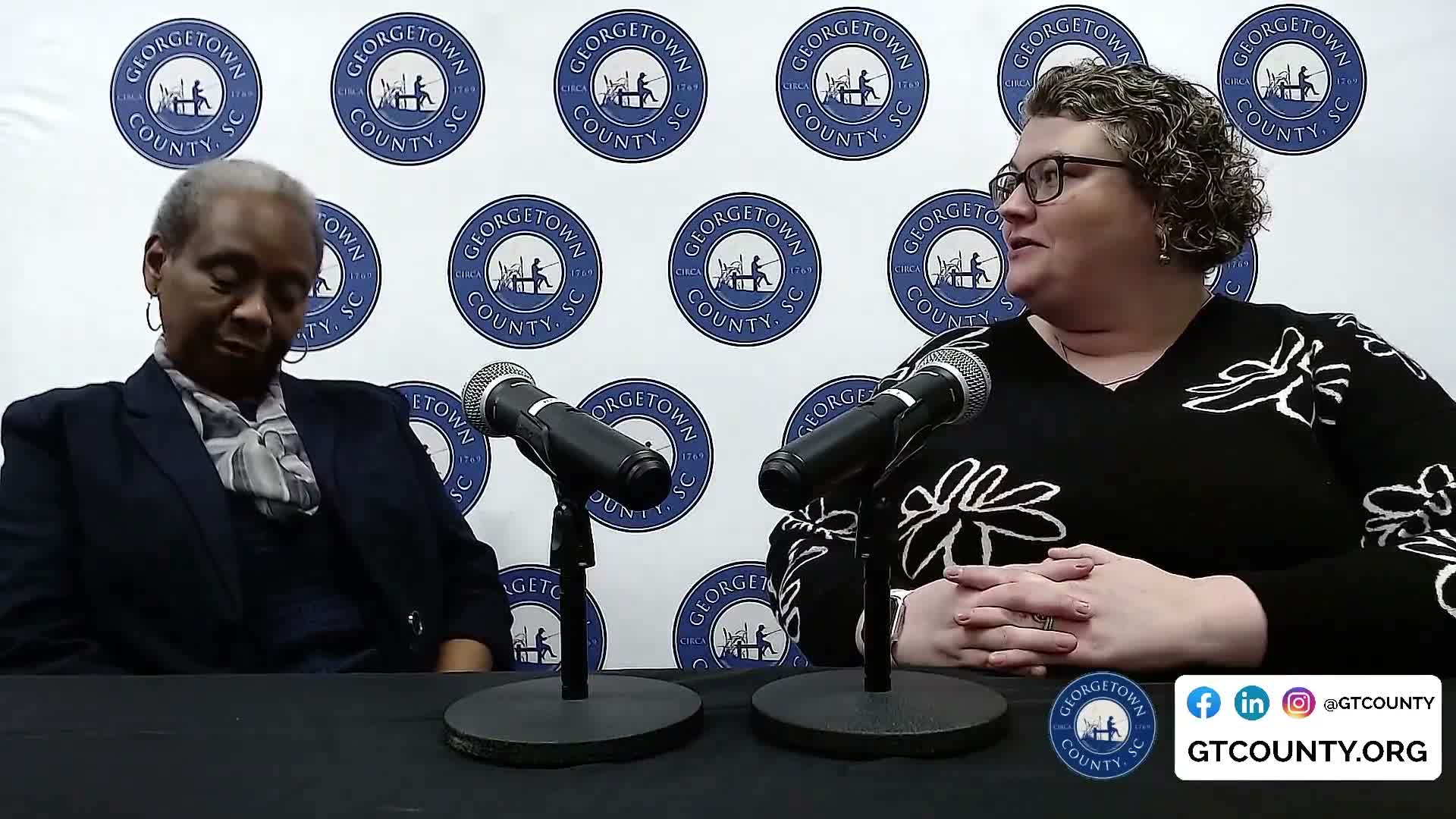
Alma White, Georgetown County Clerk of Court, described the administrative responsibilities her office carries for the state circuit court, including oversight of General Sessions (criminal), Common Pleas (civil) and family court matters. “The clerical court office serve as the administrative arm of the court system,” White said.
White explained that the circuit court schedule and the solicitor largely determine which matters are brought to a term of court, while her office handles court scheduling, file preparation and jury management. “My office responsibility is to make sure that I summons enough jury, enough people in this county to come in to potentially serve jury duty that week. We normally send out, like, 200 and 50 summons,” she said.
The Clerk described technological changes that moved many civil‑case filings online through e‑filing and reduced routine in‑person visits. She said the county moved into a new courthouse building in 2009, which added courtrooms, a jury assembly room and updated technology; the Clerk reported the office now has roughly 15 staff, down from about 25 in anticipation of expanded courtroom use and greater reliance on technology.
White also noted statutory processing timeframes that affect how municipal and magistrate court information reaches the clerk’s office and the solicitor. On warrants and scheduling, she said municipal and magistrate courts transmit documents to the clerk and that the clerk’s office has statutorily prescribed handling time to process and pass information to the solicitor’s office. White emphasized the clerk’s role in coordination rather than making prosecutorial or scheduling decisions.
The interview provides an overview of the clerk’s administrative role and how technology and the new courthouse building changed daily operations; where White referenced statutes and timeframes she did not specify exact statute citations on the program.
White explained that the circuit court schedule and the solicitor largely determine which matters are brought to a term of court, while her office handles court scheduling, file preparation and jury management. “My office responsibility is to make sure that I summons enough jury, enough people in this county to come in to potentially serve jury duty that week. We normally send out, like, 200 and 50 summons,” she said.
The Clerk described technological changes that moved many civil‑case filings online through e‑filing and reduced routine in‑person visits. She said the county moved into a new courthouse building in 2009, which added courtrooms, a jury assembly room and updated technology; the Clerk reported the office now has roughly 15 staff, down from about 25 in anticipation of expanded courtroom use and greater reliance on technology.
White also noted statutory processing timeframes that affect how municipal and magistrate court information reaches the clerk’s office and the solicitor. On warrants and scheduling, she said municipal and magistrate courts transmit documents to the clerk and that the clerk’s office has statutorily prescribed handling time to process and pass information to the solicitor’s office. White emphasized the clerk’s role in coordination rather than making prosecutorial or scheduling decisions.
The interview provides an overview of the clerk’s administrative role and how technology and the new courthouse building changed daily operations; where White referenced statutes and timeframes she did not specify exact statute citations on the program.
View the Full Meeting & All Its Details
This article offers just a summary. Unlock complete video, transcripts, and insights as a Founder Member.
✓
Watch full, unedited meeting videos
✓
Search every word spoken in unlimited transcripts
✓
AI summaries & real-time alerts (all government levels)
✓
Permanent access to expanding government content
30-day money-back guarantee
