Senate panel hears testimony on S.198 to curb youth vaping; bill would ban toy-like devices and shift penalties to suppliers
February 06, 2026 | Economic Development, Housing & General Affairs, SENATE, Committees, Legislative , Vermont
This article was created by AI summarizing key points discussed. AI makes mistakes, so for full details and context, please refer to the video of the full meeting. Please report any errors so we can fix them. Report an error »
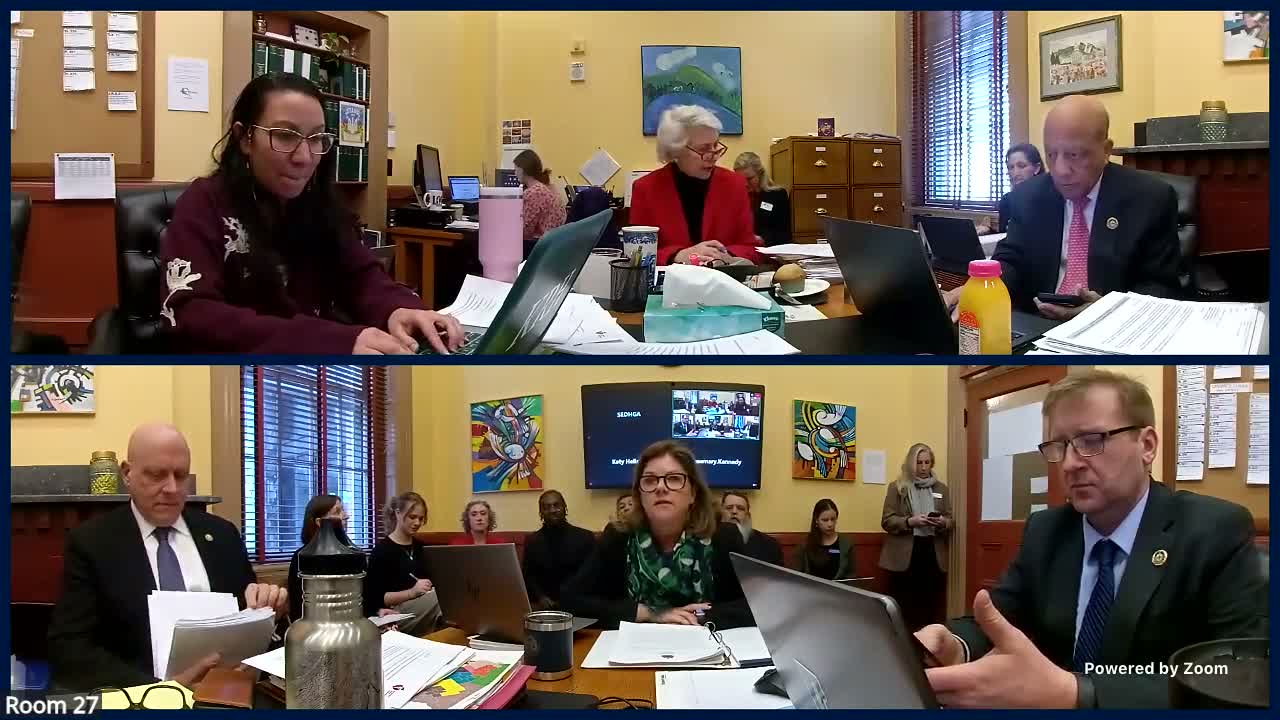
Montpelier — Lawmakers on the Senate Economic Development, Housing & General Affairs committee on Monday heard hours of testimony on S.198, a bill that would tighten state rules on electronic nicotine products, ban devices designed to appeal to children, and shift enforcement away from penalizing minors to targeting suppliers and retailers.
Assistant Attorney General Rose Kennedy, who outlined the bill for the committee, said the state has seen declining Master Settlement Agreement receipts as tobacco substitutes — e‑cigarettes, pouches and other products — have proliferated. "None of that exists for vapes and nicotine products, and that's why we're here," she told the committee, arguing S.198 would fill a state regulatory gap while federal premarket review remains backlogged.
Kennedy detailed several core proposals in S.198: an explicit ban on "products that we think should just be flat out banned in Vermont" because they are designed to look like toys or to be "stealthy" (light‑up devices, inhaler‑style products, markers and gaming‑style vapes); a separate licensing regime for nicotine products with higher fees; expanded inspection authority so state inspectors can check brick‑and‑mortar shelves for unauthorized products and tax compliance; and higher civil penalties for furnishing to under‑21s. "We're asking for the provisions in S.198 that increase the penalties for those who sell to underage folks," Kennedy said, and she described a proposal to "increase the tax to a 100% for any of these products that are over 5 milliliters per gram of nicotine." The committee asked staff to review technical language and agreed to accept written amendments.
School counselors, prevention coordinators and health researchers described classroom and clinical impacts. Matthew Mignier, a student assistance program counselor at Champlain Valley Union High School, said removing fines for youth possession would encourage students to seek help: "Eliminating penalties for youth possession and shifting accountability to the supply side aligns with the law and with what we know works in schools," he testified. Mignier described students who use nicotine to cope with anxiety or depression and said families sometimes exhaust every effort to block deliveries yet students still access products locally.
Amy Brewer, who coordinates the Franklin/Green Hill Tobacco Prevention Coalition, brought examples of devices to show the committee and described how the products are "cool" and "tech forward," with Bluetooth, lights and gaming features that make them attractive to teenagers. She and other presenters noted many confiscated devices are disposable, flavored and sold with high nicotine loads; they also warned that confiscated vapes are treated as hazardous waste and require secure disposal.
Cardiologist Prospero Vilodo told the committee the health and economic burden from tobacco is large: he cited prior testimony placing annual tobacco‑related illness costs in Vermont in the hundreds of millions and warned that vaping may add future costs. He said acute severe cases — vaping‑associated lung injury — are rare but can require extended intensive care; he noted one such case presented at UVM about 18 months ago.
Public‑health surveillance presented to the committee reinforced those concerns. Katie Homan, a researcher working with the Vermont Department of Health, summarized a two‑year confiscated‑vape collection and testing project that cataloged 512 items from middle and high schools across the state; she said one brand made up more than one‑third of the collection and that most devices were flavored disposables with high nicotine concentrations. Andrea, a public‑health researcher with the PACE Vermont study, reported survey findings from roughly 300 teens and young adults in the state sample, with high reported rates of recent cigarette and e‑nicotine product use and frequent exposure to marketing in stores and on social media.
Legislative Council staff summarized existing civil penalties for furnishing nicotine to under‑21s and the bill's proposed increases. "Currently... subject to a civil penalty... not more than $100 for a first offense or $500 for a subsequent offense," the staffer said, and noted S.198 would raise the first‑offense cap to $1,000 and discussed increasing subsequent penalties to $2,000; staff also said they will examine how penalty increases would interact with license suspension provisions.
Committee members and witnesses discussed enforcement challenges posed by unauthorized products that remain on shelves while federal premarket reviews continue. Kennedy described coordination with other state attorneys general and with industry stakeholders and asked the committee to consider technical amendments drafted by Legislative Council.
No vote was taken. Chair closed the hearing and said the committee will take up S.198 again at a future meeting.
Assistant Attorney General Rose Kennedy, who outlined the bill for the committee, said the state has seen declining Master Settlement Agreement receipts as tobacco substitutes — e‑cigarettes, pouches and other products — have proliferated. "None of that exists for vapes and nicotine products, and that's why we're here," she told the committee, arguing S.198 would fill a state regulatory gap while federal premarket review remains backlogged.
Kennedy detailed several core proposals in S.198: an explicit ban on "products that we think should just be flat out banned in Vermont" because they are designed to look like toys or to be "stealthy" (light‑up devices, inhaler‑style products, markers and gaming‑style vapes); a separate licensing regime for nicotine products with higher fees; expanded inspection authority so state inspectors can check brick‑and‑mortar shelves for unauthorized products and tax compliance; and higher civil penalties for furnishing to under‑21s. "We're asking for the provisions in S.198 that increase the penalties for those who sell to underage folks," Kennedy said, and she described a proposal to "increase the tax to a 100% for any of these products that are over 5 milliliters per gram of nicotine." The committee asked staff to review technical language and agreed to accept written amendments.
School counselors, prevention coordinators and health researchers described classroom and clinical impacts. Matthew Mignier, a student assistance program counselor at Champlain Valley Union High School, said removing fines for youth possession would encourage students to seek help: "Eliminating penalties for youth possession and shifting accountability to the supply side aligns with the law and with what we know works in schools," he testified. Mignier described students who use nicotine to cope with anxiety or depression and said families sometimes exhaust every effort to block deliveries yet students still access products locally.
Amy Brewer, who coordinates the Franklin/Green Hill Tobacco Prevention Coalition, brought examples of devices to show the committee and described how the products are "cool" and "tech forward," with Bluetooth, lights and gaming features that make them attractive to teenagers. She and other presenters noted many confiscated devices are disposable, flavored and sold with high nicotine loads; they also warned that confiscated vapes are treated as hazardous waste and require secure disposal.
Cardiologist Prospero Vilodo told the committee the health and economic burden from tobacco is large: he cited prior testimony placing annual tobacco‑related illness costs in Vermont in the hundreds of millions and warned that vaping may add future costs. He said acute severe cases — vaping‑associated lung injury — are rare but can require extended intensive care; he noted one such case presented at UVM about 18 months ago.
Public‑health surveillance presented to the committee reinforced those concerns. Katie Homan, a researcher working with the Vermont Department of Health, summarized a two‑year confiscated‑vape collection and testing project that cataloged 512 items from middle and high schools across the state; she said one brand made up more than one‑third of the collection and that most devices were flavored disposables with high nicotine concentrations. Andrea, a public‑health researcher with the PACE Vermont study, reported survey findings from roughly 300 teens and young adults in the state sample, with high reported rates of recent cigarette and e‑nicotine product use and frequent exposure to marketing in stores and on social media.
Legislative Council staff summarized existing civil penalties for furnishing nicotine to under‑21s and the bill's proposed increases. "Currently... subject to a civil penalty... not more than $100 for a first offense or $500 for a subsequent offense," the staffer said, and noted S.198 would raise the first‑offense cap to $1,000 and discussed increasing subsequent penalties to $2,000; staff also said they will examine how penalty increases would interact with license suspension provisions.
Committee members and witnesses discussed enforcement challenges posed by unauthorized products that remain on shelves while federal premarket reviews continue. Kennedy described coordination with other state attorneys general and with industry stakeholders and asked the committee to consider technical amendments drafted by Legislative Council.
No vote was taken. Chair closed the hearing and said the committee will take up S.198 again at a future meeting.
Don't Miss a Word: See the Full Meeting!
Go beyond summaries. Unlock every video, transcript, and key insight with a Founder Membership.
✓
Get instant access to full meeting videos
✓
Search and clip any phrase from complete transcripts
✓
Receive AI-powered summaries & custom alerts
✓
Enjoy lifetime, unrestricted access to government data
30-day money-back guarantee
