Housing partners tell committee more revenue needed but warn of capacity and cost constraints
February 06, 2026 | Economic Development, Housing & General Affairs, SENATE, Committees, Legislative , Vermont
This article was created by AI summarizing key points discussed. AI makes mistakes, so for full details and context, please refer to the video of the full meeting. Please report any errors so we can fix them. Report an error »
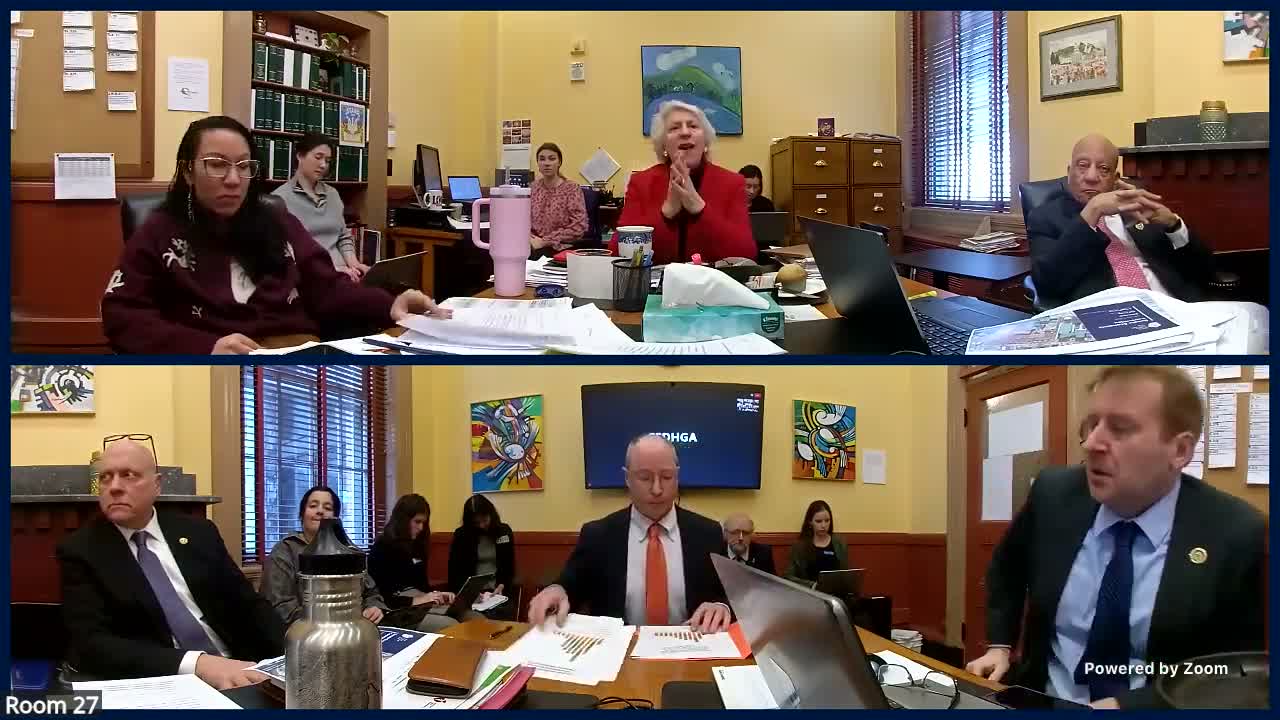
Housing advocates and state housing program officials told the committee that recurring revenue is necessary to sustain the existing development pipeline and to catalyze private leverage, but they cautioned that money alone will not immediately produce the state’s target of 7,500 units a year.
Chris Donnan of Champlain Housing Trust told the committee two‑thirds of the households identified in the state housing needs assessment will require subsidy and that recent modeling shows roughly 4,000 of the annual 7,500 units will need state support. "I don't think we're talking about getting to that today," Donnan said, but added that without a revenue signal the pipeline is already beginning to slow.
An executive from the Land Housing and Conservation Board (recorded in the hearing as Best Seal) reviewed pandemic‑era outputs and leverage: the board reported funding more than 5,600 residences during the pandemic period and said state investment then averaged about $80,000 per unit. "Over the course of those 5,600 residences. We invested $80,000 per unit," the witness said, while stressing that state dollars often serve a catalytic role by unlocking far more private equity.
Panelists described wide variation in how much state subsidy a given unit needs depending on project type and financing. In one modeled scenario, roughly $45 million in new revenue allocated across programs could support 500–600 additional subsidized units depending on subsidy depth and private leverage; partners warned that costs (labor, materials, construction finance) have increased since the pandemic and limit how much can be built per dollar of state investment.
Committee members pressed witnesses for regional breakdowns of unit costs and for more precise estimates of how many units the housing sector could realistically build with different dollar amounts. Witnesses and members also discussed policy levers to reduce costs — expedited permitting, density bonuses, construction‑tax relief, and treasurer‑backed low‑cost loans — and asked staff to return with region‑specific cost and capacity modeling.
The committee recessed for follow‑up work and asked housing partners to return with detailed regional plans and unit‑cost averages.
Chris Donnan of Champlain Housing Trust told the committee two‑thirds of the households identified in the state housing needs assessment will require subsidy and that recent modeling shows roughly 4,000 of the annual 7,500 units will need state support. "I don't think we're talking about getting to that today," Donnan said, but added that without a revenue signal the pipeline is already beginning to slow.
An executive from the Land Housing and Conservation Board (recorded in the hearing as Best Seal) reviewed pandemic‑era outputs and leverage: the board reported funding more than 5,600 residences during the pandemic period and said state investment then averaged about $80,000 per unit. "Over the course of those 5,600 residences. We invested $80,000 per unit," the witness said, while stressing that state dollars often serve a catalytic role by unlocking far more private equity.
Panelists described wide variation in how much state subsidy a given unit needs depending on project type and financing. In one modeled scenario, roughly $45 million in new revenue allocated across programs could support 500–600 additional subsidized units depending on subsidy depth and private leverage; partners warned that costs (labor, materials, construction finance) have increased since the pandemic and limit how much can be built per dollar of state investment.
Committee members pressed witnesses for regional breakdowns of unit costs and for more precise estimates of how many units the housing sector could realistically build with different dollar amounts. Witnesses and members also discussed policy levers to reduce costs — expedited permitting, density bonuses, construction‑tax relief, and treasurer‑backed low‑cost loans — and asked staff to return with region‑specific cost and capacity modeling.
The committee recessed for follow‑up work and asked housing partners to return with detailed regional plans and unit‑cost averages.
Don't Miss a Word: See the Full Meeting!
Go beyond summaries. Unlock every video, transcript, and key insight with a Founder Membership.
✓
Get instant access to full meeting videos
✓
Search and clip any phrase from complete transcripts
✓
Receive AI-powered summaries & custom alerts
✓
Enjoy lifetime, unrestricted access to government data
30-day money-back guarantee
