Witnesses tell Judiciary committee sealing, not expungement, better balances second chances and oversight
February 06, 2026 | Judiciary, HOUSE OF REPRESENTATIVES, Committees, Legislative , Vermont
This article was created by AI summarizing key points discussed. AI makes mistakes, so for full details and context, please refer to the video of the full meeting. Please report any errors so we can fix them. Report an error »
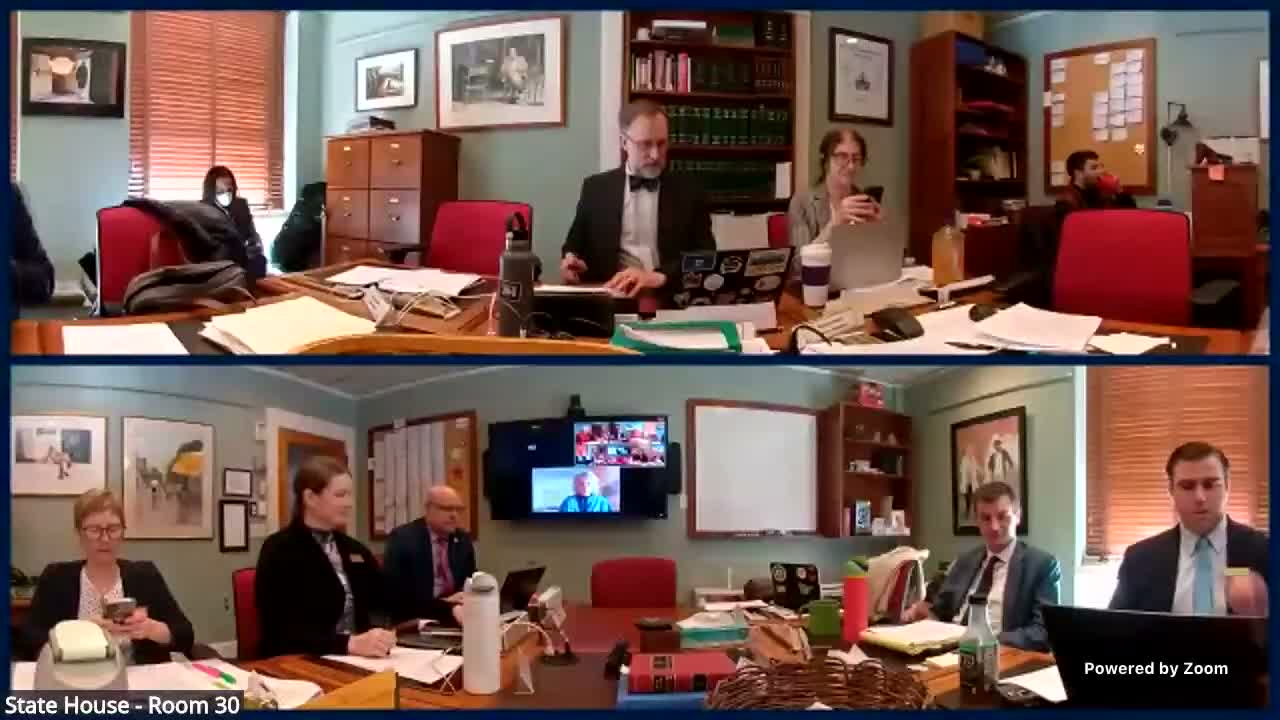
The Judiciary committee on Feb. 5 heard testimony urging the panel to move H.566 from expungement to a sealing regime for successful post‑charge diversion cases.
Rachel Jolley, director of the Burlington Community Justice Center, told the committee she supports the change and urged clearer public guidance: "some kind of 1 pager or plain language document would be really helpful for our staff and our participants to understand who acts has access to their records and when." Jolley described Burlington's City Circle pilot, saying the program hired a coordinator in November, trained six volunteers and launched on Jan. 5; it has received six tickets for four individuals, with two people participating and three tickets addressed so far.
"The position that coordinator City Circle is being funded by the attorney general's office," Jolley said, describing the role as a precharge position that handles diversion referrals from police. She said the Burlington attorney's office retains discretion to prosecute matters that later escalate, and that the pilot will continue through the fiscal year to collect data.
Jennifer Pullman, executive director of the Mott Center for Crime Victim Services, also endorsed the bill, arguing sealing preserves second chances while allowing limited access for criminal justice agencies. "Sealing is a practical humane policy because it removes the public barriers to housing and employment," Pullman said, adding that sealing preserves an accurate government record that can be accessed when necessary.
Pullman cautioned that diversion eligibility has broadened over time and recounted examples she said illustrate why retaining government access matters. She described operational impacts for victim services and restitution enforcement if records are expunged: "If it's expunged, we can't provide any support whatsoever," she said, and recounted an instance she identified in which a restitution order for about $30,000 was later expunged and could not be enforced.
An unnamed testifier who also spoke in favor of sealing told the committee that expungement can remove evidence needed later for oversight or civil claims and urged that victims be considered for limited access to sealed records. Committee members questioned how to define "victim," raised concerns about opening sealed records too broadly, and noted existing Title 13 petition processes that allow court review for civil defenses in narrow circumstances.
Members also pressed the question of municipal scope: whether municipal ordinance cases should be part of a statewide precharge sealing regime and who would fund those interventions. Jolley said Burlington's pilot was established with attorney general funding but acknowledged that some municipalities or city attorneys might need to agree to and fund local participation if the program expands.
The committee did not take a final vote at the hearing. The chair said the committee would consider a draft amendment regarding the pilot language and expected to hold a vote the next morning. Witnesses said they would provide memos and guidance documents to the committee to inform that decision.
The hearing also included logistical scheduling for upcoming budget briefings and additional public safety bills. The committee paused the hearing to reconvene for other business and to continue consideration of pending legislation.
What comes next: committee members asked staff to draft language that would recognize or authorize municipal pilot work and to circulate the revised text before the scheduled vote. The committee signaled it will review the pilot documents and the revised draft prior to taking action.
Rachel Jolley, director of the Burlington Community Justice Center, told the committee she supports the change and urged clearer public guidance: "some kind of 1 pager or plain language document would be really helpful for our staff and our participants to understand who acts has access to their records and when." Jolley described Burlington's City Circle pilot, saying the program hired a coordinator in November, trained six volunteers and launched on Jan. 5; it has received six tickets for four individuals, with two people participating and three tickets addressed so far.
"The position that coordinator City Circle is being funded by the attorney general's office," Jolley said, describing the role as a precharge position that handles diversion referrals from police. She said the Burlington attorney's office retains discretion to prosecute matters that later escalate, and that the pilot will continue through the fiscal year to collect data.
Jennifer Pullman, executive director of the Mott Center for Crime Victim Services, also endorsed the bill, arguing sealing preserves second chances while allowing limited access for criminal justice agencies. "Sealing is a practical humane policy because it removes the public barriers to housing and employment," Pullman said, adding that sealing preserves an accurate government record that can be accessed when necessary.
Pullman cautioned that diversion eligibility has broadened over time and recounted examples she said illustrate why retaining government access matters. She described operational impacts for victim services and restitution enforcement if records are expunged: "If it's expunged, we can't provide any support whatsoever," she said, and recounted an instance she identified in which a restitution order for about $30,000 was later expunged and could not be enforced.
An unnamed testifier who also spoke in favor of sealing told the committee that expungement can remove evidence needed later for oversight or civil claims and urged that victims be considered for limited access to sealed records. Committee members questioned how to define "victim," raised concerns about opening sealed records too broadly, and noted existing Title 13 petition processes that allow court review for civil defenses in narrow circumstances.
Members also pressed the question of municipal scope: whether municipal ordinance cases should be part of a statewide precharge sealing regime and who would fund those interventions. Jolley said Burlington's pilot was established with attorney general funding but acknowledged that some municipalities or city attorneys might need to agree to and fund local participation if the program expands.
The committee did not take a final vote at the hearing. The chair said the committee would consider a draft amendment regarding the pilot language and expected to hold a vote the next morning. Witnesses said they would provide memos and guidance documents to the committee to inform that decision.
The hearing also included logistical scheduling for upcoming budget briefings and additional public safety bills. The committee paused the hearing to reconvene for other business and to continue consideration of pending legislation.
What comes next: committee members asked staff to draft language that would recognize or authorize municipal pilot work and to circulate the revised text before the scheduled vote. The committee signaled it will review the pilot documents and the revised draft prior to taking action.
View the Full Meeting & All Its Details
This article offers just a summary. Unlock complete video, transcripts, and insights as a Founder Member.
✓
Watch full, unedited meeting videos
✓
Search every word spoken in unlimited transcripts
✓
AI summaries & real-time alerts (all government levels)
✓
Permanent access to expanding government content
30-day money-back guarantee
