Kentucky Senate approves bill easing staffing rules for level 4 trauma centers after lengthy debate
February 06, 2026 | 2026 Legislature KY, Kentucky
This article was created by AI summarizing key points discussed. AI makes mistakes, so for full details and context, please refer to the video of the full meeting. Please report any errors so we can fix them. Report an error »
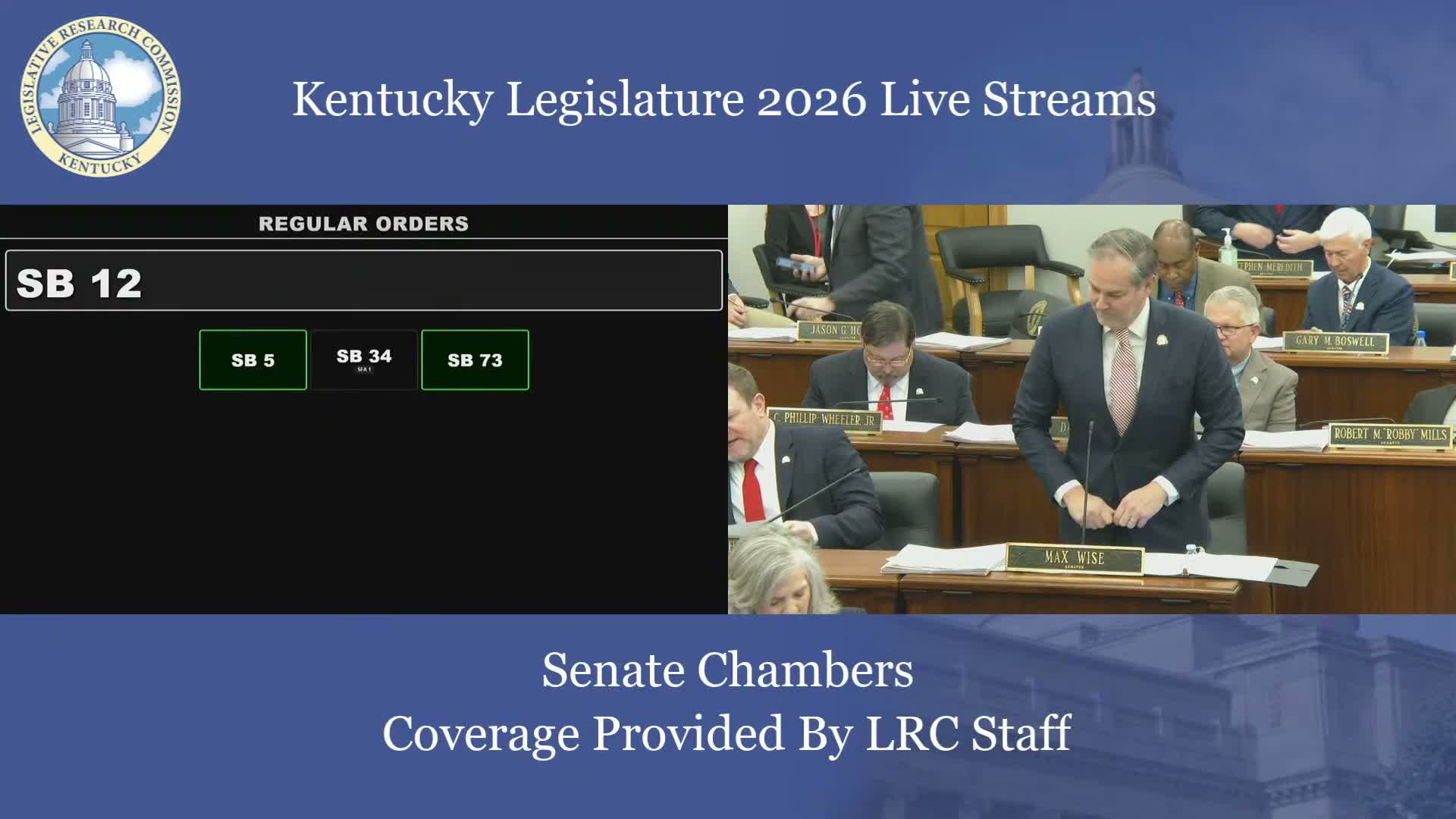
Senate Bill 12, which adjusts statutory standards for level 4 trauma centers so they may utilize physician assistants and nurse practitioners under physician supervision (including by telemedicine), was approved by the Kentucky Senate on Feb. 5, 2026 after extended debate.
The bill’s sponsor, the senator from Grayson, framed the measure as a pragmatic step to broaden access to trauma care in rural Kentucky. He said the state has only about 20 level 4 centers while 55 hospitals lack designation and that workforce constraints make it “almost impossible” for many rural hospitals to meet existing standards. He argued SB12 aligns Kentucky law with national guidance that permits midlevel practitioners to provide care under physician oversight and said the change would open certification opportunities and improve coordination and transfers without requiring a new appropriation.
Opponents, including a senator who described four decades of trauma experience, said parts of the bill risk lowering standards of care. They warned that a level 4 designation influences ambulance destination decisions and that allowing non-physicians to staff these centers without clear, mandatory on-site physician response standards could endanger patients. Several speakers emphasized that supervision and response-time expectations were not defined in the bill and urged alternatives such as increased funding, resident rotations, or other programs to bring physicians into rural hospitals.
The Senate floor exchange repeatedly framed the choice as safety versus access. Supporters cited workforce statistics and the practical realities of rural hospitals — including shortages of pediatricians and primary care providers and counties designated as health professional shortage areas — and said SB12 would give rural facilities a path to certification, equipment upgrades, formal transfer agreements and additional funding or billing opportunities that accompany designation.
Members asked and the sponsor answered procedural and technical questions about certification requirements: hospitals seeking level 4 verification would need trauma-specific protocols, personnel training (including nurse and midlevel designations), life‑saving equipment such as defibrillators and airway scopes, and formal transfer agreements with larger tertiary centers. The sponsor said the equipment standards for a level 4 designation are the same regardless of urban or rural location but acknowledged the cost barrier for small hospitals.
On final passage the clerk reported 27 yeas and 11 nays. The bill will now proceed to the House as part of the legislative process. Supporters said the measure will help stabilize rural hospitals and improve access; opponents signaled they will watch implementation closely and pressed for future fixes if outcomes indicate reduced quality.
The most recent procedural step is passage in the Senate; next steps include House consideration and potential committee or floor amendments there.
The bill’s sponsor, the senator from Grayson, framed the measure as a pragmatic step to broaden access to trauma care in rural Kentucky. He said the state has only about 20 level 4 centers while 55 hospitals lack designation and that workforce constraints make it “almost impossible” for many rural hospitals to meet existing standards. He argued SB12 aligns Kentucky law with national guidance that permits midlevel practitioners to provide care under physician oversight and said the change would open certification opportunities and improve coordination and transfers without requiring a new appropriation.
Opponents, including a senator who described four decades of trauma experience, said parts of the bill risk lowering standards of care. They warned that a level 4 designation influences ambulance destination decisions and that allowing non-physicians to staff these centers without clear, mandatory on-site physician response standards could endanger patients. Several speakers emphasized that supervision and response-time expectations were not defined in the bill and urged alternatives such as increased funding, resident rotations, or other programs to bring physicians into rural hospitals.
The Senate floor exchange repeatedly framed the choice as safety versus access. Supporters cited workforce statistics and the practical realities of rural hospitals — including shortages of pediatricians and primary care providers and counties designated as health professional shortage areas — and said SB12 would give rural facilities a path to certification, equipment upgrades, formal transfer agreements and additional funding or billing opportunities that accompany designation.
Members asked and the sponsor answered procedural and technical questions about certification requirements: hospitals seeking level 4 verification would need trauma-specific protocols, personnel training (including nurse and midlevel designations), life‑saving equipment such as defibrillators and airway scopes, and formal transfer agreements with larger tertiary centers. The sponsor said the equipment standards for a level 4 designation are the same regardless of urban or rural location but acknowledged the cost barrier for small hospitals.
On final passage the clerk reported 27 yeas and 11 nays. The bill will now proceed to the House as part of the legislative process. Supporters said the measure will help stabilize rural hospitals and improve access; opponents signaled they will watch implementation closely and pressed for future fixes if outcomes indicate reduced quality.
The most recent procedural step is passage in the Senate; next steps include House consideration and potential committee or floor amendments there.
View the Full Meeting & All Its Details
This article offers just a summary. Unlock complete video, transcripts, and insights as a Founder Member.
✓
Watch full, unedited meeting videos
✓
Search every word spoken in unlimited transcripts
✓
AI summaries & real-time alerts (all government levels)
✓
Permanent access to expanding government content
30-day money-back guarantee
