Legislative committee reviews transportation report mandates; recommends repeals, retains EV and railroad reporting
February 06, 2026 | Transportation, HOUSE OF REPRESENTATIVES, Committees, Legislative , Vermont
This article was created by AI summarizing key points discussed. AI makes mistakes, so for full details and context, please refer to the video of the full meeting. Please report any errors so we can fix them. Report an error »
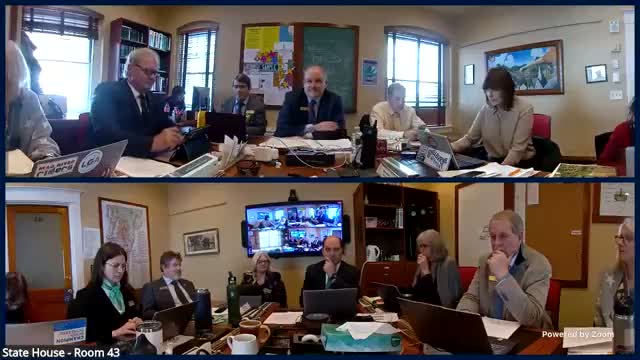
Damon Leonard, legislative counsel, and Michelle Blumhower of the Vermont Agency of Transportation reviewed statutory report requirements during a Feb. 5 committee session meant to trim unnecessary reporting while preserving oversight.
Leonard said the review was prompted by a directive tied to the speaker’s office and the government operations committee on accountability. He noted a standing statutory mechanism that causes long‑term reports with annual triggers to expire after five years unless the law explicitly retains them and that chairs receive a biennial repeal questionnaire to consider keeping or repealing reports.
The session considered roughly a dozen transportation‑related reports. Agency staff and legislative counsel recommended retaining the recently enacted annual report on the state’s EV infrastructure and deployment plan — which includes the NEVI program and work by the Agency of Commerce and Community Development — because the state is still pursuing network goals. Michelle Blumhower said the goals “of having a high‑speed charging station within 3 miles of every interstate interchange and every 25 miles on the state highway system are ones that are still important.”
By contrast, committee staff and AOT recommended repealing several reporting requirements tied to programs that are currently inactive or exhausted of funding. That group included annual reports tied to vehicle‑incentive and e‑bike incentive programs; staff said those programs’ funding has been expended and the statutory reporting language could be removed or made contingent on future appropriations.
The committee also addressed a statutory annual review tied to automated traffic‑law enforcement images. Blumhower said the program itself ‘‘does not exist’’ in administrative practice, though language remains in statute. She recommended repealing the image‑use report requirement ‘‘unless and until such a time that there is a firm program’’ in place and funded.
Other recommendations included retaining an annual report on revenue from leases of state‑owned railroad rights‑of‑way (used for fee oversight) and keeping the Complete Streets annual report because AOT and regional planning commissions have developed a reporting database and community‑level data collection. Leonard noted the lease‑notification requirement (triggered when 12 months remain on an operating lease) is useful oversight; the committee observed there are only about four such leases on regular renewal cycles.
Leonard also walked members through how to find legislative reports online, demonstrating search queries (for example, typing "transportation" for Agency of Transportation reports or "motor" for DMV items) and warning that some reports sometimes appear only on committee pages rather than the central reports repository.
No formal votes or motions were recorded in the session transcript. Staff offered to amend statutory drafting language where appropriate, confirm whether final ‘‘bridal’’/final reports exist for closed programs, and to locate and circulate links to recent submissions (one early‑renewals report was noted as filed about a half‑hour before the meeting).
The committee adjourned after the review; staff said they would draft statutory language or memos reflecting the group’s recommendations and return items for further consideration if necessary.
Leonard said the review was prompted by a directive tied to the speaker’s office and the government operations committee on accountability. He noted a standing statutory mechanism that causes long‑term reports with annual triggers to expire after five years unless the law explicitly retains them and that chairs receive a biennial repeal questionnaire to consider keeping or repealing reports.
The session considered roughly a dozen transportation‑related reports. Agency staff and legislative counsel recommended retaining the recently enacted annual report on the state’s EV infrastructure and deployment plan — which includes the NEVI program and work by the Agency of Commerce and Community Development — because the state is still pursuing network goals. Michelle Blumhower said the goals “of having a high‑speed charging station within 3 miles of every interstate interchange and every 25 miles on the state highway system are ones that are still important.”
By contrast, committee staff and AOT recommended repealing several reporting requirements tied to programs that are currently inactive or exhausted of funding. That group included annual reports tied to vehicle‑incentive and e‑bike incentive programs; staff said those programs’ funding has been expended and the statutory reporting language could be removed or made contingent on future appropriations.
The committee also addressed a statutory annual review tied to automated traffic‑law enforcement images. Blumhower said the program itself ‘‘does not exist’’ in administrative practice, though language remains in statute. She recommended repealing the image‑use report requirement ‘‘unless and until such a time that there is a firm program’’ in place and funded.
Other recommendations included retaining an annual report on revenue from leases of state‑owned railroad rights‑of‑way (used for fee oversight) and keeping the Complete Streets annual report because AOT and regional planning commissions have developed a reporting database and community‑level data collection. Leonard noted the lease‑notification requirement (triggered when 12 months remain on an operating lease) is useful oversight; the committee observed there are only about four such leases on regular renewal cycles.
Leonard also walked members through how to find legislative reports online, demonstrating search queries (for example, typing "transportation" for Agency of Transportation reports or "motor" for DMV items) and warning that some reports sometimes appear only on committee pages rather than the central reports repository.
No formal votes or motions were recorded in the session transcript. Staff offered to amend statutory drafting language where appropriate, confirm whether final ‘‘bridal’’/final reports exist for closed programs, and to locate and circulate links to recent submissions (one early‑renewals report was noted as filed about a half‑hour before the meeting).
The committee adjourned after the review; staff said they would draft statutory language or memos reflecting the group’s recommendations and return items for further consideration if necessary.
View the Full Meeting & All Its Details
This article offers just a summary. Unlock complete video, transcripts, and insights as a Founder Member.
✓
Watch full, unedited meeting videos
✓
Search every word spoken in unlimited transcripts
✓
AI summaries & real-time alerts (all government levels)
✓
Permanent access to expanding government content
30-day money-back guarantee
