Board previews new Achievement & Integration plan and key indicators
February 06, 2026 | South Washington County Schools, School Boards, Minnesota
This article was created by AI summarizing key points discussed. AI makes mistakes, so for full details and context, please refer to the video of the full meeting. Please report any errors so we can fix them. Report an error »
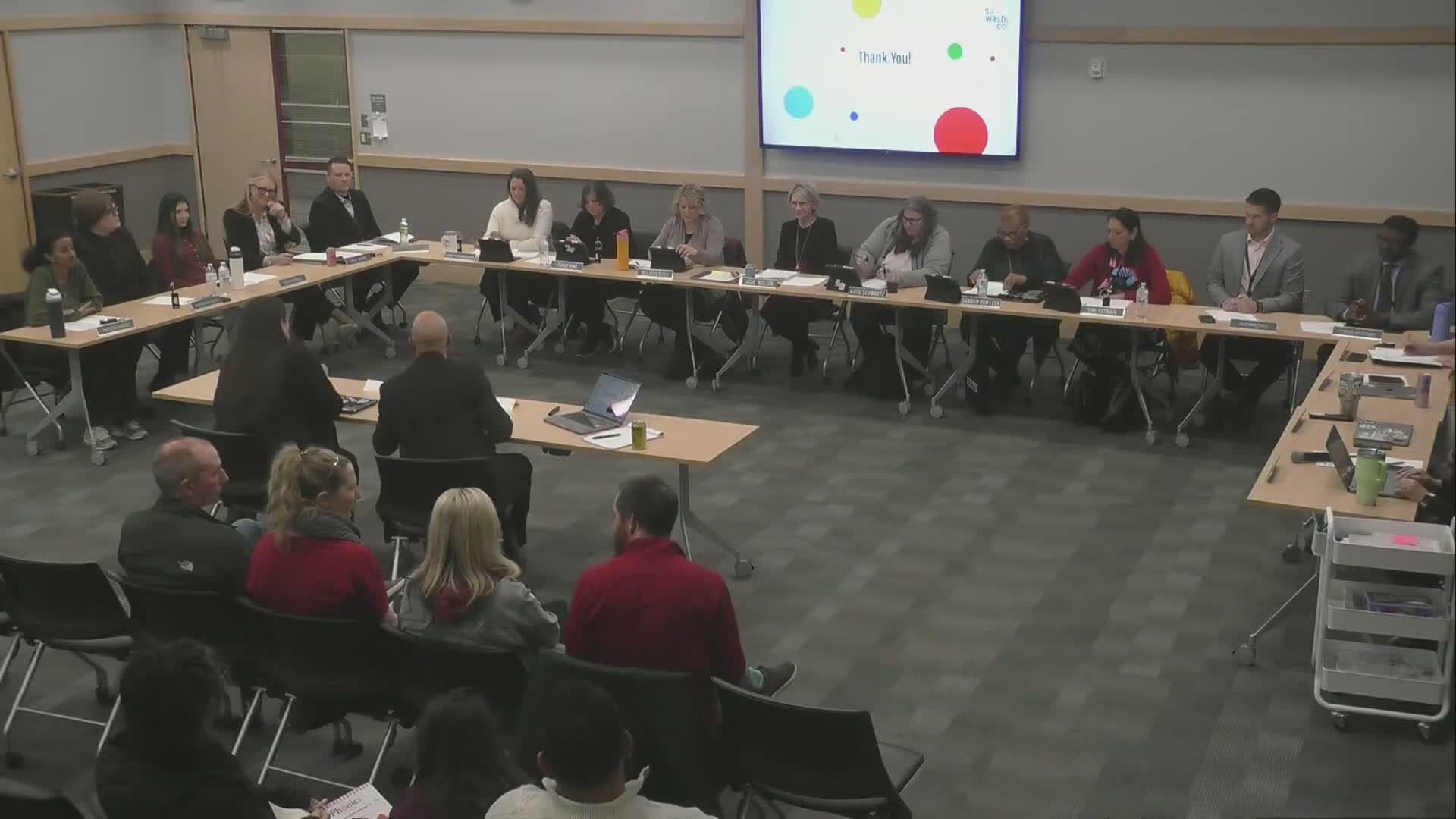
At the Feb. 5 workshop, South Washington County Schools staff previewed the district’s next three‑year Achievement & Integration (ANI) plan, describing three overarching goals — eliminating achievement disparities, increasing workforce diversity and improving community engagement — and the strategies and key indicators that will be used to track progress.
Assistant Superintendent Kelly Jansen introduced the report and James (ANI lead) explained that SWASHCO is required to participate in the state program as an identified district. Rather than single SMART goals, the district will use multiple key indicators for each goal so staff can pivot strategies without discarding the full plan. Key strategies presented include placement of academic success coaches in high‑need schools, expansion and district‑wide integration of AVID, use of cultural liaisons to support IEP/504 and tutoring needs, 'grow your own' mentorship pathways to expose students to education careers, retention and mentorship programs for staff of color, and cross‑district summer and enrichment programming to increase integration.
Presenter said the plan’s three goals are on track under current indicators and that the board will be asked to take action on Feb. 19; the budget alignment and full indicator baselines will be submitted to the state by March 15 and implementation will begin July 1 with many activities starting mid‑March. Board members asked about funding sources (state ANI funds were confirmed), how sites will receive funds (district currently uses internal grants but plans to empower sites to drive programming), and the role of the DEI advisory committee (committee provided feedback and helped craft the plan). The presentation emphasized that modifications to submitted key indicators would be returned to the board for approval, while routine management adjustments would not require board action.
Assistant Superintendent Kelly Jansen introduced the report and James (ANI lead) explained that SWASHCO is required to participate in the state program as an identified district. Rather than single SMART goals, the district will use multiple key indicators for each goal so staff can pivot strategies without discarding the full plan. Key strategies presented include placement of academic success coaches in high‑need schools, expansion and district‑wide integration of AVID, use of cultural liaisons to support IEP/504 and tutoring needs, 'grow your own' mentorship pathways to expose students to education careers, retention and mentorship programs for staff of color, and cross‑district summer and enrichment programming to increase integration.
Presenter said the plan’s three goals are on track under current indicators and that the board will be asked to take action on Feb. 19; the budget alignment and full indicator baselines will be submitted to the state by March 15 and implementation will begin July 1 with many activities starting mid‑March. Board members asked about funding sources (state ANI funds were confirmed), how sites will receive funds (district currently uses internal grants but plans to empower sites to drive programming), and the role of the DEI advisory committee (committee provided feedback and helped craft the plan). The presentation emphasized that modifications to submitted key indicators would be returned to the board for approval, while routine management adjustments would not require board action.
Don't Miss a Word: See the Full Meeting!
Go beyond summaries. Unlock every video, transcript, and key insight with a Founder Membership.
✓
Get instant access to full meeting videos
✓
Search and clip any phrase from complete transcripts
✓
Receive AI-powered summaries & custom alerts
✓
Enjoy lifetime, unrestricted access to government data
30-day money-back guarantee
