DMV briefs Senate panel on staff morale, training and wait‑time fixes
February 06, 2026 | Senate Transportation, SENATE, Committees, Legislative , Vermont
This article was created by AI summarizing key points discussed. AI makes mistakes, so for full details and context, please refer to the video of the full meeting. Please report any errors so we can fix them. Report an error »
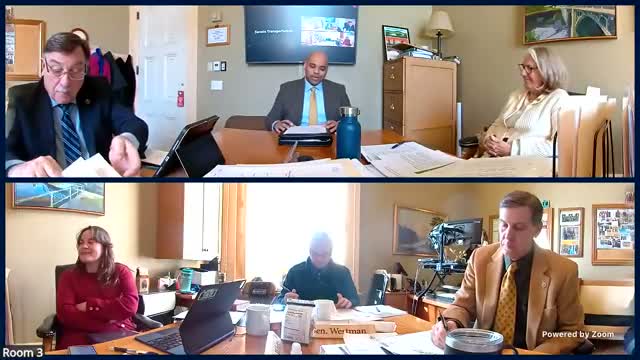
DMV leadership updated the Senate Transportation Committee on Feb. 5 about employee engagement, training and customer-service measures, saying internal survey results show some gains but persistent concerns about workload and training.
Andrew Carter, presenting for DMV, told senators the department is working to raise survey participation and to give employees time to complete the survey, saying leadership must encourage staff to take the 15–20 minutes needed to respond. "Really making it clear to leadership team ... employees, if they want, they can have the time take 15, 20 minutes or so to just work on the survey," Carter said.
Carter said the department is prioritizing training changes and has introduced one hour per month — on historically low-traffic days — when managers can pull staff for consolidated training rather than decentralized, ad‑hoc sessions. He also described an anonymous feedback portal already in use to collect employee concerns and process-improvement suggestions and said some changes are already being planned based on that feedback.
Senators pressed on the training metric: the share of respondents who said they "received the training I need to do my job" increased from 43% to 55% but still leaves a large minority feeling undertrained. Committee members asked what specific actions managers are taking to address the remaining 45% and asked for follow-up during next year’s review.
On customer service, staff and committee members discussed appointments, walk-in traffic at mobile sites and outreach to institutions (notably colleges) to reduce peak walk-in demand. Carter said the department averages roughly 2,300 calls a week with an average callback/wait time of about 20 minutes and that a callback service is available to callers.
The DMV reported operational changes intended to reduce counter wait times, including a dealer unit to handle multiple dealer transactions, clearer renewal-letter verbiage to reduce unnecessary visits, more aggressive use of social media and web updates to nudge customers toward appointments, and targeted outreach to towns and institutions. No formal votes were taken; senators requested performance measures and national-benchmark comparisons in future budget or oversight materials.
The committee recessed after the update.
Andrew Carter, presenting for DMV, told senators the department is working to raise survey participation and to give employees time to complete the survey, saying leadership must encourage staff to take the 15–20 minutes needed to respond. "Really making it clear to leadership team ... employees, if they want, they can have the time take 15, 20 minutes or so to just work on the survey," Carter said.
Carter said the department is prioritizing training changes and has introduced one hour per month — on historically low-traffic days — when managers can pull staff for consolidated training rather than decentralized, ad‑hoc sessions. He also described an anonymous feedback portal already in use to collect employee concerns and process-improvement suggestions and said some changes are already being planned based on that feedback.
Senators pressed on the training metric: the share of respondents who said they "received the training I need to do my job" increased from 43% to 55% but still leaves a large minority feeling undertrained. Committee members asked what specific actions managers are taking to address the remaining 45% and asked for follow-up during next year’s review.
On customer service, staff and committee members discussed appointments, walk-in traffic at mobile sites and outreach to institutions (notably colleges) to reduce peak walk-in demand. Carter said the department averages roughly 2,300 calls a week with an average callback/wait time of about 20 minutes and that a callback service is available to callers.
The DMV reported operational changes intended to reduce counter wait times, including a dealer unit to handle multiple dealer transactions, clearer renewal-letter verbiage to reduce unnecessary visits, more aggressive use of social media and web updates to nudge customers toward appointments, and targeted outreach to towns and institutions. No formal votes were taken; senators requested performance measures and national-benchmark comparisons in future budget or oversight materials.
The committee recessed after the update.
View the Full Meeting & All Its Details
This article offers just a summary. Unlock complete video, transcripts, and insights as a Founder Member.
✓
Watch full, unedited meeting videos
✓
Search every word spoken in unlimited transcripts
✓
AI summaries & real-time alerts (all government levels)
✓
Permanent access to expanding government content
30-day money-back guarantee
