Farmers and witnesses press for clearer definitions, measurable thresholds in agriculture bill
February 06, 2026 | Agriculture, SENATE, Committees, Legislative , Vermont
This article was created by AI summarizing key points discussed. AI makes mistakes, so for full details and context, please refer to the video of the full meeting. Please report any errors so we can fix them. Report an error »
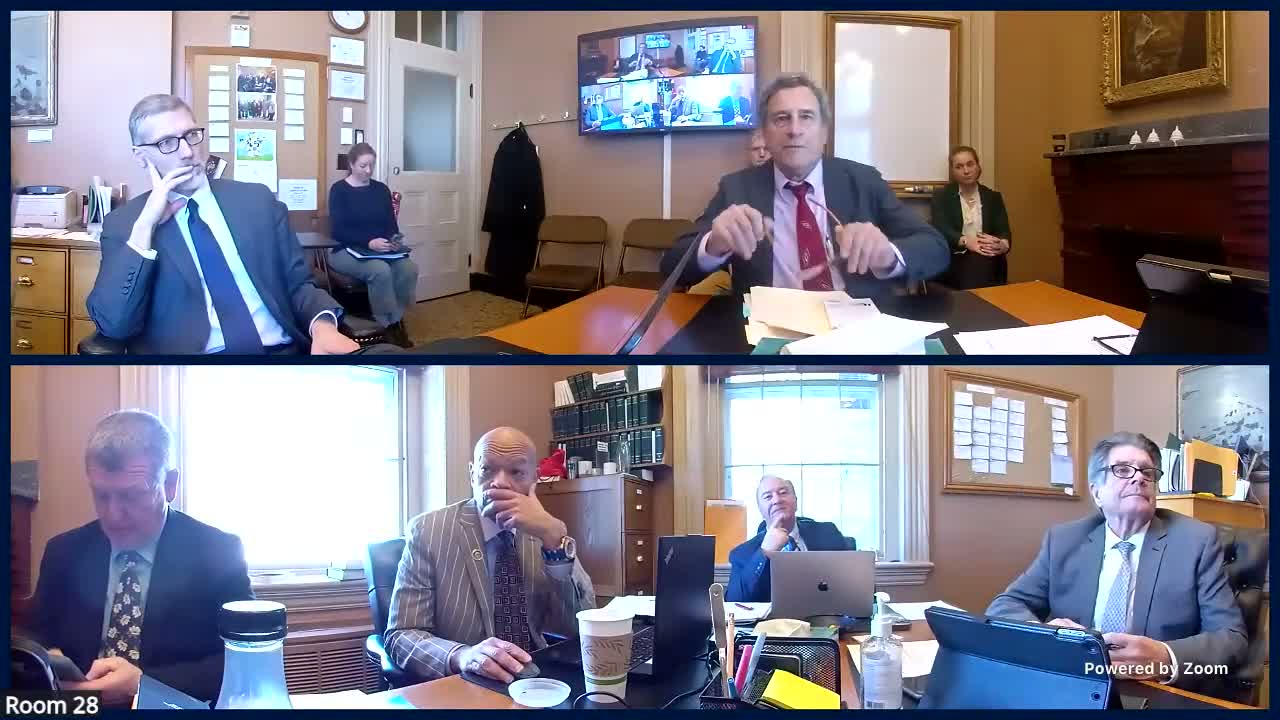
Paul Ralston, who identified himself as a retired businessperson now operating a farm, walked the committee through multiple sections of a draft miscellaneous agriculture bill and urged the legislature to harmonize statutory definitions that currently vary across chapters and agencies.
Ralston recommended using the definition of "farming" in 10 VSA A76001 as a baseline, harmonizing discrepancies with references to 24 VSA, and adding accessory on‑farm business to the definition of farm structure. He criticized ambiguous terms such as "principally produced on the farm" as legally unenforceable and recommended replacing amorphous tests with measurable standards tied to tax returns and gross sales.
"What you would do with this is replace unenforceable language with definite, absolutely measurable language," Ralston said, arguing that a measurable threshold gives farmers the confidence to invest in processing capacity without fear of retroactive enforcement.
Ralston said a $250,000 gross sales threshold for accessory on‑farm business activity is appropriate for Vermont small business scale, allowing farms to purchase inputs from neighboring farms when crops fail and to add value through processing (for example, turning apples into pies or apple‑cider donuts) without losing accessory status.
He described the practical problem he encountered when converting produce: after the Department of Health categorized his small farm kitchen as a commercial caterer, the Agency of Natural Resources required substantial wastewater and grease management upgrades that carried prohibitive costs. He urged the committee to create a distinct, scaled regulatory box for small farm kitchen operations so rules are commensurate with actual public‑health and environmental risks.
Spencer Blackwell, owner of Elmer Farm in Middlebury, described a 7‑acre organic vegetable operation with gross sales of roughly $225,000 and about 2 d full‑time equivalent employees. Blackwell said small farm kitchens and the ability to purchase more inputs from other producers would help farms capture more value, find markets for surplus or imperfect crops, and ease generational transitions. He also voiced support for capital gains and property transfer tax exemptions for qualified farm transfers to aid succession.
Committee members asked for more detailed annotations and data to support Ralston's proposals and signaled they will continue refining the bill before any formal action; no vote was taken during the hearing.
Ralston recommended using the definition of "farming" in 10 VSA A76001 as a baseline, harmonizing discrepancies with references to 24 VSA, and adding accessory on‑farm business to the definition of farm structure. He criticized ambiguous terms such as "principally produced on the farm" as legally unenforceable and recommended replacing amorphous tests with measurable standards tied to tax returns and gross sales.
"What you would do with this is replace unenforceable language with definite, absolutely measurable language," Ralston said, arguing that a measurable threshold gives farmers the confidence to invest in processing capacity without fear of retroactive enforcement.
Ralston said a $250,000 gross sales threshold for accessory on‑farm business activity is appropriate for Vermont small business scale, allowing farms to purchase inputs from neighboring farms when crops fail and to add value through processing (for example, turning apples into pies or apple‑cider donuts) without losing accessory status.
He described the practical problem he encountered when converting produce: after the Department of Health categorized his small farm kitchen as a commercial caterer, the Agency of Natural Resources required substantial wastewater and grease management upgrades that carried prohibitive costs. He urged the committee to create a distinct, scaled regulatory box for small farm kitchen operations so rules are commensurate with actual public‑health and environmental risks.
Spencer Blackwell, owner of Elmer Farm in Middlebury, described a 7‑acre organic vegetable operation with gross sales of roughly $225,000 and about 2 d full‑time equivalent employees. Blackwell said small farm kitchens and the ability to purchase more inputs from other producers would help farms capture more value, find markets for surplus or imperfect crops, and ease generational transitions. He also voiced support for capital gains and property transfer tax exemptions for qualified farm transfers to aid succession.
Committee members asked for more detailed annotations and data to support Ralston's proposals and signaled they will continue refining the bill before any formal action; no vote was taken during the hearing.
View the Full Meeting & All Its Details
This article offers just a summary. Unlock complete video, transcripts, and insights as a Founder Member.
✓
Watch full, unedited meeting videos
✓
Search every word spoken in unlimited transcripts
✓
AI summaries & real-time alerts (all government levels)
✓
Permanent access to expanding government content
30-day money-back guarantee
