Lawmakers Hear Testimony Urging Funding for 3 Squares Vermont, Crop Cash and Food‑security Programs
February 06, 2026 | Agriculture, SENATE, Committees, Legislative , Vermont
This article was created by AI summarizing key points discussed. AI makes mistakes, so for full details and context, please refer to the video of the full meeting. Please report any errors so we can fix them. Report an error »
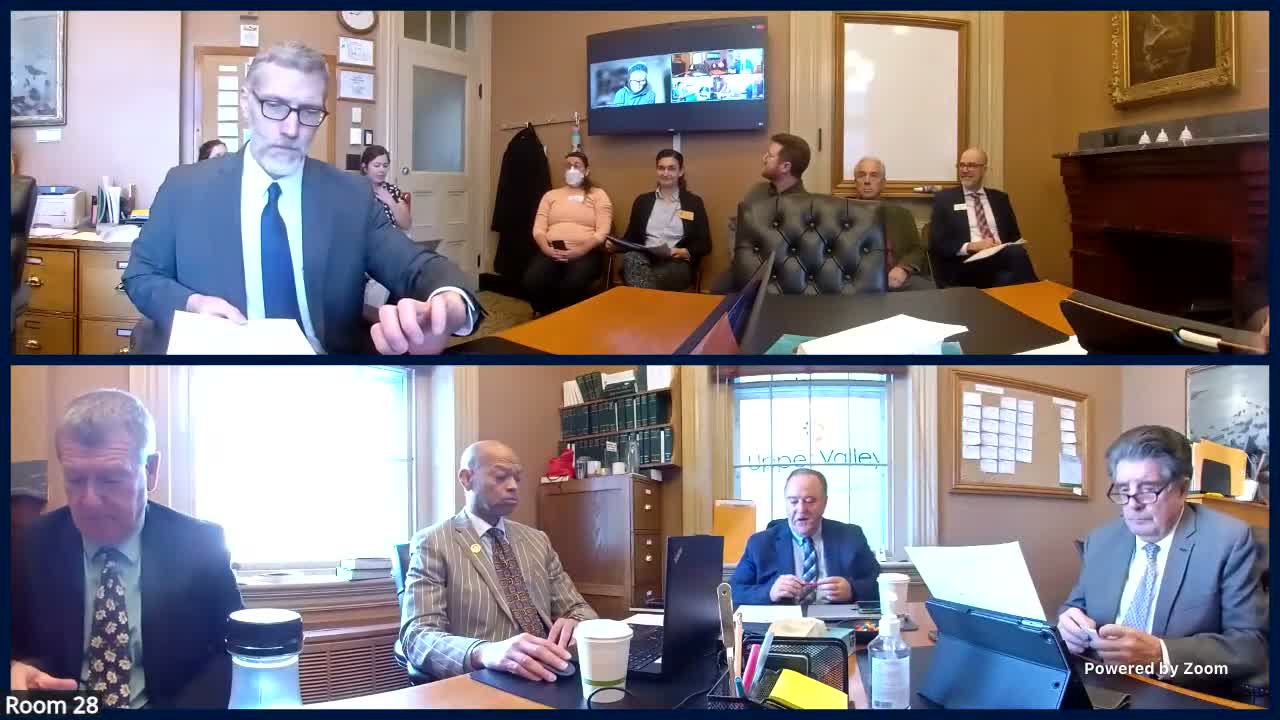
A legislative committee heard more than two hours of testimony from farmers, food‑bank leaders and program staff pressing for state support of 3 Squares Vermont (the state name for SNAP) and related farm‑support programs.
Joanna Doran, local food access director with NOFA Vermont, told the committee she and partner organizations brought three requests: $500,000 in ongoing funding for programs that help channel SNAP dollars to farmers (Crop Cash, Crop Cash Plus and FarmShare); a $5,000,000 total appropriation for fiscal 2027 for the Vermont Food Bank (with $2,000,000 for partner networks, $2,000,000 for a student/Vermonters program and $1,000,000 for readiness and emergency response); and funding for administration of the 3 Squares Vermont program to counter recent federal changes.
"3 Squares Vermont helps nearly 10% of our state buy groceries every month," Doran said. "That's approximately 63,400 people." She said Crop Cash and Crop Cash Plus both increase SNAP recipients' ability to spend benefits at farmers markets and directly with producers, increasing sales for small farms while improving access to fresh, local food.
Leslie Wisdom, director of 3 Squares Vermont in the Department for Children and Families' Economic Services Division, described how households are notified when benefits change and the department's outreach to help impacted families. "We do not share their information with any, anyone else. Their privacy is protected," Wisdom told the committee. She said the application process itself is unchanged but that recent federal rule changes alter eligibility calculations and reporting requirements.
Witnesses described those federal changes as reducing eligibility for some noncitizen households, adding new work‑or‑volunteer reporting for certain adults, and changing how shelter costs are counted — changes that, they said, are already creating confusion and may lead to benefit reductions or closures for some households.
Farmers who sell direct to consumers and supply community food programs said state funding for incentive programs translates into concrete economic activity. "Crop Cash Plus has enabled more customers to afford my products," said Jamie Skybianco, owner of Ramble Bramble Farm. Skybianco said roughly 30% of lamb and goat sales and 20% of her bread sales are supported by Crop Cash Plus, and that increased sales allowed the farm to hire additional labor.
Sarah Dias, founder of Giant Journey Barn, said small farms and households depend on a network of programs. "Funding the complete slate of the food security roadmap to 2035 allows our community food systems to function exactly as they should," Dias said, calling budgets "moral documents."
John Sale, CEO of the Vermont Food Bank, reiterated the coalition request for $5 million and described how a larger, stable appropriation would allow the food bank to forward‑contract with farmers and better align procurement with the farming calendar. He said the food bank calculates that spending on locally produced food yields meaningful economic returns to the state (the food bank cited about a $1.60 economic multiplier per local dollar spent).
Annette Mosley of CVOEO's Feeding Champlain Valley described a network of pantries and meal programs that served more than 12,000 people in 2025 and said the network is already buying significant local produce to distribute through pantries and meal sites.
Several legislators asked how the state and partner organizations are notifying recipients impacted by federal changes and whether the department can help households navigate online processes. Agency witnesses said notices of decision are issued to affected households, outreach partners help with sign‑ups, and the department will work with community organizations on communication and targeted outreach.
The committee did not take a vote. The chair thanked witnesses and said the committee had heard the testimony and would follow up with requested numbers and clarifications on administrative‑cost estimates.
Joanna Doran, local food access director with NOFA Vermont, told the committee she and partner organizations brought three requests: $500,000 in ongoing funding for programs that help channel SNAP dollars to farmers (Crop Cash, Crop Cash Plus and FarmShare); a $5,000,000 total appropriation for fiscal 2027 for the Vermont Food Bank (with $2,000,000 for partner networks, $2,000,000 for a student/Vermonters program and $1,000,000 for readiness and emergency response); and funding for administration of the 3 Squares Vermont program to counter recent federal changes.
"3 Squares Vermont helps nearly 10% of our state buy groceries every month," Doran said. "That's approximately 63,400 people." She said Crop Cash and Crop Cash Plus both increase SNAP recipients' ability to spend benefits at farmers markets and directly with producers, increasing sales for small farms while improving access to fresh, local food.
Leslie Wisdom, director of 3 Squares Vermont in the Department for Children and Families' Economic Services Division, described how households are notified when benefits change and the department's outreach to help impacted families. "We do not share their information with any, anyone else. Their privacy is protected," Wisdom told the committee. She said the application process itself is unchanged but that recent federal rule changes alter eligibility calculations and reporting requirements.
Witnesses described those federal changes as reducing eligibility for some noncitizen households, adding new work‑or‑volunteer reporting for certain adults, and changing how shelter costs are counted — changes that, they said, are already creating confusion and may lead to benefit reductions or closures for some households.
Farmers who sell direct to consumers and supply community food programs said state funding for incentive programs translates into concrete economic activity. "Crop Cash Plus has enabled more customers to afford my products," said Jamie Skybianco, owner of Ramble Bramble Farm. Skybianco said roughly 30% of lamb and goat sales and 20% of her bread sales are supported by Crop Cash Plus, and that increased sales allowed the farm to hire additional labor.
Sarah Dias, founder of Giant Journey Barn, said small farms and households depend on a network of programs. "Funding the complete slate of the food security roadmap to 2035 allows our community food systems to function exactly as they should," Dias said, calling budgets "moral documents."
John Sale, CEO of the Vermont Food Bank, reiterated the coalition request for $5 million and described how a larger, stable appropriation would allow the food bank to forward‑contract with farmers and better align procurement with the farming calendar. He said the food bank calculates that spending on locally produced food yields meaningful economic returns to the state (the food bank cited about a $1.60 economic multiplier per local dollar spent).
Annette Mosley of CVOEO's Feeding Champlain Valley described a network of pantries and meal programs that served more than 12,000 people in 2025 and said the network is already buying significant local produce to distribute through pantries and meal sites.
Several legislators asked how the state and partner organizations are notifying recipients impacted by federal changes and whether the department can help households navigate online processes. Agency witnesses said notices of decision are issued to affected households, outreach partners help with sign‑ups, and the department will work with community organizations on communication and targeted outreach.
The committee did not take a vote. The chair thanked witnesses and said the committee had heard the testimony and would follow up with requested numbers and clarifications on administrative‑cost estimates.
Don't Miss a Word: See the Full Meeting!
Go beyond summaries. Unlock every video, transcript, and key insight with a Founder Membership.
✓
Get instant access to full meeting videos
✓
Search and clip any phrase from complete transcripts
✓
Receive AI-powered summaries & custom alerts
✓
Enjoy lifetime, unrestricted access to government data
30-day money-back guarantee
