Home‑health provider says East Middlebury care home will give medically frail patients a short‑term landing to avoid repeat ER stays
February 06, 2026 | Human Services, HOUSE OF REPRESENTATIVES, Committees, Legislative , Vermont
This article was created by AI summarizing key points discussed. AI makes mistakes, so for full details and context, please refer to the video of the full meeting. Please report any errors so we can fix them. Report an error »
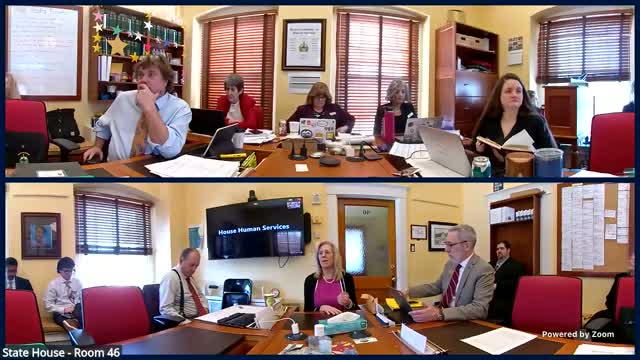
A home‑health agency representative told a House committee that the agency bought a large home in East Middlebury and plans to convert it into an eight‑bed short‑term care home aimed at preventing avoidable hospital stays.
The witness said the project began after another local provider left Addison County, producing a gap in services for medically frail residents. “We searched for over a year and found a large home in East Middlebury,” the representative said, adding that the agency is “now fundraising so that we can renovate it with stair lifts and sprinklers and all those fire safety things that we need to do.”
The representative framed the home as a short‑term “landing spot” for patients who cannot immediately return home after hospital stays – typically two to three weeks of supervised care, not long‑term nursing home placement. Staffed by home‑health clinicians and paraprofessionals, the facility would provide skilled nursing, physical therapy and case management to stabilize patients and reconnect them with community supports.
Why it matters: Committee members pressed on local capacity and alternatives. The witness noted Addison County has one nursing home with long Medicaid waits, saying that a traditional nursing facility often does not meet the immediate, short‑term needs of patients who are medically frail but not long‑term care candidates. “Our goal is to use this building and to navigate it in such a way … to figure out how that fits,” the witness said.
Regulatory and funding questions remain. The testimony referenced work with a licensing division and stated the home could be built up to meet “level 3 care home” standards if required, but the agency said it is still clarifying which regulatory pathway and funding mix (Medicaid, private pay, fundraising) will apply. The witness emphasized case management as central to the model: screening on arrival, coordinating medical follow‑up, and supporting transitions so residents do not return to emergency departments.
Committee members asked whether the model is replicable and how it would be financed. The witness said the approach could be repeated with adequate funding and staff and that the agency has experience with career‑ladder initiatives and staff training funded by prior state grants.
What’s next: The testimony concluded with committee members thanking the witness and offering to stay in touch as AHS and DCF continue budget and shelter planning. No formal actions or votes on the proposal were taken at the hearing.
The witness said the project began after another local provider left Addison County, producing a gap in services for medically frail residents. “We searched for over a year and found a large home in East Middlebury,” the representative said, adding that the agency is “now fundraising so that we can renovate it with stair lifts and sprinklers and all those fire safety things that we need to do.”
The representative framed the home as a short‑term “landing spot” for patients who cannot immediately return home after hospital stays – typically two to three weeks of supervised care, not long‑term nursing home placement. Staffed by home‑health clinicians and paraprofessionals, the facility would provide skilled nursing, physical therapy and case management to stabilize patients and reconnect them with community supports.
Why it matters: Committee members pressed on local capacity and alternatives. The witness noted Addison County has one nursing home with long Medicaid waits, saying that a traditional nursing facility often does not meet the immediate, short‑term needs of patients who are medically frail but not long‑term care candidates. “Our goal is to use this building and to navigate it in such a way … to figure out how that fits,” the witness said.
Regulatory and funding questions remain. The testimony referenced work with a licensing division and stated the home could be built up to meet “level 3 care home” standards if required, but the agency said it is still clarifying which regulatory pathway and funding mix (Medicaid, private pay, fundraising) will apply. The witness emphasized case management as central to the model: screening on arrival, coordinating medical follow‑up, and supporting transitions so residents do not return to emergency departments.
Committee members asked whether the model is replicable and how it would be financed. The witness said the approach could be repeated with adequate funding and staff and that the agency has experience with career‑ladder initiatives and staff training funded by prior state grants.
What’s next: The testimony concluded with committee members thanking the witness and offering to stay in touch as AHS and DCF continue budget and shelter planning. No formal actions or votes on the proposal were taken at the hearing.
Don't Miss a Word: See the Full Meeting!
Go beyond summaries. Unlock every video, transcript, and key insight with a Founder Membership.
✓
Get instant access to full meeting videos
✓
Search and clip any phrase from complete transcripts
✓
Receive AI-powered summaries & custom alerts
✓
Enjoy lifetime, unrestricted access to government data
30-day money-back guarantee
