Leon County committee declines immediate charter change for inspector general after questions on cost and overlap
February 06, 2026 | Leon County, Florida
This article was created by AI summarizing key points discussed. AI makes mistakes, so for full details and context, please refer to the video of the full meeting. Please report any errors so we can fix them. Report an error »
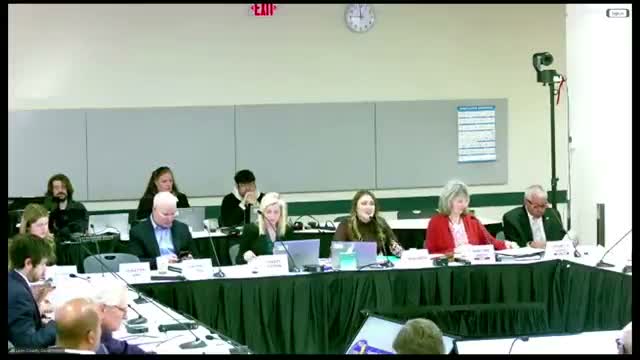
The Leon County Charter Review Committee debated whether to place a charter amendment establishing an independent office of inspector general before the Board of County Commissioners, but on Feb. 5 the committee voted 16–2 to accept the staff report and take no further action at this time.
Staff presenter Nikki described the typical role of offices of inspector general (OIGs) as detecting, investigating and preventing fraud, abuse and mismanagement and compared Florida examples, noting OIG budgets in other charter counties average about $4.5 million with 12–42 staff. Nikki said many OIG functions — auditing, complaint intake, contract oversight — are already provided in Leon County through the clerk’s audit processes, existing complaint procedures and internal human-resources investigations.
Several public speakers urged the committee to advance the charter amendment. Peter Buttsin, a Tallahassee resident, argued an OIG would be a preventive investment and proposed “an initial budget of under $1,000,000 for an office of inspector general,” saying that even a small office could boost public trust. Ernie Payne, who originally proposed the idea to the committee, said the charter signals government priorities and that establishing oversight infrastructure demonstrates a commitment to transparent governance. Ben Wilcox of Citizens for Ethics Reform also urged placing an independent inspector general on the ballot so voters could decide.
County Attorney (unidentified) clarified how complaints are handled today under county law: the Leon County code provides procedures for reporting and investigating alleged violations (cited in discussion as sections 2-653 and 2-654 and section 1-9 of the Leon County code of laws). The county attorney said most noncriminal allegations are currently investigated by human resources or the clerk’s auditor and noted the code’s default prosecution approach references ordinance violation procedures; “you can be fined up to $500” and may face “up to 60 days in jail” under the county’s enforcement mechanics, the attorney said.
Members questioned whether the county receives sufficient cases to justify a full-time office. Staff and the county attorney said reports of waste, fraud and abuse had been rare in recent years — the county attorney said there was essentially one allegation of waste, fraud or abuse reported in the last six years that produced a report in 2025 — and emphasized that criminal fraud allegations would be referred to law enforcement (FDLE or the sheriff’s office). Several members also raised concerns about overlap with constitutionally required auditing functions performed by the clerk of the court and asked how an OIG would coordinate authority without infringing on the clerk’s statutory role.
Dr. Howard Kessler made the substantive motion to advance option 2 (establish an office of inspector general in the charter) but the committee proceeded through extended questioning and procedural votes. After debate and procedural action the committee ultimately adopted option 1 — to accept the staff report and take no further action on the proposed charter amendment — by a 16–2 roll-call vote.
The committee asked staff to return with additional fiscal comparisons and possible structural alternatives if members want to revisit the matter. The committee adjourned for a short break after the vote.
Staff presenter Nikki described the typical role of offices of inspector general (OIGs) as detecting, investigating and preventing fraud, abuse and mismanagement and compared Florida examples, noting OIG budgets in other charter counties average about $4.5 million with 12–42 staff. Nikki said many OIG functions — auditing, complaint intake, contract oversight — are already provided in Leon County through the clerk’s audit processes, existing complaint procedures and internal human-resources investigations.
Several public speakers urged the committee to advance the charter amendment. Peter Buttsin, a Tallahassee resident, argued an OIG would be a preventive investment and proposed “an initial budget of under $1,000,000 for an office of inspector general,” saying that even a small office could boost public trust. Ernie Payne, who originally proposed the idea to the committee, said the charter signals government priorities and that establishing oversight infrastructure demonstrates a commitment to transparent governance. Ben Wilcox of Citizens for Ethics Reform also urged placing an independent inspector general on the ballot so voters could decide.
County Attorney (unidentified) clarified how complaints are handled today under county law: the Leon County code provides procedures for reporting and investigating alleged violations (cited in discussion as sections 2-653 and 2-654 and section 1-9 of the Leon County code of laws). The county attorney said most noncriminal allegations are currently investigated by human resources or the clerk’s auditor and noted the code’s default prosecution approach references ordinance violation procedures; “you can be fined up to $500” and may face “up to 60 days in jail” under the county’s enforcement mechanics, the attorney said.
Members questioned whether the county receives sufficient cases to justify a full-time office. Staff and the county attorney said reports of waste, fraud and abuse had been rare in recent years — the county attorney said there was essentially one allegation of waste, fraud or abuse reported in the last six years that produced a report in 2025 — and emphasized that criminal fraud allegations would be referred to law enforcement (FDLE or the sheriff’s office). Several members also raised concerns about overlap with constitutionally required auditing functions performed by the clerk of the court and asked how an OIG would coordinate authority without infringing on the clerk’s statutory role.
Dr. Howard Kessler made the substantive motion to advance option 2 (establish an office of inspector general in the charter) but the committee proceeded through extended questioning and procedural votes. After debate and procedural action the committee ultimately adopted option 1 — to accept the staff report and take no further action on the proposed charter amendment — by a 16–2 roll-call vote.
The committee asked staff to return with additional fiscal comparisons and possible structural alternatives if members want to revisit the matter. The committee adjourned for a short break after the vote.
Don't Miss a Word: See the Full Meeting!
Go beyond summaries. Unlock every video, transcript, and key insight with a Founder Membership.
✓
Get instant access to full meeting videos
✓
Search and clip any phrase from complete transcripts
✓
Receive AI-powered summaries & custom alerts
✓
Enjoy lifetime, unrestricted access to government data
30-day money-back guarantee
