Panel narrows bill to protect pregnant women on opioid-use treatment from child-abuse classification
February 06, 2026 | 2026 Legislature VA, Virginia
This article was created by AI summarizing key points discussed. AI makes mistakes, so for full details and context, please refer to the video of the full meeting. Please report any errors so we can fix them. Report an error »
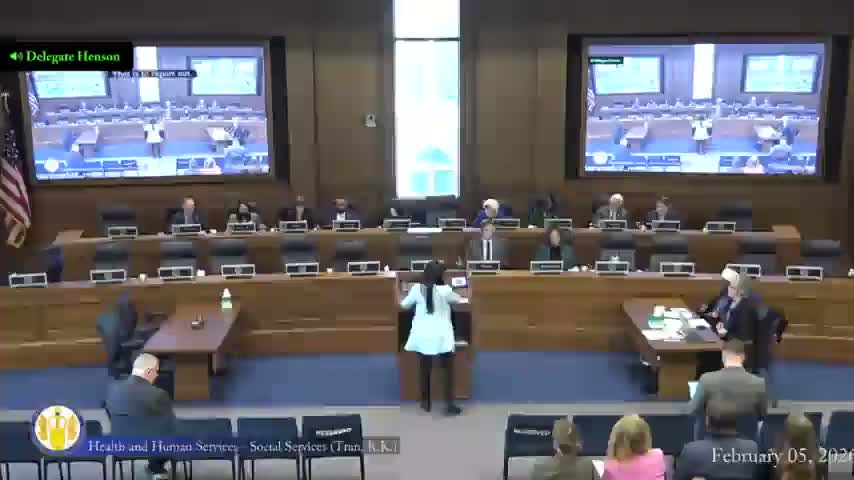
Delegate Del. Gardner told the Social Services Subcommittee HB283 removes ambiguity in state code so that "if a pregnant woman is taking a prescribed medication under the care of her physician, that she is not engaged in child abuse or neglect solely for taking that controlled substance as prescribed." Gardner said the change would clear up inconsistency across states and align practice with Virginia Department of Social Services guidance.
Supporters included people with lived experience and medical organizations. Lane Seabert, who described herself as "a person in long-term recovery," urged passage and said the law as written presented a "horrific choice" for pregnant women: discontinue medication and risk relapse, or continue treatment and risk child-protection consequences. The Medical Society of Virginia and the American College of Obstetricians and Gynecologists testified their organizations back the bill.
Dr. Elise Osterweil, a toxicologist who identified professional concerns and said the language "is not specific enough," opposed the bill as drafted and urged precision about which substances and clinical scenarios are covered. The committee adopted an amendment that narrowed the bill to opioid-addiction treatment; the amended bill reported out 5–1 in committee.
Supporters framed the bill as protecting maternal and infant health by removing a statutory disincentive to seek evidence-based treatment; opponents asked for clearer, narrower statutory definitions to avoid unintended coverage of other exposures. The committee's action sends the narrower, amended bill forward to the next stage of review.
Supporters included people with lived experience and medical organizations. Lane Seabert, who described herself as "a person in long-term recovery," urged passage and said the law as written presented a "horrific choice" for pregnant women: discontinue medication and risk relapse, or continue treatment and risk child-protection consequences. The Medical Society of Virginia and the American College of Obstetricians and Gynecologists testified their organizations back the bill.
Dr. Elise Osterweil, a toxicologist who identified professional concerns and said the language "is not specific enough," opposed the bill as drafted and urged precision about which substances and clinical scenarios are covered. The committee adopted an amendment that narrowed the bill to opioid-addiction treatment; the amended bill reported out 5–1 in committee.
Supporters framed the bill as protecting maternal and infant health by removing a statutory disincentive to seek evidence-based treatment; opponents asked for clearer, narrower statutory definitions to avoid unintended coverage of other exposures. The committee's action sends the narrower, amended bill forward to the next stage of review.
View the Full Meeting & All Its Details
This article offers just a summary. Unlock complete video, transcripts, and insights as a Founder Member.
✓
Watch full, unedited meeting videos
✓
Search every word spoken in unlimited transcripts
✓
AI summaries & real-time alerts (all government levels)
✓
Permanent access to expanding government content
30-day money-back guarantee
