Researchers and clinicians clash over prescribing authority for doctoral psychologists in H.237
February 06, 2026 | Health & Welfare, SENATE, Committees, Legislative , Vermont
This article was created by AI summarizing key points discussed. AI makes mistakes, so for full details and context, please refer to the video of the full meeting. Please report any errors so we can fix them. Report an error »
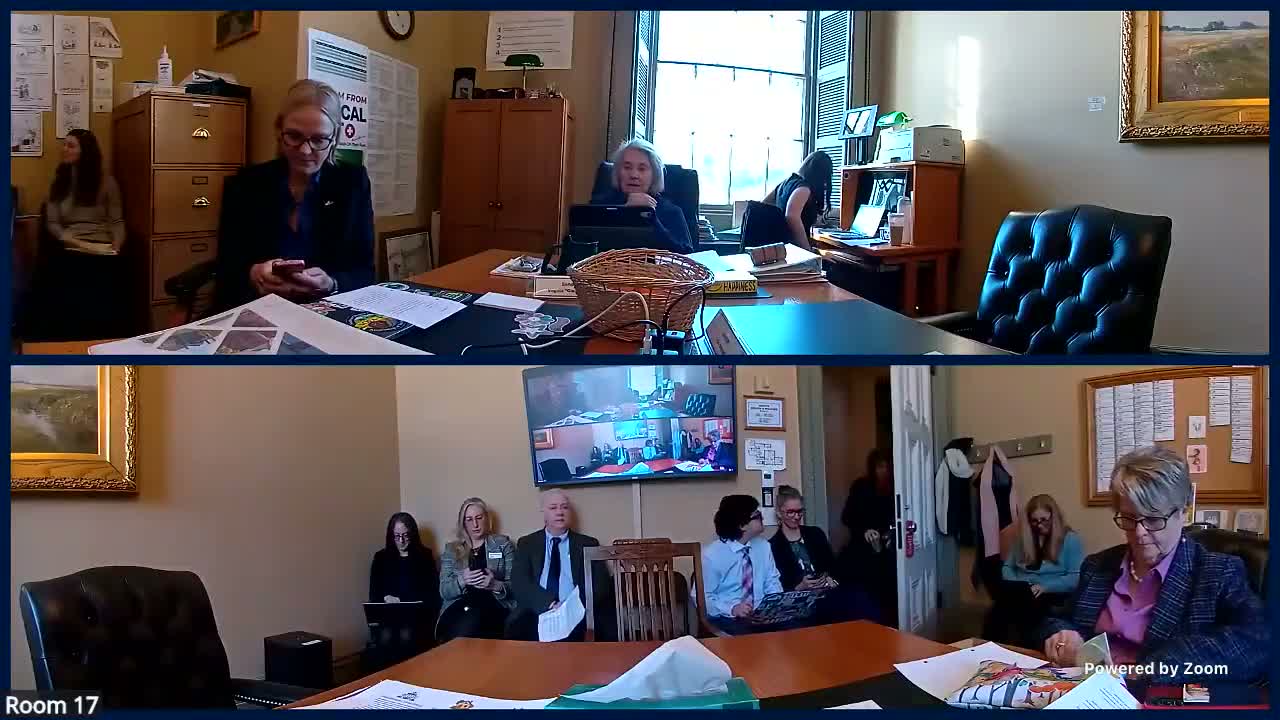
The Senate Health & Welfare Committee heard competing testimony Feb. 5 on H.237, a bill to authorize appropriately trained doctoral psychologists to prescribe medications for mental-health treatment. Witnesses presented evidence on safety, workforce impact and alternative strategies to expand access to psychiatric medications.
Dr. Phil Hughes, a health-services researcher, summarized peer‑reviewed and policy-simulation research suggesting prescribing psychologists in other states had similar or better safety outcomes on several measures and that stricter clinical‑training requirements proposed in Vermont would compare favorably to states with existing authority. "Prescribing psychologists appear to be at least as safe as psychiatrists," Hughes said, and he cited modeling that the policy could reduce prescriber shortages in Vermont.
Several clinicians urged caution. Dr. George Vonna and Dr. Evan Eiler raised concerns about supervision, residency-level training and the complexity of managing systemic medical issues across prescribers. Eiler argued Vermont can expand access more effectively by investing in collaborative-care models, telemedicine and incentives such as loan repayment and housing, rather than establishing a new licensing and oversight system.
Supporters including Dr. Sarah Hastings (a licensed psychologist and professor) highlighted continuity of care benefits when psychotherapy and medication management are provided by the same clinician and noted safeguards written into the bill, including advanced training and supervised practice.
The committee did not take a vote. Members asked witnesses to submit additional written materials and data (for example, training standards in other states and detailed safety analyses) to inform possible amendments and a future markup.
Dr. Phil Hughes, a health-services researcher, summarized peer‑reviewed and policy-simulation research suggesting prescribing psychologists in other states had similar or better safety outcomes on several measures and that stricter clinical‑training requirements proposed in Vermont would compare favorably to states with existing authority. "Prescribing psychologists appear to be at least as safe as psychiatrists," Hughes said, and he cited modeling that the policy could reduce prescriber shortages in Vermont.
Several clinicians urged caution. Dr. George Vonna and Dr. Evan Eiler raised concerns about supervision, residency-level training and the complexity of managing systemic medical issues across prescribers. Eiler argued Vermont can expand access more effectively by investing in collaborative-care models, telemedicine and incentives such as loan repayment and housing, rather than establishing a new licensing and oversight system.
Supporters including Dr. Sarah Hastings (a licensed psychologist and professor) highlighted continuity of care benefits when psychotherapy and medication management are provided by the same clinician and noted safeguards written into the bill, including advanced training and supervised practice.
The committee did not take a vote. Members asked witnesses to submit additional written materials and data (for example, training standards in other states and detailed safety analyses) to inform possible amendments and a future markup.
View the Full Meeting & All Its Details
This article offers just a summary. Unlock complete video, transcripts, and insights as a Founder Member.
✓
Watch full, unedited meeting videos
✓
Search every word spoken in unlimited transcripts
✓
AI summaries & real-time alerts (all government levels)
✓
Permanent access to expanding government content
30-day money-back guarantee
