Glynn County commissioners approve rezoning of 211‑acre Buckswamp Road tract with 2.5‑unit density cap
February 06, 2026 | Glynn County, Georgia
This article was created by AI summarizing key points discussed. AI makes mistakes, so for full details and context, please refer to the video of the full meeting. Please report any errors so we can fix them. Report an error »
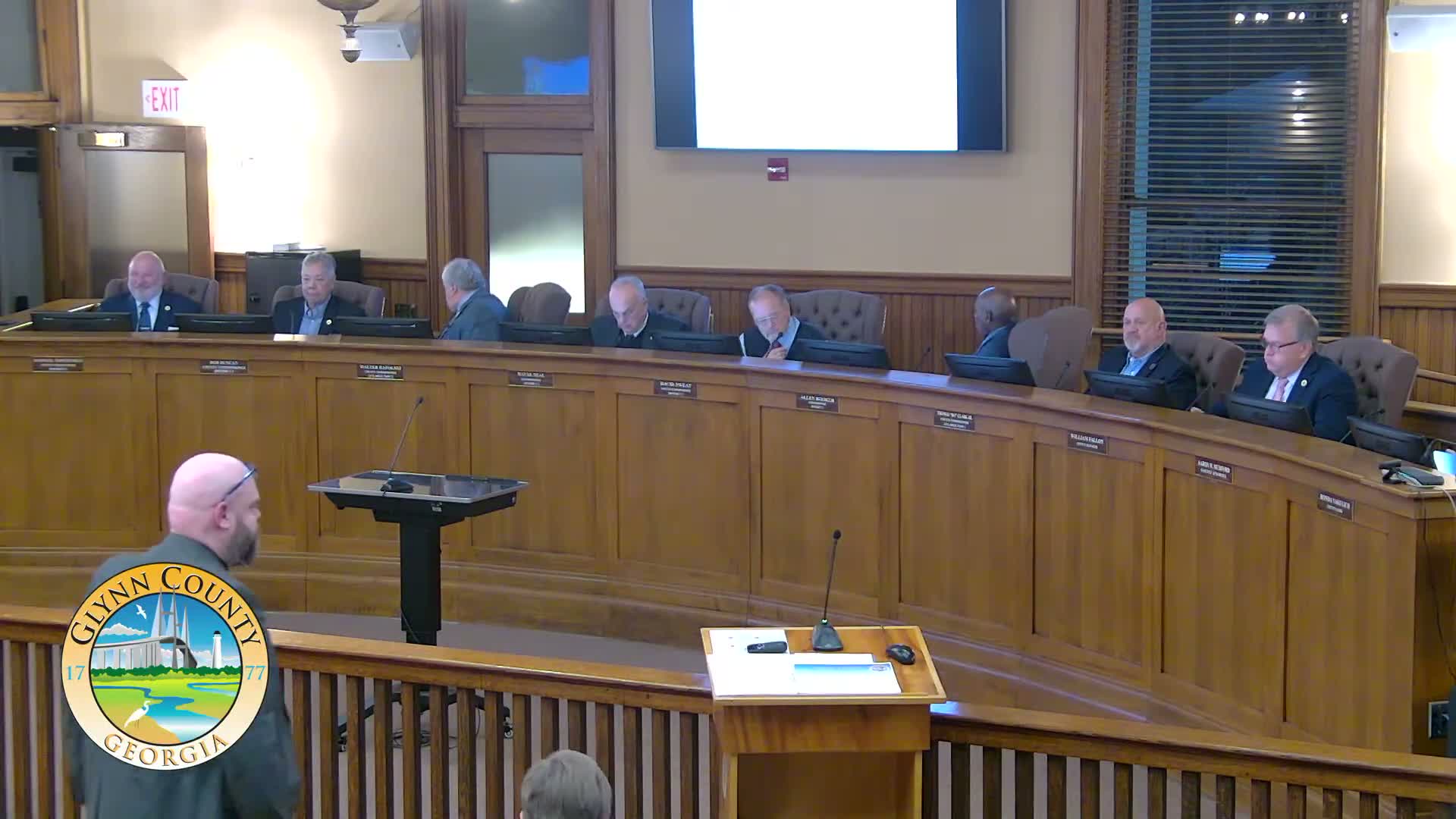
The Glynn County Board of Commissioners on Feb. 5 approved a rezoning that allows General Residential use on a 211‑acre portion of property at 1572 Buckswamp Road, placing a condition that the maximum residential density not exceed 2.5 dwelling units per gross acre. The motion by Commissioner Tosteson passed 5‑2 after a lengthy public hearing and deliberation.
The rezoning request, filed for a portion of a larger Weyerhaeuser‑owned tract, initially sought a GR designation with a cap of three units per acre and was supported by the applicant’s agent, Wesley Franks, who said the application “brings down the density from 10 to 3, which is in the realm of a low density development.” Franks and other proponents told the board that existing water and sewer mains and planned infrastructure make the site appropriate for managed residential growth.
Opponents — including neighbors and conservation groups — urged denial or deferral, citing traffic, wetland and flood risks, loss of rural character, and the lack of a detailed, phase‑by‑phase traffic and wetland mitigation plan. Kat Montgomery, an advocacy organizer, told commissioners, “We stand with the community and we ask you to deny this rezone,” arguing the county should require a more detailed site plan and trip analysis before approving higher density.
Commissioners discussed compromise options at the dais. Tosteson said the action would simply “establish the rezoning classifications that place a cap on the maximum residential density,” not approve any subdivision or site plan. After the applicant indicated willingness to accept a lower cap, Tosteson moved to approve the rezoning subject to the 2.5 dwelling‑units‑per‑acre cap and a requirement that the owner coordinate with county staff on a potential traffic study; the motion was seconded and passed 5‑2.
The county planner had described a sketch plan showing up to 633 lots under higher densities; the approved condition reduces that theoretical maximum and requires future, phase‑specific study and permitting before any platting or construction. Commissioners and supporters framed the decision as a balance between conserving rural character and enabling housing supply tied to existing utilities; opponents said the cap and coordination requirement do not replace the need for a full traffic and wetlands assessment before rezoning.
Next steps: rezoning establishes allowable density and zoning classification; any developer will still need to submit preliminary plats, traffic studies (if required by staff), construction plans and stormwater and permitting approvals before building begins.
The rezoning request, filed for a portion of a larger Weyerhaeuser‑owned tract, initially sought a GR designation with a cap of three units per acre and was supported by the applicant’s agent, Wesley Franks, who said the application “brings down the density from 10 to 3, which is in the realm of a low density development.” Franks and other proponents told the board that existing water and sewer mains and planned infrastructure make the site appropriate for managed residential growth.
Opponents — including neighbors and conservation groups — urged denial or deferral, citing traffic, wetland and flood risks, loss of rural character, and the lack of a detailed, phase‑by‑phase traffic and wetland mitigation plan. Kat Montgomery, an advocacy organizer, told commissioners, “We stand with the community and we ask you to deny this rezone,” arguing the county should require a more detailed site plan and trip analysis before approving higher density.
Commissioners discussed compromise options at the dais. Tosteson said the action would simply “establish the rezoning classifications that place a cap on the maximum residential density,” not approve any subdivision or site plan. After the applicant indicated willingness to accept a lower cap, Tosteson moved to approve the rezoning subject to the 2.5 dwelling‑units‑per‑acre cap and a requirement that the owner coordinate with county staff on a potential traffic study; the motion was seconded and passed 5‑2.
The county planner had described a sketch plan showing up to 633 lots under higher densities; the approved condition reduces that theoretical maximum and requires future, phase‑specific study and permitting before any platting or construction. Commissioners and supporters framed the decision as a balance between conserving rural character and enabling housing supply tied to existing utilities; opponents said the cap and coordination requirement do not replace the need for a full traffic and wetlands assessment before rezoning.
Next steps: rezoning establishes allowable density and zoning classification; any developer will still need to submit preliminary plats, traffic studies (if required by staff), construction plans and stormwater and permitting approvals before building begins.
View the Full Meeting & All Its Details
This article offers just a summary. Unlock complete video, transcripts, and insights as a Founder Member.
✓
Watch full, unedited meeting videos
✓
Search every word spoken in unlimited transcripts
✓
AI summaries & real-time alerts (all government levels)
✓
Permanent access to expanding government content
30-day money-back guarantee
