Subcommittee advances bill to expand and professionalize Virginia Parole Board, add juvenile-parole standards
February 06, 2026 | 2026 Legislature VA, Virginia
This article was created by AI summarizing key points discussed. AI makes mistakes, so for full details and context, please refer to the video of the full meeting. Please report any errors so we can fix them. Report an error »
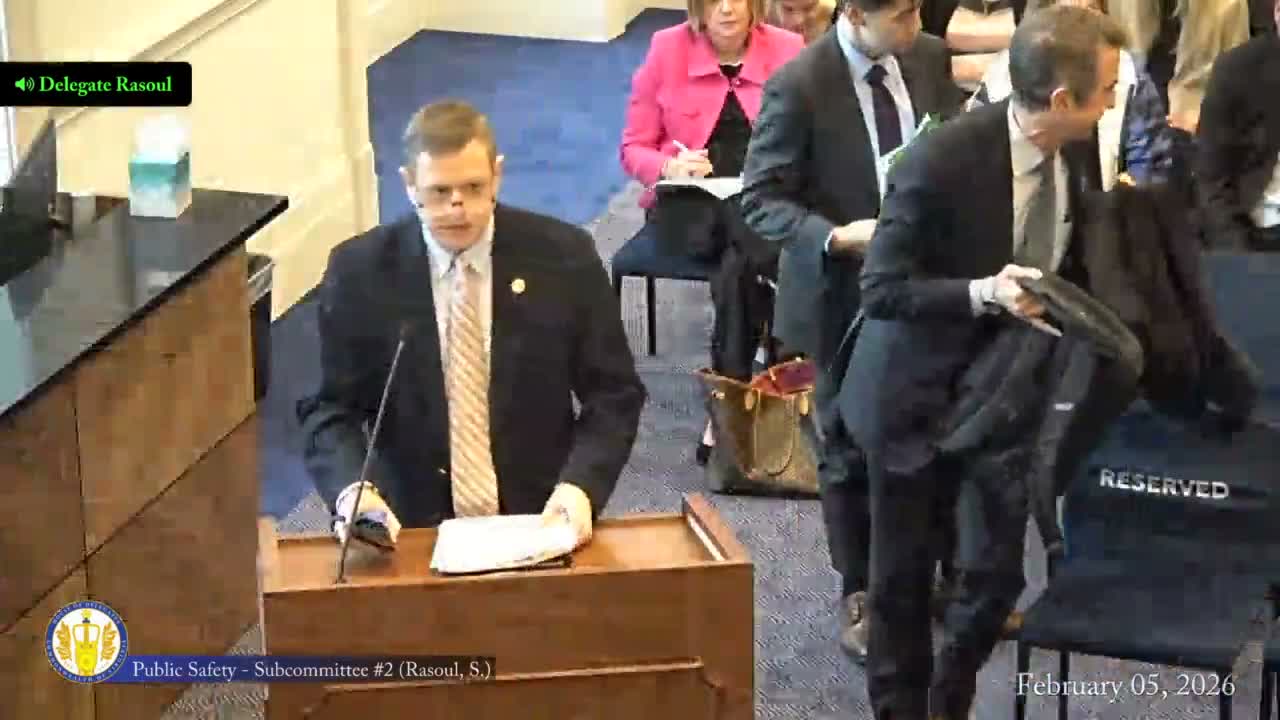
Delegate Luke Hope, sponsor of the substitute to House Bill 318, told the subcommittee the measure codifies a "meaningful opportunity for parole" for people who committed crimes as juveniles, expands the parole board from five to at least 11 members and requires members to have "significant professional experience" in criminal law, corrections, reentry or victim services. He said the bill does not automatically expand parole eligibility but ensures that eligible people receive hearings consistent with constitutional principles and Supreme Court precedent.
Colleen Maxwell, a staff member of the Virginia Parole Board, told the panel the bill's staggered terms and expanded membership would address current capacity problems and prevent paralysis when board seats are vacant. Maxwell said a prisoner becomes eligible for juvenile parole in Virginia typically after 20 years when certain life or lengthy felony sentences apply and that the bill would broaden mitigating factors considered at hearings.
Supporters including Hannah Potts of Up to Date In-Side Virginia, advocates from the Humanization Project and attorneys from the Legal Aid Justice Center argued that the substitute aligns parole practice with research on adolescent brain development and provides consistent processes for reviewing rehabilitation and maturity. Maisie Osteen (Legal Aid Justice Center) said expanding membership would reduce delays stemming from unanimous-vote requirements when a single board member is absent.
Committee members asked how board members would be selected and whether appointment criteria would apply across governor, House and Senate appointees. Delegate Hope pointed to statutory language in the substitute requiring professional experience for "all members of the board," and said the change gives the General Assembly more input into appointments.
Delegate Seibold moved to report the substitute; the motion passed and HB 318 was reported with substitute 5-2 to Appropriations. The bill includes a delayed enactment to allow regulations and implementation steps to be completed before the change takes effect.
Colleen Maxwell, a staff member of the Virginia Parole Board, told the panel the bill's staggered terms and expanded membership would address current capacity problems and prevent paralysis when board seats are vacant. Maxwell said a prisoner becomes eligible for juvenile parole in Virginia typically after 20 years when certain life or lengthy felony sentences apply and that the bill would broaden mitigating factors considered at hearings.
Supporters including Hannah Potts of Up to Date In-Side Virginia, advocates from the Humanization Project and attorneys from the Legal Aid Justice Center argued that the substitute aligns parole practice with research on adolescent brain development and provides consistent processes for reviewing rehabilitation and maturity. Maisie Osteen (Legal Aid Justice Center) said expanding membership would reduce delays stemming from unanimous-vote requirements when a single board member is absent.
Committee members asked how board members would be selected and whether appointment criteria would apply across governor, House and Senate appointees. Delegate Hope pointed to statutory language in the substitute requiring professional experience for "all members of the board," and said the change gives the General Assembly more input into appointments.
Delegate Seibold moved to report the substitute; the motion passed and HB 318 was reported with substitute 5-2 to Appropriations. The bill includes a delayed enactment to allow regulations and implementation steps to be completed before the change takes effect.
View the Full Meeting & All Its Details
This article offers just a summary. Unlock complete video, transcripts, and insights as a Founder Member.
✓
Watch full, unedited meeting videos
✓
Search every word spoken in unlimited transcripts
✓
AI summaries & real-time alerts (all government levels)
✓
Permanent access to expanding government content
30-day money-back guarantee
