Regental presidents outline enrollment gains, workforce ties and maintenance needs at appropriations hearing
February 06, 2026 | 2025 Legislative SD, South Dakota
This article was created by AI summarizing key points discussed. AI makes mistakes, so for full details and context, please refer to the video of the full meeting. Please report any errors so we can fix them. Report an error »
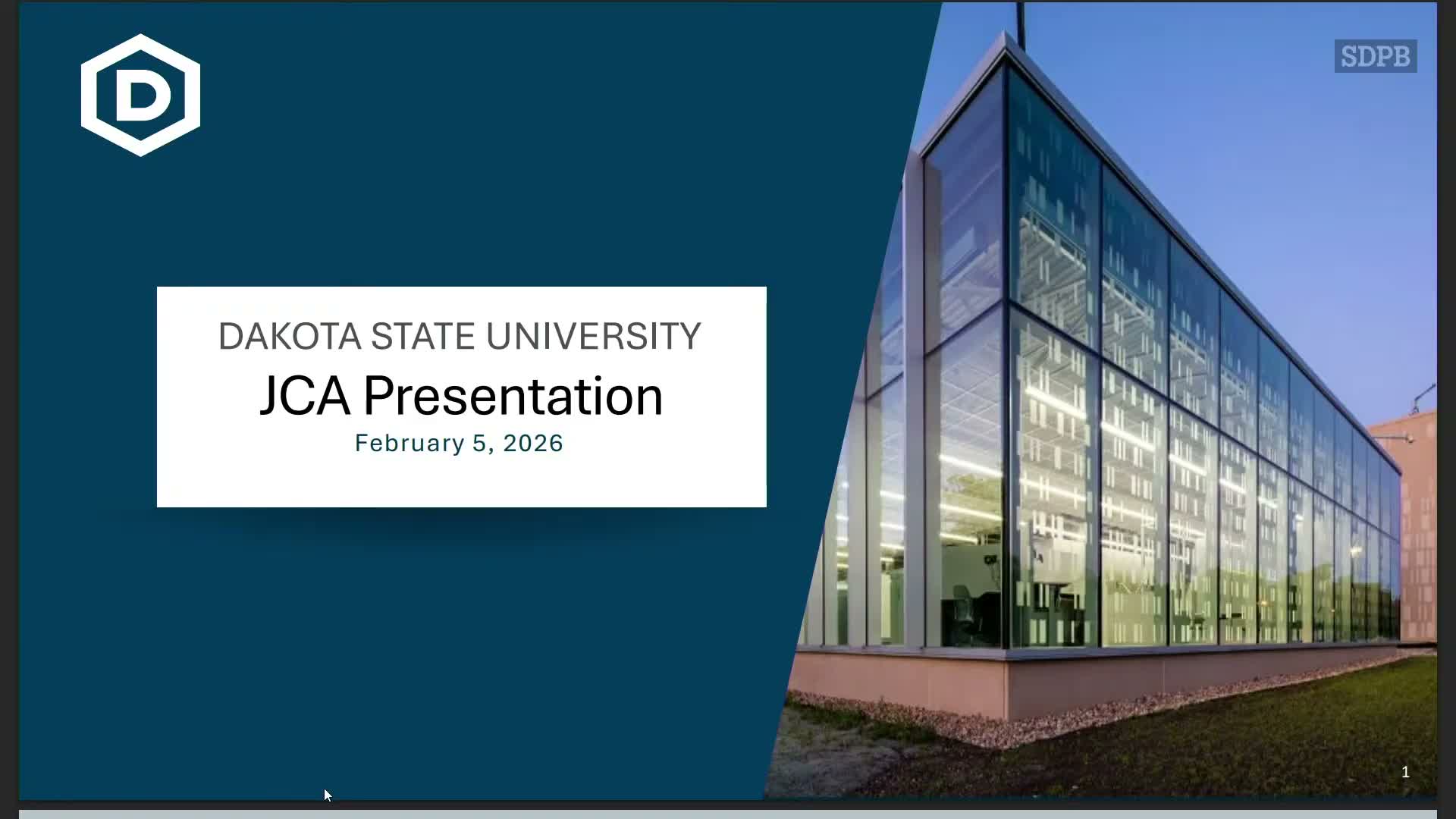
The Joint Committee on Appropriations heard budget presentations on Feb. 5 from four Regental institutions, with presidents stressing enrollment trends, workforce partnerships and campus maintenance needs.
Brian Tandy, president of the South Dakota School of Mines and Technology, told the committee Mines has ‘‘just over 2,500 students’’ (about 2,200 undergraduates and roughly 363 graduate students) and emphasized low per-credit tuition on his slide. He said Mines awarded more than $5 million in scholarships last year and closed a $120 million fundraising campaign. Tandy highlighted student outcomes—an 83 percent retention rate, 537 degrees awarded last year and a 97 percent placement rate in graduates’ fields—calling the average starting salary ‘‘just over $77,000.’’ He described new programs in data science and plans for robotics and aerospace, a newly created Center for Education Innovation to expand work-based learning, and research growth from roughly $17 million to more than $30 million in awards in recent years. On technology transfer, Tandy explained the campus typically owns IP developed through university employment and licenses it for royalties that are shared with inventors. He also reported a $27 million-plus deferred-maintenance backlog and asked for continued M&R funding.
Steve Elliott, president of Black Hills State University, said his institution’s headcount is 3,425 and that retention has reached 72 percent. Elliott noted increased enrollments at the Rapid City campus, an expanding portfolio of workforce-driven programs and affordability efforts including reduced military tuition tied to Ellsworth Air Force Base. He said 64 percent of Black Hills State students take federal loans and that average borrower debt for those students is about $26,000; Elliott described ongoing scholarship fundraising and a new U.S. Department of Education SimCivics grant worth $2.1 million over three years to expand civics education for pre-service teachers.
Alan LeFave, president of Northern State University, outlined enrollment of roughly 3,700 students with notable transfer-student growth and said scholarships awarded last year approached $4 million. LeFave emphasized a new nursing program with 105 enrolled as of Jan. 26 and clinical partnerships stretching across rural communities, and he described private fundraising that has supported campus improvements.
José‑Marie Griffiths, president of Dakota State University, reported enrollment increases (about 3,842 students) and summarized two state appropriations: a quantum-information appropriation (about $3.0 million across institutions) and the $30 million cyber expansion awarded in 2022. Griffiths described the Governor’s Cyber Academy (dual-degree, high-school juniors/seniors), apprenticeship pathways and a Denny Sanford–funded secure facility in Sioux Falls intended to house research and employer partners. She said DSU’s job-placement rate within six months exceeds 99 percent and cited growth in South Dakota cyber employment that the university has helped fuel.
Committee members asked follow-ups on career fairs and employer demand, revenue sharing for commercialization, the scope and costs of facility and IT investments, and program accreditation timelines. The committee voted earlier to approve prior minutes and, at the close of the morning session, voted to adjourn. The committee scheduled additional hearings and follow-ups as campuses continue to refine budget requests and planned capital or M&R projects.
The hearing provides lawmakers with enrollment and workforce-placement metrics, details about federal and state grants supporting research and education, and a renewed emphasis from university leaders on maintenance and repair needs and industry partnerships that they say deliver local jobs.
Brian Tandy, president of the South Dakota School of Mines and Technology, told the committee Mines has ‘‘just over 2,500 students’’ (about 2,200 undergraduates and roughly 363 graduate students) and emphasized low per-credit tuition on his slide. He said Mines awarded more than $5 million in scholarships last year and closed a $120 million fundraising campaign. Tandy highlighted student outcomes—an 83 percent retention rate, 537 degrees awarded last year and a 97 percent placement rate in graduates’ fields—calling the average starting salary ‘‘just over $77,000.’’ He described new programs in data science and plans for robotics and aerospace, a newly created Center for Education Innovation to expand work-based learning, and research growth from roughly $17 million to more than $30 million in awards in recent years. On technology transfer, Tandy explained the campus typically owns IP developed through university employment and licenses it for royalties that are shared with inventors. He also reported a $27 million-plus deferred-maintenance backlog and asked for continued M&R funding.
Steve Elliott, president of Black Hills State University, said his institution’s headcount is 3,425 and that retention has reached 72 percent. Elliott noted increased enrollments at the Rapid City campus, an expanding portfolio of workforce-driven programs and affordability efforts including reduced military tuition tied to Ellsworth Air Force Base. He said 64 percent of Black Hills State students take federal loans and that average borrower debt for those students is about $26,000; Elliott described ongoing scholarship fundraising and a new U.S. Department of Education SimCivics grant worth $2.1 million over three years to expand civics education for pre-service teachers.
Alan LeFave, president of Northern State University, outlined enrollment of roughly 3,700 students with notable transfer-student growth and said scholarships awarded last year approached $4 million. LeFave emphasized a new nursing program with 105 enrolled as of Jan. 26 and clinical partnerships stretching across rural communities, and he described private fundraising that has supported campus improvements.
José‑Marie Griffiths, president of Dakota State University, reported enrollment increases (about 3,842 students) and summarized two state appropriations: a quantum-information appropriation (about $3.0 million across institutions) and the $30 million cyber expansion awarded in 2022. Griffiths described the Governor’s Cyber Academy (dual-degree, high-school juniors/seniors), apprenticeship pathways and a Denny Sanford–funded secure facility in Sioux Falls intended to house research and employer partners. She said DSU’s job-placement rate within six months exceeds 99 percent and cited growth in South Dakota cyber employment that the university has helped fuel.
Committee members asked follow-ups on career fairs and employer demand, revenue sharing for commercialization, the scope and costs of facility and IT investments, and program accreditation timelines. The committee voted earlier to approve prior minutes and, at the close of the morning session, voted to adjourn. The committee scheduled additional hearings and follow-ups as campuses continue to refine budget requests and planned capital or M&R projects.
The hearing provides lawmakers with enrollment and workforce-placement metrics, details about federal and state grants supporting research and education, and a renewed emphasis from university leaders on maintenance and repair needs and industry partnerships that they say deliver local jobs.
View the Full Meeting & All Its Details
This article offers just a summary. Unlock complete video, transcripts, and insights as a Founder Member.
✓
Watch full, unedited meeting videos
✓
Search every word spoken in unlimited transcripts
✓
AI summaries & real-time alerts (all government levels)
✓
Permanent access to expanding government content
30-day money-back guarantee
