Senate committee advances bill creating three‑judge panels for select state constitutional cases amid public concern
February 05, 2026 | 2026 Utah Legislature, Utah Legislature, Utah Legislative Branch, Utah
This article was created by AI summarizing key points discussed. AI makes mistakes, so for full details and context, please refer to the video of the full meeting. Please report any errors so we can fix them. Report an error »
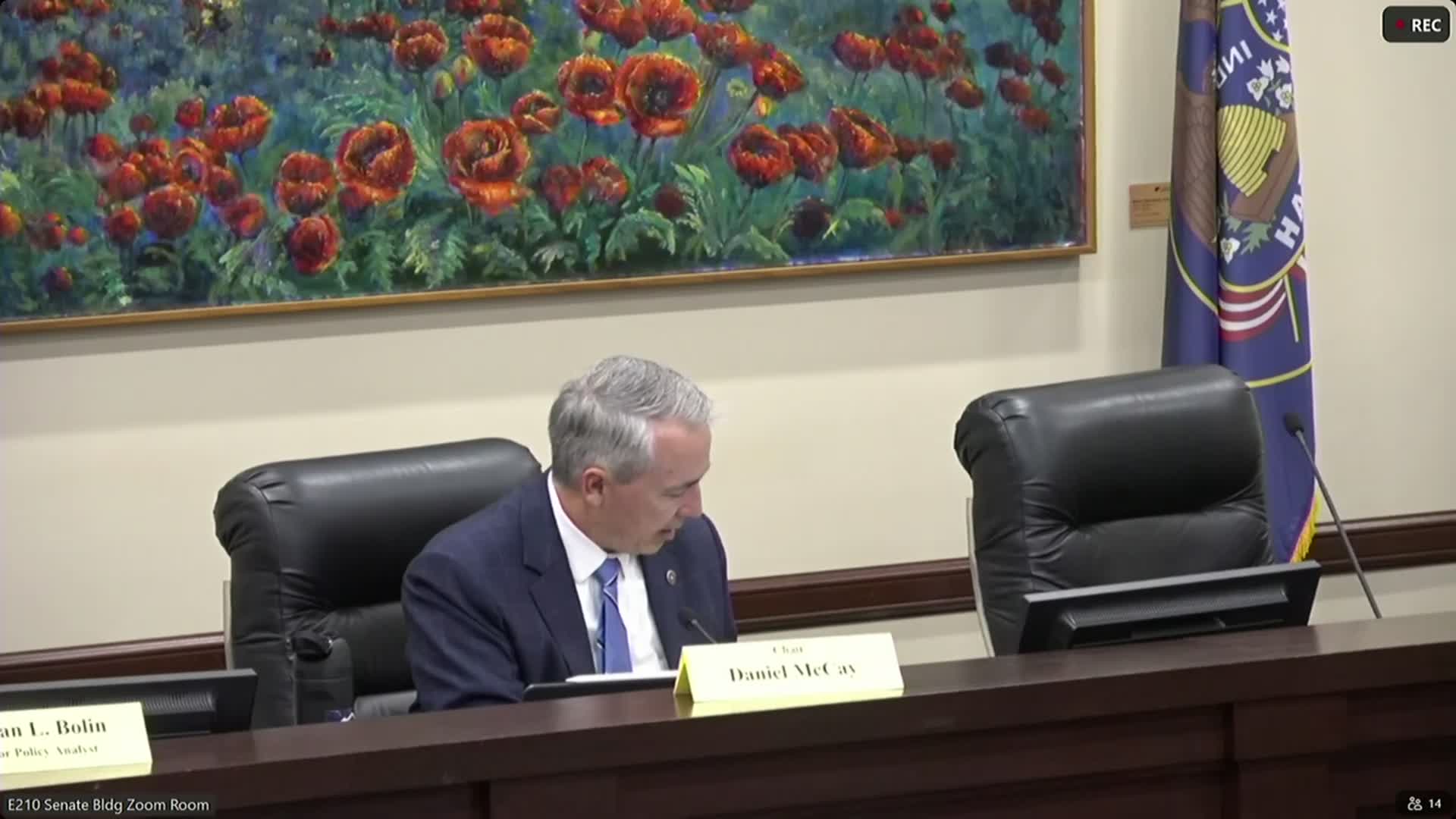
The Senate Revenue & Taxation Committee voted Feb. 5 to pass out Second Substitute HB 392 with a favorable recommendation, moving a controversial proposal that would let the legislature, governor or attorney general seek removal of certain constitutional or facial‑law challenges from a single district judge to a randomly selected three‑judge district panel.
Representative McPherson, the bill sponsor, said the measure is designed to bring additional judicial minds and geographic diversity to high‑stakes constitutional questions and to publish the eligibility list so panel selection is auditable. “We want some consistency,” he told the committee, describing dedicated clerks and a coordinator for the panels.
Court representatives and public commenters urged caution. Michael Drexel of the Administrative Office of the Courts said amendments addressed some earlier concerns but warned that pending companion rule changes (Rule 42 / House Joint Resolution 21) could allow parties to seek panel removal after substantive rulings have been made, a shift he said could damage perceived fairness. “There’s never been in the rules the ability to remove a judge after they’ve made substantive decisions,” Drexel said.
Other speakers—including the Utah State Bar and civic groups—said the revised bill resolved some problems but still raised costs, operational burdens and questions about whether only state actors should have the power to request panel removal. Law professor Linda Smith recommended a self‑executing standard or a process that allows any party to request removal to avoid privileging one side.
After extended questioning on judge eligibility, clerk staffing and the one‑way removal concern, the committee voted 4–1 to recommend the second substitute to the full Senate. Several senators said they expect further amendments on the floor to address fairness and to ensure the process cannot be used unilaterally to advantage state actors.
Next steps: HB 392 will be scheduled for Senate floor consideration; sponsors and stakeholders signaled ongoing negotiations about who may request removal and whether the mechanism should be symmetric between government and private parties.
Representative McPherson, the bill sponsor, said the measure is designed to bring additional judicial minds and geographic diversity to high‑stakes constitutional questions and to publish the eligibility list so panel selection is auditable. “We want some consistency,” he told the committee, describing dedicated clerks and a coordinator for the panels.
Court representatives and public commenters urged caution. Michael Drexel of the Administrative Office of the Courts said amendments addressed some earlier concerns but warned that pending companion rule changes (Rule 42 / House Joint Resolution 21) could allow parties to seek panel removal after substantive rulings have been made, a shift he said could damage perceived fairness. “There’s never been in the rules the ability to remove a judge after they’ve made substantive decisions,” Drexel said.
Other speakers—including the Utah State Bar and civic groups—said the revised bill resolved some problems but still raised costs, operational burdens and questions about whether only state actors should have the power to request panel removal. Law professor Linda Smith recommended a self‑executing standard or a process that allows any party to request removal to avoid privileging one side.
After extended questioning on judge eligibility, clerk staffing and the one‑way removal concern, the committee voted 4–1 to recommend the second substitute to the full Senate. Several senators said they expect further amendments on the floor to address fairness and to ensure the process cannot be used unilaterally to advantage state actors.
Next steps: HB 392 will be scheduled for Senate floor consideration; sponsors and stakeholders signaled ongoing negotiations about who may request removal and whether the mechanism should be symmetric between government and private parties.
Don't Miss a Word: See the Full Meeting!
Go beyond summaries. Unlock every video, transcript, and key insight with a Founder Membership.
✓
Get instant access to full meeting videos
✓
Search and clip any phrase from complete transcripts
✓
Receive AI-powered summaries & custom alerts
✓
Enjoy lifetime, unrestricted access to government data
30-day money-back guarantee
