Committee holds juvenile-justice bill on school drug offenses, requests more data
February 05, 2026 | 2026 Utah Legislature, Utah Legislature, Utah Legislative Branch, Utah
This article was created by AI summarizing key points discussed. AI makes mistakes, so for full details and context, please refer to the video of the full meeting. Please report any errors so we can fix them. Report an error »
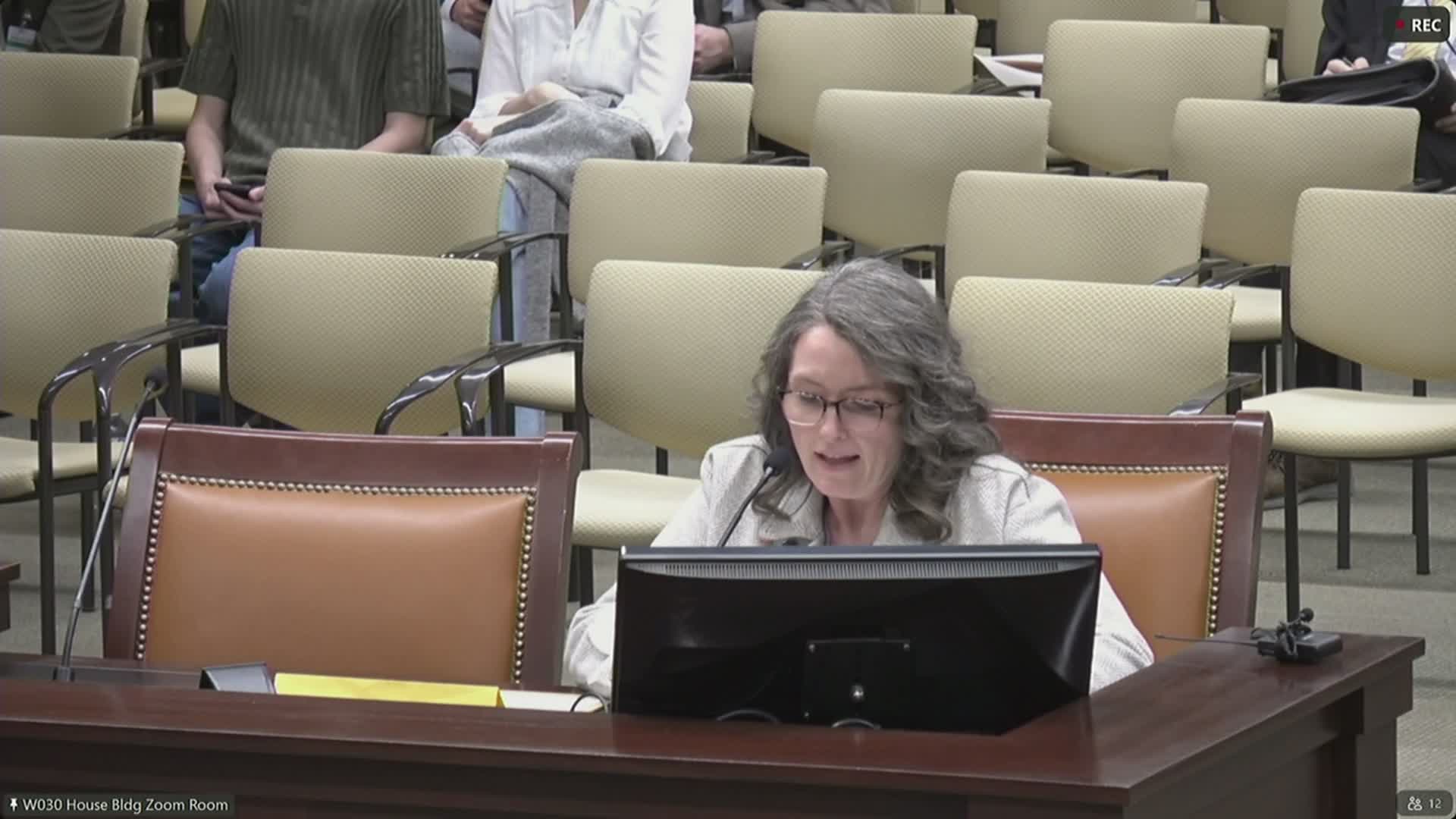
The House Law Enforcement & Criminal Justice Committee on Monday voted to hold substitute HB 188, a juvenile-justice measure addressing drug offenses in schools, after members said they needed more empirical data and stakeholder input.
Representative Peck presented the bill, which defines juvenile and school-based recidivism, directs the Commission on Criminal and Juvenile Justice (CCJJ) to collect recidivism metrics, clarifies administrator and SRO search/referral procedures, and distinguishes distribution at school (which the bill would refer for judicial consideration) from possession (which could allow one nonjudicial adjustment). The sponsor said the bill responds to constituent and teacher concerns about increasing drug incidents in some districts and aims to make reporting and referral practices consistent.
Several committee members, including Representative Stoddard and Representative Strong, raised concerns about the lack of robust, year-over-year recidivism data and whether current reporting captures repeat offenders; members requested clearer comparisons to existing law on nonjudicial adjustments. The sponsor acknowledged limited available data and said the bill’s recidivism definition and CCJJ data collection provisions are intended to fill those gaps.
An online public commenter, Seth Stewart, argued the bill’s recidivism definition could create administrative records that impact individuals without a jury conviction, raising due-process concerns. Committee members did not resolve those constitutional arguments in the hearing.
After discussion, Representative Strong moved to hold the substitute to allow the sponsor time to gather data, bring education stakeholders, and clarify current-law comparisons; other members supported the motion. The committee took a voice vote and the motion to hold carried; the bill will return to committee for further consideration.
The committee did adopt the first substitute before voting to hold additional floor action, but members emphasized that holding the bill was intended to permit additional stakeholder engagement and data review rather than to signal final opposition.
Representative Peck presented the bill, which defines juvenile and school-based recidivism, directs the Commission on Criminal and Juvenile Justice (CCJJ) to collect recidivism metrics, clarifies administrator and SRO search/referral procedures, and distinguishes distribution at school (which the bill would refer for judicial consideration) from possession (which could allow one nonjudicial adjustment). The sponsor said the bill responds to constituent and teacher concerns about increasing drug incidents in some districts and aims to make reporting and referral practices consistent.
Several committee members, including Representative Stoddard and Representative Strong, raised concerns about the lack of robust, year-over-year recidivism data and whether current reporting captures repeat offenders; members requested clearer comparisons to existing law on nonjudicial adjustments. The sponsor acknowledged limited available data and said the bill’s recidivism definition and CCJJ data collection provisions are intended to fill those gaps.
An online public commenter, Seth Stewart, argued the bill’s recidivism definition could create administrative records that impact individuals without a jury conviction, raising due-process concerns. Committee members did not resolve those constitutional arguments in the hearing.
After discussion, Representative Strong moved to hold the substitute to allow the sponsor time to gather data, bring education stakeholders, and clarify current-law comparisons; other members supported the motion. The committee took a voice vote and the motion to hold carried; the bill will return to committee for further consideration.
The committee did adopt the first substitute before voting to hold additional floor action, but members emphasized that holding the bill was intended to permit additional stakeholder engagement and data review rather than to signal final opposition.
Don't Miss a Word: See the Full Meeting!
Go beyond summaries. Unlock every video, transcript, and key insight with a Founder Membership.
✓
Get instant access to full meeting videos
✓
Search and clip any phrase from complete transcripts
✓
Receive AI-powered summaries & custom alerts
✓
Enjoy lifetime, unrestricted access to government data
30-day money-back guarantee
