House Committee reviews landlord-tenant bill package; staff outlines faster evictions and tenant protections
February 06, 2026 | General & Housing, HOUSE OF REPRESENTATIVES, Committees, Legislative , Vermont
This article was created by AI summarizing key points discussed. AI makes mistakes, so for full details and context, please refer to the video of the full meeting. Please report any errors so we can fix them. Report an error »
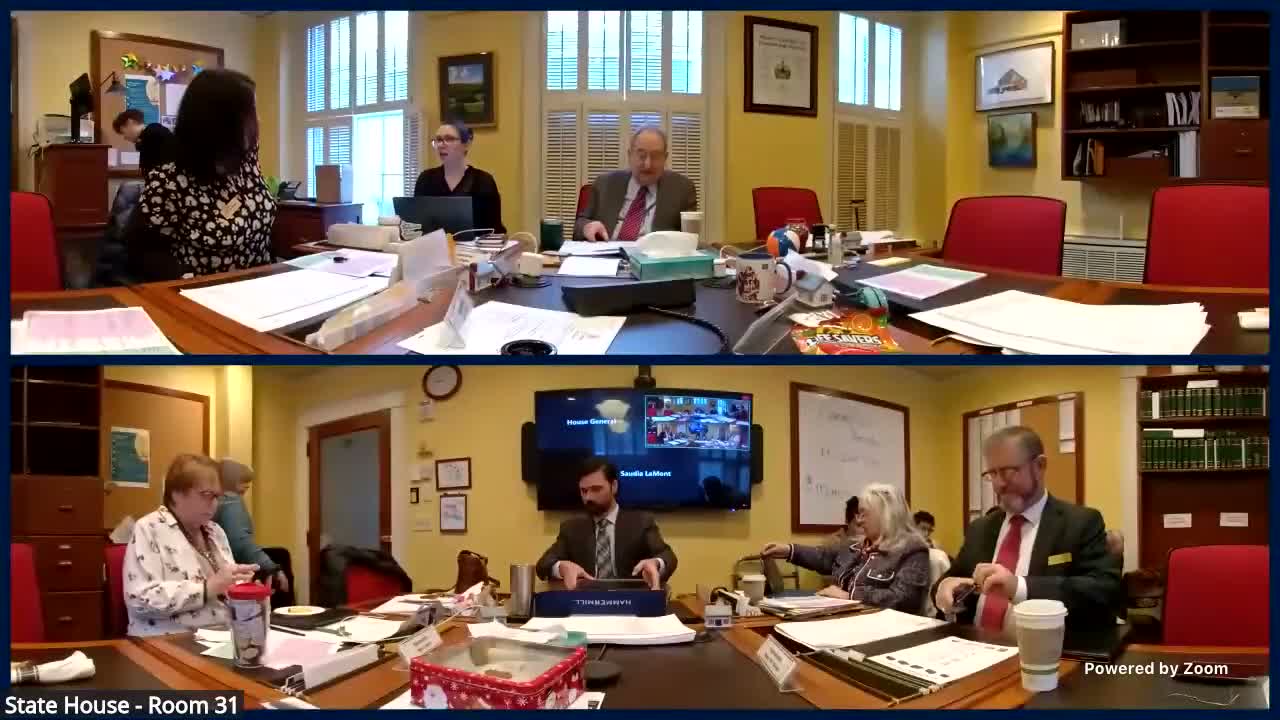
The House Committee on General and Housing on Feb. 5 heard a detailed staff walkthrough of five bills that would reshape landlord-tenant law, including proposals to standardize termination notice periods, limit some rent increases, add tenant supports and accelerate court ejectment procedures.
Cameron Woodhouse of the Legislative Council told the committee he had prepared a 23-page ‘‘side-by-side’’ comparison of the bills and related provisions, saying, ‘‘I pulled together all the provisions of these bills related to the residential rental agreement chapter.’’ The document, he said, is available on the committee webpage and served as the basis for the discussion.
Why it matters: The bills would change the timing and process for evictions and tenant defenses in ways that could speed removals for some landlords while expanding protections in other drafts. Committee members sought clarification on how the proposals would affect tenants who have lived in a unit for different lengths of time, room-rental or sublet situations, and the process for executing writs and disposing of tenant property.
Major changes discussed
Termination notice periods: Members discussed consolidating a patchwork of notice rules into a clearer 60/90 framework tied to length of tenancy rather than the current mix of written/unwritten lease distinctions. The chair acknowledged a drafting mistake in an earlier version that had reduced notice windows and said the intent was to increase them.
Relocation expenses: At least two drafts include relocation-expense provisions when a termination is due to renovation; one draft specifies a minimum equal to one month’s rent while another refers to ‘‘adequate’’ relocation payment, a difference Woodhouse highlighted.
Tenant supports: One bill would create a tenant-rights advocate at the Department of Housing and Community Development and statutory language in some drafts establishes a right to counsel for defendants in certain ejectment actions, matters the committee noted may require appropriation language and implementation planning.
Rent-increase limits and purchase exceptions: Some drafts would cap annual rent increases (examples discussed included formulas tied to the consumer price index with numerical caps); another approach would limit increases only when a property is sold, with a six-month lookback that uses the pre-sale rent to prevent sellers and buyers from evading caps.
Ejectment and court-process changes: Several bills would shorten defendant answer periods and other deadlines. Proposals discussed included a reduction to five business days for an answer under some drafts and to seven days under another, and one bill (7.72 in the packet) would create a new expedited subchapter that—if used—would not provide a jury trial option for that particular route while preserving the existing statute as an alternate path. Woodhouse emphasized committees must weigh whether to keep parallel procedures or adopt a single process.
Affirmative defense and withholding rent: One draft would make a serious health-and-safety code violation an affirmative defense to an ejectment action based on nonpayment of rent; Woodhouse and the chair said this defense would apply only to nonpayment claims and that landlords want limits so the defense cannot be used by tenants who themselves caused the condition. The Legislative Counsel also pointed to existing statute that permits rent withholding for material habitability defects after actual notice by the tenant or a qualified inspector; the statute does not require withheld rent to be placed in escrow.
Service, writs and expedited enforcement: Proposals would allow courts to authorize alternate service (for example, by publication or leaving papers at a dwelling) to apply through an entire proceeding, shorten hearing-notice periods for motions to pay rent into court, and require sheriffs to serve writs of possession within 24 hours of issuance in some drafts—changes members flagged as potentially accelerating the physical removal of occupants.
Property left after eviction: Current law requires landlords to hold tenant property for a statutory period (discussed as 15 days in committee materials). Some drafts would allow immediate disposal without landlord liability once possession is restored; members expressed concern about that change.
Procedure and confidentiality: The expedited paths discussed include show-cause hearings for alleged criminal activity (with a show-cause date within seven days of an answer and final hearings set within 30 days if live testimony is required). One draft would keep the expedited proceeding confidential until judgment and include affidavit-based short hearings in some cases.
Committee questions and next steps
Members asked about edge cases—roommate/sublet arrangements, home-share platforms, and whether shared-occupancy definitions would cover those facts. Woodhouse said application depends on factual circumstances and potential case law and recommended targeted legal follow-up. The panel asked staff to prepare a concise procedural ‘‘cheat sheet’’ summarizing timeframes (answer deadlines, right to jury, hearing windows) for the public record and for witnesses.
The committee recessed for a short break and scheduled testimony to begin at 10:20 a.m.; the chair said witnesses expected included Jessica (in person), Hannah (in person if available) and Angela (by video). The staff side-by-side and additional materials will be available on the committee webpage.
No formal votes or final actions were taken during this session; members will hear testimony and return to debate and potential amendments at subsequent meetings.
Cameron Woodhouse of the Legislative Council told the committee he had prepared a 23-page ‘‘side-by-side’’ comparison of the bills and related provisions, saying, ‘‘I pulled together all the provisions of these bills related to the residential rental agreement chapter.’’ The document, he said, is available on the committee webpage and served as the basis for the discussion.
Why it matters: The bills would change the timing and process for evictions and tenant defenses in ways that could speed removals for some landlords while expanding protections in other drafts. Committee members sought clarification on how the proposals would affect tenants who have lived in a unit for different lengths of time, room-rental or sublet situations, and the process for executing writs and disposing of tenant property.
Major changes discussed
Termination notice periods: Members discussed consolidating a patchwork of notice rules into a clearer 60/90 framework tied to length of tenancy rather than the current mix of written/unwritten lease distinctions. The chair acknowledged a drafting mistake in an earlier version that had reduced notice windows and said the intent was to increase them.
Relocation expenses: At least two drafts include relocation-expense provisions when a termination is due to renovation; one draft specifies a minimum equal to one month’s rent while another refers to ‘‘adequate’’ relocation payment, a difference Woodhouse highlighted.
Tenant supports: One bill would create a tenant-rights advocate at the Department of Housing and Community Development and statutory language in some drafts establishes a right to counsel for defendants in certain ejectment actions, matters the committee noted may require appropriation language and implementation planning.
Rent-increase limits and purchase exceptions: Some drafts would cap annual rent increases (examples discussed included formulas tied to the consumer price index with numerical caps); another approach would limit increases only when a property is sold, with a six-month lookback that uses the pre-sale rent to prevent sellers and buyers from evading caps.
Ejectment and court-process changes: Several bills would shorten defendant answer periods and other deadlines. Proposals discussed included a reduction to five business days for an answer under some drafts and to seven days under another, and one bill (7.72 in the packet) would create a new expedited subchapter that—if used—would not provide a jury trial option for that particular route while preserving the existing statute as an alternate path. Woodhouse emphasized committees must weigh whether to keep parallel procedures or adopt a single process.
Affirmative defense and withholding rent: One draft would make a serious health-and-safety code violation an affirmative defense to an ejectment action based on nonpayment of rent; Woodhouse and the chair said this defense would apply only to nonpayment claims and that landlords want limits so the defense cannot be used by tenants who themselves caused the condition. The Legislative Counsel also pointed to existing statute that permits rent withholding for material habitability defects after actual notice by the tenant or a qualified inspector; the statute does not require withheld rent to be placed in escrow.
Service, writs and expedited enforcement: Proposals would allow courts to authorize alternate service (for example, by publication or leaving papers at a dwelling) to apply through an entire proceeding, shorten hearing-notice periods for motions to pay rent into court, and require sheriffs to serve writs of possession within 24 hours of issuance in some drafts—changes members flagged as potentially accelerating the physical removal of occupants.
Property left after eviction: Current law requires landlords to hold tenant property for a statutory period (discussed as 15 days in committee materials). Some drafts would allow immediate disposal without landlord liability once possession is restored; members expressed concern about that change.
Procedure and confidentiality: The expedited paths discussed include show-cause hearings for alleged criminal activity (with a show-cause date within seven days of an answer and final hearings set within 30 days if live testimony is required). One draft would keep the expedited proceeding confidential until judgment and include affidavit-based short hearings in some cases.
Committee questions and next steps
Members asked about edge cases—roommate/sublet arrangements, home-share platforms, and whether shared-occupancy definitions would cover those facts. Woodhouse said application depends on factual circumstances and potential case law and recommended targeted legal follow-up. The panel asked staff to prepare a concise procedural ‘‘cheat sheet’’ summarizing timeframes (answer deadlines, right to jury, hearing windows) for the public record and for witnesses.
The committee recessed for a short break and scheduled testimony to begin at 10:20 a.m.; the chair said witnesses expected included Jessica (in person), Hannah (in person if available) and Angela (by video). The staff side-by-side and additional materials will be available on the committee webpage.
No formal votes or final actions were taken during this session; members will hear testimony and return to debate and potential amendments at subsequent meetings.
Don't Miss a Word: See the Full Meeting!
Go beyond summaries. Unlock every video, transcript, and key insight with a Founder Membership.
✓
Get instant access to full meeting videos
✓
Search and clip any phrase from complete transcripts
✓
Receive AI-powered summaries & custom alerts
✓
Enjoy lifetime, unrestricted access to government data
30-day money-back guarantee
