House Education hears plan to shift from truancy to chronic-absenteeism framework
February 06, 2026 | Education, HOUSE OF REPRESENTATIVES, Committees, Legislative , Vermont
This article was created by AI summarizing key points discussed. AI makes mistakes, so for full details and context, please refer to the video of the full meeting. Please report any errors so we can fix them. Report an error »
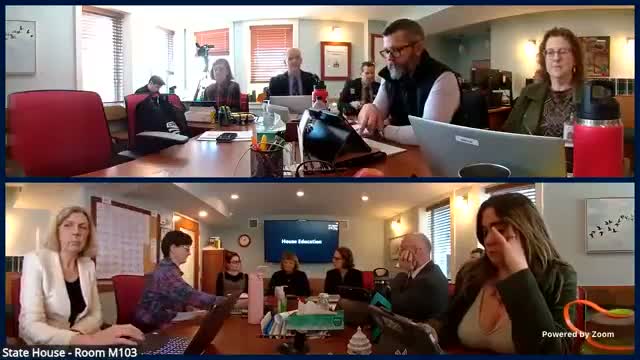
The House Education committee on Feb. 5 heard Agency of Education staff describe a proposed statutory shift from a truancy model to a chronic-absenteeism framework intended to standardize attendance definitions and promote earlier school-based interventions.
Agency witnesses said the draft grew from several years of work and expanded stakeholder engagement. "We're really thinking about this idea of shared accountability for shared funding," said Courtney O'Brien, who introduced the agency's presentation. Anne Bordenaro, director for Safe and Healthy Schools, said the effort follows research linking chronic absence to later-life outcomes and aims to fix wide inconsistencies in how districts define and record absences.
The proposal would focus on schools that receive public education dollars, including public schools and approved independent schools that are eligible for public funding, while not extending oversight to recognized private schools that do not receive public funds. "The definitions are our effort to be really clear with everyone...about what constitutes an excused and unexcused absence," Bordenaro said, adding that the draft will be accompanied by guidance for school nurses, pediatricians and school staff about when absence is medically necessary.
Agency counsel Jamie Crabeau said the draft also responds to concerns from prosecutors and school attorneys by building a documentation protocol so truancy officers and state's attorneys receive a clear record of school-level interventions before cases escalate. "The teeth were already there," Crabeau said of existing truancy enforcement in statute; the change, she said, is intended to reduce escalations by strengthening front-end supports.
On terminology, committee members discussed whether to use "parent or guardian" or the broader term "caregiver." Crabeau cautioned that "the term guardian has lots of different legal understandings depending on how it's defined in statute or elsewhere" and said the draft attempts a statutory definition that also accounts for emancipated or unaccompanied minors. Agency staff suggested checking with the Department for Children and Families to ensure any changes do not disrupt handoffs between Title 33 and Title 16 processes.
Committee members asked whether the proposal would increase burdens on schools. Agency staff said districts may need training and change management but argued the new approach should simplify operations by clarifying roles and emphasizing early interventions rather than heavier work later in the process.
The committee did not take a vote on the draft. The Committee Chair said staff would gather feedback from the field next week and the committee recessed until 2 p.m.
Agency witnesses said the draft grew from several years of work and expanded stakeholder engagement. "We're really thinking about this idea of shared accountability for shared funding," said Courtney O'Brien, who introduced the agency's presentation. Anne Bordenaro, director for Safe and Healthy Schools, said the effort follows research linking chronic absence to later-life outcomes and aims to fix wide inconsistencies in how districts define and record absences.
The proposal would focus on schools that receive public education dollars, including public schools and approved independent schools that are eligible for public funding, while not extending oversight to recognized private schools that do not receive public funds. "The definitions are our effort to be really clear with everyone...about what constitutes an excused and unexcused absence," Bordenaro said, adding that the draft will be accompanied by guidance for school nurses, pediatricians and school staff about when absence is medically necessary.
Agency counsel Jamie Crabeau said the draft also responds to concerns from prosecutors and school attorneys by building a documentation protocol so truancy officers and state's attorneys receive a clear record of school-level interventions before cases escalate. "The teeth were already there," Crabeau said of existing truancy enforcement in statute; the change, she said, is intended to reduce escalations by strengthening front-end supports.
On terminology, committee members discussed whether to use "parent or guardian" or the broader term "caregiver." Crabeau cautioned that "the term guardian has lots of different legal understandings depending on how it's defined in statute or elsewhere" and said the draft attempts a statutory definition that also accounts for emancipated or unaccompanied minors. Agency staff suggested checking with the Department for Children and Families to ensure any changes do not disrupt handoffs between Title 33 and Title 16 processes.
Committee members asked whether the proposal would increase burdens on schools. Agency staff said districts may need training and change management but argued the new approach should simplify operations by clarifying roles and emphasizing early interventions rather than heavier work later in the process.
The committee did not take a vote on the draft. The Committee Chair said staff would gather feedback from the field next week and the committee recessed until 2 p.m.
Don't Miss a Word: See the Full Meeting!
Go beyond summaries. Unlock every video, transcript, and key insight with a Founder Membership.
✓
Get instant access to full meeting videos
✓
Search and clip any phrase from complete transcripts
✓
Receive AI-powered summaries & custom alerts
✓
Enjoy lifetime, unrestricted access to government data
30-day money-back guarantee
