House subcommittee debates tighter statewide energy and building-code rules; bills carried over for process reform
February 06, 2026 | 2026 Legislature VA, Virginia
This article was created by AI summarizing key points discussed. AI makes mistakes, so for full details and context, please refer to the video of the full meeting. Please report any errors so we can fix them. Report an error »
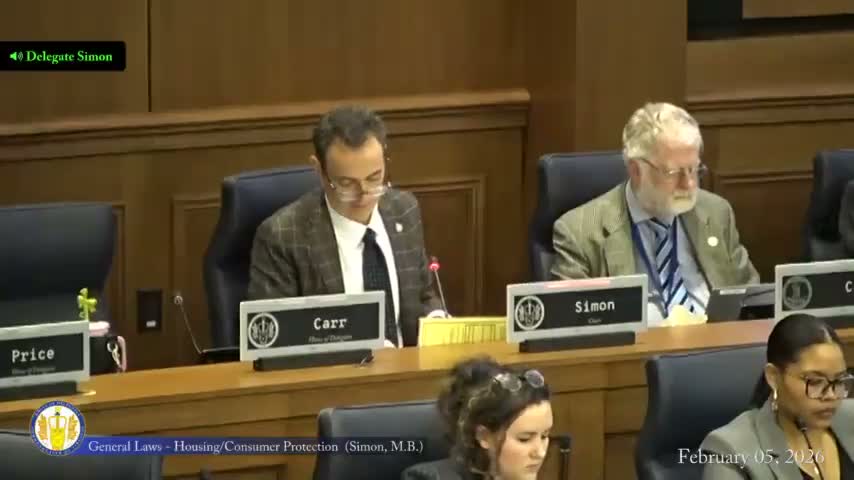
Delegate Bennett Parker asked the subcommittee to require the Board of Housing and Community Development to adopt energy-efficiency standards at least as stringent as the International Energy Conservation Code, arguing updated codes would lower lifetime household energy costs and cut greenhouse-gas emissions. "Adopting the 2021 and 2024 ICC updates would reduce energy costs for Virginians by almost $12,000 per home," Bennett Parker said, noting HUD and USDA analyses that found updates would not harm purchase affordability.
Supporters said higher-efficiency standards are a cost-effective way to reduce strain on the electric grid and reduce bills. "Energy codes are among the most cost-effective tools we have to reduce strain on the grid and lower the risk of future power shortages," the City of Alexandria vice mayor told the committee. Environmental groups including the Sierra Club and The Nature Conservancy urged the subcommittee to report the bill.
Industry witnesses warned that an 18-month adoption schedule would compress Virginia's established code-adoption process and reduce stakeholder review. "Virginia's process is a 30-month process; condensing that to about 18 months risks shortcircuiting stakeholder input," said Andrew Clark of the Home Builders Association of Virginia. Joel Andrus of the Virginia Building Code Officials Association echoed concerns about protecting the deliberative process.
The committee also considered HB 1509, a separate measure aimed at making uniform interpretations of the statewide building code to reduce locality-by-locality variability in permits, inspections and fees. Delegate Dahlia Phillips said inconsistent local practices create extra cost and uncertainty for contractors and builders.
Members acknowledged the goals behind both bills but said they wanted to address the adoption process itself before legislating code content or timelines. The chair said the panel is pursuing separate process reforms to address single-member holds and other delays. To preserve legislative options while the process work continues, the committee voted to carry the energy and building-code bills over under Rule 22.
The committee did not adopt a final policy change on either measure; next steps are to refine process reforms and revisit the bills in future subcommittee consideration.
Supporters said higher-efficiency standards are a cost-effective way to reduce strain on the electric grid and reduce bills. "Energy codes are among the most cost-effective tools we have to reduce strain on the grid and lower the risk of future power shortages," the City of Alexandria vice mayor told the committee. Environmental groups including the Sierra Club and The Nature Conservancy urged the subcommittee to report the bill.
Industry witnesses warned that an 18-month adoption schedule would compress Virginia's established code-adoption process and reduce stakeholder review. "Virginia's process is a 30-month process; condensing that to about 18 months risks shortcircuiting stakeholder input," said Andrew Clark of the Home Builders Association of Virginia. Joel Andrus of the Virginia Building Code Officials Association echoed concerns about protecting the deliberative process.
The committee also considered HB 1509, a separate measure aimed at making uniform interpretations of the statewide building code to reduce locality-by-locality variability in permits, inspections and fees. Delegate Dahlia Phillips said inconsistent local practices create extra cost and uncertainty for contractors and builders.
Members acknowledged the goals behind both bills but said they wanted to address the adoption process itself before legislating code content or timelines. The chair said the panel is pursuing separate process reforms to address single-member holds and other delays. To preserve legislative options while the process work continues, the committee voted to carry the energy and building-code bills over under Rule 22.
The committee did not adopt a final policy change on either measure; next steps are to refine process reforms and revisit the bills in future subcommittee consideration.
View the Full Meeting & All Its Details
This article offers just a summary. Unlock complete video, transcripts, and insights as a Founder Member.
✓
Watch full, unedited meeting videos
✓
Search every word spoken in unlimited transcripts
✓
AI summaries & real-time alerts (all government levels)
✓
Permanent access to expanding government content
30-day money-back guarantee
