House panel advances bill to require school elopement plans for students at risk
February 05, 2026 | 2026 Legislature FL, Florida
This article was created by AI summarizing key points discussed. AI makes mistakes, so for full details and context, please refer to the video of the full meeting. Please report any errors so we can fix them. Report an error »
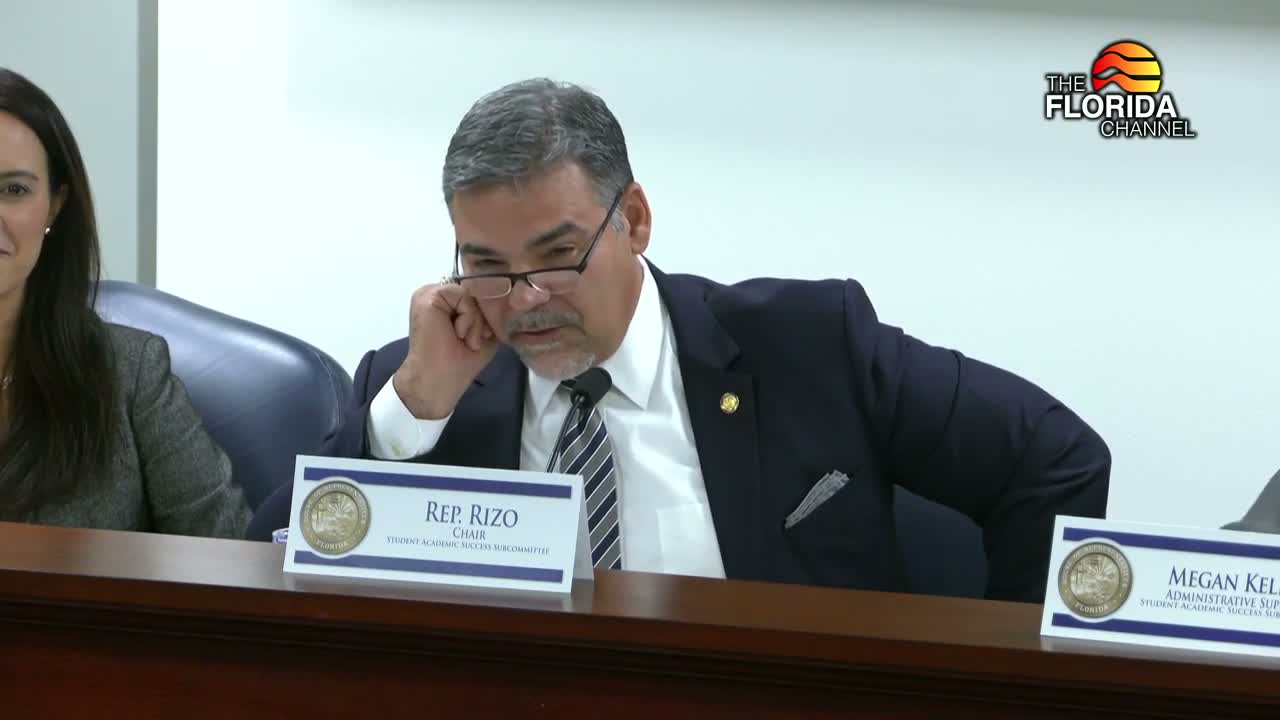
A Florida House subcommittee on Monday advanced a bipartisan bill that would require public K–12 schools to adopt standardized elopement plans for students assessed as at risk of wandering.
Representatives Carlos Escamani and [Representative] Tremont, sponsors of the measure, said the bill aims to streamline existing district policies into a statewide approach that mandates campus search procedures, immediate parent notification even when a child is found safe, and staff training. Sponsors said schools would create a campus “safe team” to develop and update elopement plans and to respond to incidents.
Autism advocates and parents told the committee that elopement — also described as wandering or bolting — poses serious risks. Donna Lorman, president of the Autism Society of Greater Orlando, cited state data and examples of children found off campus and urged lawmakers to adopt standard protocols to reduce drownings, traffic accidents and other harms. Parent Monica Carretero said her son repeatedly eloped as a child and that staff had no formal plan beyond chasing a frightened child.
Representatives from Disability Rights of Florida said they had previously expressed concerns about overly broad definitions and the potential for unnecessary law enforcement involvement, but worked with sponsors and advocates to narrow the bill’s scope to students with a demonstrated history of elopement risk. Laura Lee Minatello of Disability Rights of Florida said the bill now emphasizes student-centered planning and clarified that it does not target students who skip class or otherwise behave deliberately.
Committee members praised the bill’s bipartisan approach and personal testimonies but pressed for implementation details. Representative Hinson asked the Department of Education to designate a responsible official or office to ensure plans are adopted and followed, warning that a plan without accountability can fail to protect students. Sponsor Escamani said the bill provides rulemaking authority to the State Board of Education and that final implementation details will be addressed through that process.
The subcommittee reported the bill favorably to the next stage of consideration.
The next procedural step is for the bill to be scheduled for further committee review; sponsors and advocates said they will continue to work on technical clarifications as the measure moves forward.
Representatives Carlos Escamani and [Representative] Tremont, sponsors of the measure, said the bill aims to streamline existing district policies into a statewide approach that mandates campus search procedures, immediate parent notification even when a child is found safe, and staff training. Sponsors said schools would create a campus “safe team” to develop and update elopement plans and to respond to incidents.
Autism advocates and parents told the committee that elopement — also described as wandering or bolting — poses serious risks. Donna Lorman, president of the Autism Society of Greater Orlando, cited state data and examples of children found off campus and urged lawmakers to adopt standard protocols to reduce drownings, traffic accidents and other harms. Parent Monica Carretero said her son repeatedly eloped as a child and that staff had no formal plan beyond chasing a frightened child.
Representatives from Disability Rights of Florida said they had previously expressed concerns about overly broad definitions and the potential for unnecessary law enforcement involvement, but worked with sponsors and advocates to narrow the bill’s scope to students with a demonstrated history of elopement risk. Laura Lee Minatello of Disability Rights of Florida said the bill now emphasizes student-centered planning and clarified that it does not target students who skip class or otherwise behave deliberately.
Committee members praised the bill’s bipartisan approach and personal testimonies but pressed for implementation details. Representative Hinson asked the Department of Education to designate a responsible official or office to ensure plans are adopted and followed, warning that a plan without accountability can fail to protect students. Sponsor Escamani said the bill provides rulemaking authority to the State Board of Education and that final implementation details will be addressed through that process.
The subcommittee reported the bill favorably to the next stage of consideration.
The next procedural step is for the bill to be scheduled for further committee review; sponsors and advocates said they will continue to work on technical clarifications as the measure moves forward.
Don't Miss a Word: See the Full Meeting!
Go beyond summaries. Unlock every video, transcript, and key insight with a Founder Membership.
✓
Get instant access to full meeting videos
✓
Search and clip any phrase from complete transcripts
✓
Receive AI-powered summaries & custom alerts
✓
Enjoy lifetime, unrestricted access to government data
30-day money-back guarantee
