Committee raises concerns about emissions‑waiver program during drive‑by review of H.632 section
February 05, 2026 | Transportation, HOUSE OF REPRESENTATIVES, Committees, Legislative , Vermont
This article was created by AI summarizing key points discussed. AI makes mistakes, so for full details and context, please refer to the video of the full meeting. Please report any errors so we can fix them. Report an error »
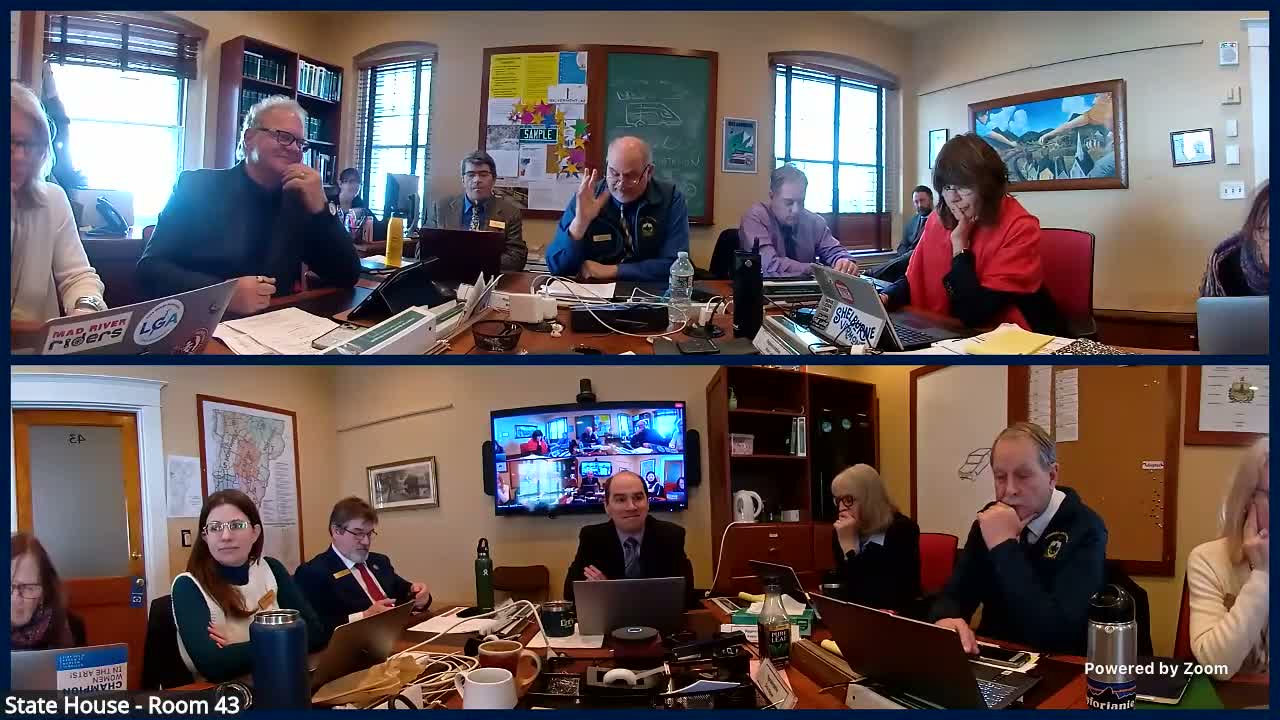
The Vermont House Committee on Transportation spent a substantial part of its Feb. 4 meeting reviewing a single section of H.632 that addresses an emissions‑waiver program and related implementation questions. Several members said the program’s record of grants and administration suggested poor performance; Representative Collins urged a memo to capture committee concerns and asked the Joint Fiscal Office to report on funding origins and balances.
Committee members debated three basic paths for the 'drive‑by' review: (1) concur with the language as drafted; (2) accept the language subject to committee amendments; or (3) pursue fuller scrutiny — potentially asking the committee that holds primary jurisdiction (House Environment) to take up repeal or more extensive changes. Representatives noted the program’s one‑time funding and cited a cited balance figure of roughly $800,000 referenced in testimony.
Legislative Council updated the panel that DMV's website shows the waiver program is scheduled to end on the 9th of this month and that when a time‑extension waiver expires a vehicle must be reinspected and another waiver will not be available. The chair said he would report the committee’s findings to the Environment Committee and asked staff to provide JFO’s accounting of where the money originated and how much remains.
Why it matters: Members said the program was intended to ease emissions compliance for low‑income vehicle owners through time‑limited waivers, but some questioned scale and effectiveness; one member summarized that only three grants had been issued under prior rounds and asked whether the program represents good use of limited public funds. Committee members flagged the risk that removing waivers could create a surge in demand for repairs without an identified ongoing funding source.
Next steps: The committee will await JFO’s funding report and the Environment Committee’s view before deciding whether to seek repeal, modify the program via the T‑bill, or adopt targeted amendments. The chair said he will return feedback to the originating committee and update members.
Committee members debated three basic paths for the 'drive‑by' review: (1) concur with the language as drafted; (2) accept the language subject to committee amendments; or (3) pursue fuller scrutiny — potentially asking the committee that holds primary jurisdiction (House Environment) to take up repeal or more extensive changes. Representatives noted the program’s one‑time funding and cited a cited balance figure of roughly $800,000 referenced in testimony.
Legislative Council updated the panel that DMV's website shows the waiver program is scheduled to end on the 9th of this month and that when a time‑extension waiver expires a vehicle must be reinspected and another waiver will not be available. The chair said he would report the committee’s findings to the Environment Committee and asked staff to provide JFO’s accounting of where the money originated and how much remains.
Why it matters: Members said the program was intended to ease emissions compliance for low‑income vehicle owners through time‑limited waivers, but some questioned scale and effectiveness; one member summarized that only three grants had been issued under prior rounds and asked whether the program represents good use of limited public funds. Committee members flagged the risk that removing waivers could create a surge in demand for repairs without an identified ongoing funding source.
Next steps: The committee will await JFO’s funding report and the Environment Committee’s view before deciding whether to seek repeal, modify the program via the T‑bill, or adopt targeted amendments. The chair said he will return feedback to the originating committee and update members.
Don't Miss a Word: See the Full Meeting!
Go beyond summaries. Unlock every video, transcript, and key insight with a Founder Membership.
✓
Get instant access to full meeting videos
✓
Search and clip any phrase from complete transcripts
✓
Receive AI-powered summaries & custom alerts
✓
Enjoy lifetime, unrestricted access to government data
30-day money-back guarantee
