Committee reviews 2027 T‑bill technical corrections: design‑speed language, bridge authority and a new penalty
February 05, 2026 | Transportation, HOUSE OF REPRESENTATIVES, Committees, Legislative , Vermont
This article was created by AI summarizing key points discussed. AI makes mistakes, so for full details and context, please refer to the video of the full meeting. Please report any errors so we can fix them. Report an error »
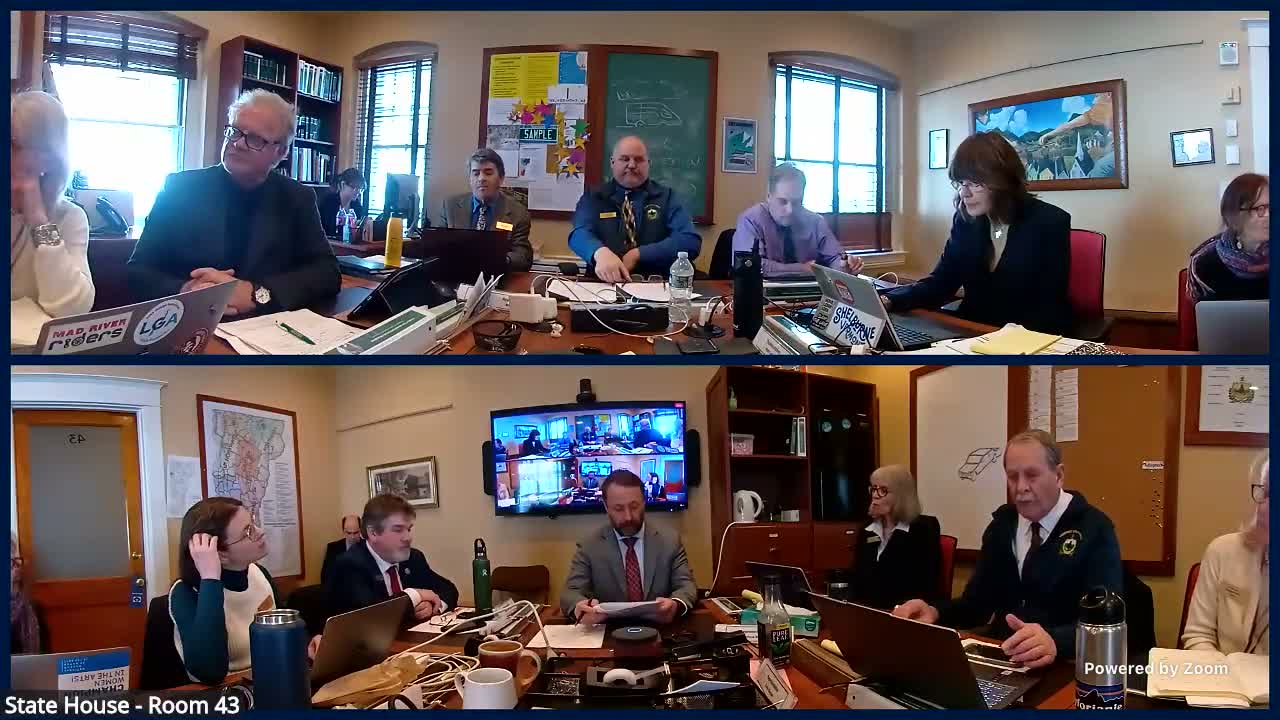
Agency chief engineer Jeremy Reed briefed the Vermont House Committee on Transportation on sections of the 2027 transportation bill, focusing on language cleanups and clarifications the Federal Highway Administration had requested.
Design speeds and signage: Reed described a modification clarifying how MUTCD and Vermont standards apply when design speeds differ from posted (legal) speeds. He said the change is intended as language clarification rather than a change in practice: engineers could document a design speed lower than the posted limit while using appropriate signs, signals and pavement markings. "This is just a legal preference, how it's worded and how expansive the examples of appropriate signs are," Reed said. Members sought reassurance that towns could not unilaterally lower posted limits without the existing process.
Bridge postings, closures and penalties: Sections 5 and 6 clarify roles and responsibilities for bridge inspections and posting/closure authority. Reed said the Agency inspects bridges and, under the proposed language, retains authority to post or close structures (including bridges over 20 feet that appear in the National Bridge Inventory) even where municipal maintenance responsibility exists. The bill also adds a civil penalty of up to $1,000 for violating a bridge posting. Reed said that is intended "in addition to any other penalty provided by law" and is focused on structures with specific structural deficiencies.
Enforcement concerns and insurance recovery: Members raised enforcement practicality in small towns with limited police presence and asked whether larger penalties or insurance claims apply when overweight vehicles cause bridge collapses. Reed explained DMV handles commercial vehicle accident weight assessments and towns can pursue insurance claims against offending carriers to recover replacement costs.
Public‑private partnerships and driveway permits: The committee also reviewed language extending authority to enter public‑private partnerships (examples include welcome centers) and a change limiting appellate rights for certain 11/11 driveway permits to the applicant/permittee rather than distant neighbors; Reed said other municipal zoning and review forums may still allow public comment.
What’s next: The committee requested additional clarifications on penalties, enforcement logistics and affected stakeholders before finalizing changes.
Design speeds and signage: Reed described a modification clarifying how MUTCD and Vermont standards apply when design speeds differ from posted (legal) speeds. He said the change is intended as language clarification rather than a change in practice: engineers could document a design speed lower than the posted limit while using appropriate signs, signals and pavement markings. "This is just a legal preference, how it's worded and how expansive the examples of appropriate signs are," Reed said. Members sought reassurance that towns could not unilaterally lower posted limits without the existing process.
Bridge postings, closures and penalties: Sections 5 and 6 clarify roles and responsibilities for bridge inspections and posting/closure authority. Reed said the Agency inspects bridges and, under the proposed language, retains authority to post or close structures (including bridges over 20 feet that appear in the National Bridge Inventory) even where municipal maintenance responsibility exists. The bill also adds a civil penalty of up to $1,000 for violating a bridge posting. Reed said that is intended "in addition to any other penalty provided by law" and is focused on structures with specific structural deficiencies.
Enforcement concerns and insurance recovery: Members raised enforcement practicality in small towns with limited police presence and asked whether larger penalties or insurance claims apply when overweight vehicles cause bridge collapses. Reed explained DMV handles commercial vehicle accident weight assessments and towns can pursue insurance claims against offending carriers to recover replacement costs.
Public‑private partnerships and driveway permits: The committee also reviewed language extending authority to enter public‑private partnerships (examples include welcome centers) and a change limiting appellate rights for certain 11/11 driveway permits to the applicant/permittee rather than distant neighbors; Reed said other municipal zoning and review forums may still allow public comment.
What’s next: The committee requested additional clarifications on penalties, enforcement logistics and affected stakeholders before finalizing changes.
View the Full Meeting & All Its Details
This article offers just a summary. Unlock complete video, transcripts, and insights as a Founder Member.
✓
Watch full, unedited meeting videos
✓
Search every word spoken in unlimited transcripts
✓
AI summaries & real-time alerts (all government levels)
✓
Permanent access to expanding government content
30-day money-back guarantee
