Senate president urges grant program to feed children in off‑site public pre‑K classrooms
February 05, 2026 | 2026 Legislature ME, Maine
This article was created by AI summarizing key points discussed. AI makes mistakes, so for full details and context, please refer to the video of the full meeting. Please report any errors so we can fix them. Report an error »
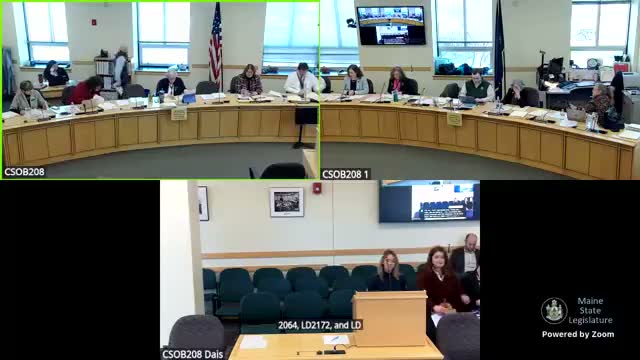
Senate President Maddie Daughtry told the Joint Standing Committee on Education and Cultural Affairs that LD 2064 would establish a grant program to ensure children in off‑site public prekindergarten classrooms get the same access to nutritious breakfast, lunch and snacks as children served inside school buildings. "Feeding children is not an optional add on to early education," Daughtry said, arguing nutrition is foundational to learning.
Under the bill as discussed, grants would be available to school administrative units and licensed community providers that partner to deliver public pre‑K; initial language cited up to $1,200 per child and up to $10,000 for infrastructure investments. Daughtry said the sums could be adjusted in work session and that the program should build on existing efforts, including prior infrastructure grants, rather than duplicate them.
Testifying providers and advocates described the need. "For every child in my pre‑K program right now, I get 95 cents a day to feed them," said Laura Larson, a child‑care director who partners with a public pre‑K. Larson said that low reimbursement forces programs to subsidize meals with general operating funds or higher tuition for privately paying families; one center in the sponsor’s district reported a roughly $15,000 annual shortfall delivering meals to on‑site pre‑K students. Full Plate's advocacy manager and the Maine Association for the Education of Young Children urged a flexible grant that allows SAUs and providers to choose delivery models that work locally — for example, having the SAU cook and deliver meals or funding on‑site kitchen upgrades where feasible.
State agency witnesses were cautious about administration. Anna Hicks of the Governor’s Children’s Cabinet testified neither for nor against and suggested the Department of Education’s Child Nutrition Team administer the grants, with the Early Childhood Advisory Council providing advisory input. Department staff recommended aligning reimbursement guidance with National School Lunch Program rates rather than fixing a per‑child amount in statute, and suggested allowing transportation and kitchen upgrades as eligible infrastructure expenses.
Supporters framed the measure as an equity step to ensure publicly funded pre‑K children receive consistent nutrition regardless of the setting, and urged the committee to consider modest administrative capacity within DOE to manage grant awards and compliance. The committee had no immediate vote; staff and sponsors said they would refine fiscal numbers and program rules for the work session.
Under the bill as discussed, grants would be available to school administrative units and licensed community providers that partner to deliver public pre‑K; initial language cited up to $1,200 per child and up to $10,000 for infrastructure investments. Daughtry said the sums could be adjusted in work session and that the program should build on existing efforts, including prior infrastructure grants, rather than duplicate them.
Testifying providers and advocates described the need. "For every child in my pre‑K program right now, I get 95 cents a day to feed them," said Laura Larson, a child‑care director who partners with a public pre‑K. Larson said that low reimbursement forces programs to subsidize meals with general operating funds or higher tuition for privately paying families; one center in the sponsor’s district reported a roughly $15,000 annual shortfall delivering meals to on‑site pre‑K students. Full Plate's advocacy manager and the Maine Association for the Education of Young Children urged a flexible grant that allows SAUs and providers to choose delivery models that work locally — for example, having the SAU cook and deliver meals or funding on‑site kitchen upgrades where feasible.
State agency witnesses were cautious about administration. Anna Hicks of the Governor’s Children’s Cabinet testified neither for nor against and suggested the Department of Education’s Child Nutrition Team administer the grants, with the Early Childhood Advisory Council providing advisory input. Department staff recommended aligning reimbursement guidance with National School Lunch Program rates rather than fixing a per‑child amount in statute, and suggested allowing transportation and kitchen upgrades as eligible infrastructure expenses.
Supporters framed the measure as an equity step to ensure publicly funded pre‑K children receive consistent nutrition regardless of the setting, and urged the committee to consider modest administrative capacity within DOE to manage grant awards and compliance. The committee had no immediate vote; staff and sponsors said they would refine fiscal numbers and program rules for the work session.
Don't Miss a Word: See the Full Meeting!
Go beyond summaries. Unlock every video, transcript, and key insight with a Founder Membership.
✓
Get instant access to full meeting videos
✓
Search and clip any phrase from complete transcripts
✓
Receive AI-powered summaries & custom alerts
✓
Enjoy lifetime, unrestricted access to government data
30-day money-back guarantee
