Woodland CCSD 50 adopts 2024'025 budget, authorizes capital spending and abatements
September 27, 2024 | Woodland CCSD 50, School Boards, Illinois
This article was created by AI summarizing key points discussed. AI makes mistakes, so for full details and context, please refer to the video of the full meeting. Please report any errors so we can fix them. Report an error »
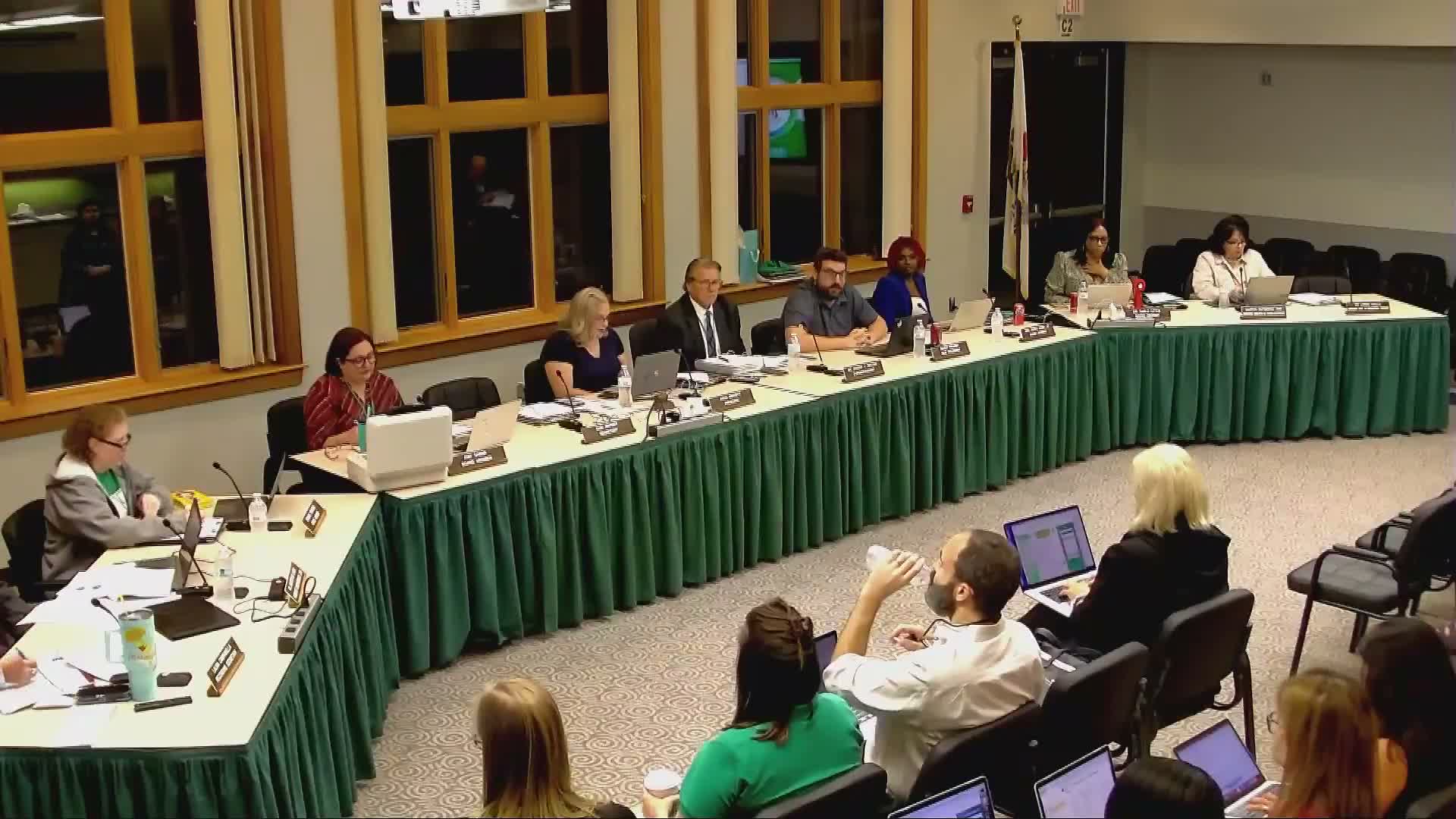
The Woodland Community Consolidated School District 50 Board of Education on Sept. 26 approved the district's fiscal 2025 budget following a public hearing and voted to move working-cash funds to cover near-term capital projects.
During the public hearing, an administration presenter summarized the budget and the assumptions that shaped it, saying, "there's a $5,000,000 increase in revenues," and noting a substantial portion of that rise came from higher interest earnings: "of the $4,200,000 in interest income, 2 years ago we had roughly $3,000,000." The presenter also told the board that federal pandemic-era ESSER funding has largely been spent and that federal revenue is expected to fall going forward.
The budget narrative presented to the board highlighted several drivers: local property taxes and fees remain the largest revenue sources; salaries and benefits account for nearly 80% of education-fund spending; insurance rates have risen in the 6%–8% range; and capital needs identified in a 10-year life-safety survey total more than $800,000, with immediate year-one items estimated at under $100,000.
Board discussion included the district's treatment under the state funding formula and an ongoing disparity with Prairie Crossing charter program funding. The presenter said the current formula would shift funds such that "Prairie Crossing is gonna wind up receiving about $2 to $300,000 more" while Woodland would receive "about $200 to $350,000 less," a shortfall administrators said is hard to make up locally.
After the hearing the board took action. On a roll-call vote the board approved Resolution No. 1 adopting the FY2025 budget (motion carried as recorded in the minutes). The board then passed Resolution No. 2 to abate $46,475 from the working-cash fund to the debt-service fund and Resolution No. 3 to abate $2,000,000 from the working-cash fund to the capital projects fund. The board also approved the FY25 capital-expenditure spending plan and authorized district staff to proceed with bidding and procurement for the authorized projects.
The board recorded the procedural roll-call votes in the meeting minutes; votes were announced on the record for each motion and the minutes list the motions as carried. Administrators reminded the board that once adopted the budget must be filed with the state within 30 days and that many capital projects (including parking-lot resurfacing and turf replacement) will carry into the 2025 fiscal year.
Board members and staff emphasized the distinction between recurring and one-time revenue: the presenters warned that interest income and other temporary boosts should not be relied on as permanent funding. The administration said it will continue to pursue remedies related to state funding formulas and work with legislative allies to address charter-related allocation issues.
The board concluded the fiscal business and moved on to other agenda items, with direction to staff to post required fiscal reports and comply with open-meetings posting requirements.
What's next: the district will finalize required filings and post the IMRF and teacher/administrator salary-and-benefit reports as required by statute; the board and administration said they will continue work on capital procurement and follow up on state funding discussions.
During the public hearing, an administration presenter summarized the budget and the assumptions that shaped it, saying, "there's a $5,000,000 increase in revenues," and noting a substantial portion of that rise came from higher interest earnings: "of the $4,200,000 in interest income, 2 years ago we had roughly $3,000,000." The presenter also told the board that federal pandemic-era ESSER funding has largely been spent and that federal revenue is expected to fall going forward.
The budget narrative presented to the board highlighted several drivers: local property taxes and fees remain the largest revenue sources; salaries and benefits account for nearly 80% of education-fund spending; insurance rates have risen in the 6%–8% range; and capital needs identified in a 10-year life-safety survey total more than $800,000, with immediate year-one items estimated at under $100,000.
Board discussion included the district's treatment under the state funding formula and an ongoing disparity with Prairie Crossing charter program funding. The presenter said the current formula would shift funds such that "Prairie Crossing is gonna wind up receiving about $2 to $300,000 more" while Woodland would receive "about $200 to $350,000 less," a shortfall administrators said is hard to make up locally.
After the hearing the board took action. On a roll-call vote the board approved Resolution No. 1 adopting the FY2025 budget (motion carried as recorded in the minutes). The board then passed Resolution No. 2 to abate $46,475 from the working-cash fund to the debt-service fund and Resolution No. 3 to abate $2,000,000 from the working-cash fund to the capital projects fund. The board also approved the FY25 capital-expenditure spending plan and authorized district staff to proceed with bidding and procurement for the authorized projects.
The board recorded the procedural roll-call votes in the meeting minutes; votes were announced on the record for each motion and the minutes list the motions as carried. Administrators reminded the board that once adopted the budget must be filed with the state within 30 days and that many capital projects (including parking-lot resurfacing and turf replacement) will carry into the 2025 fiscal year.
Board members and staff emphasized the distinction between recurring and one-time revenue: the presenters warned that interest income and other temporary boosts should not be relied on as permanent funding. The administration said it will continue to pursue remedies related to state funding formulas and work with legislative allies to address charter-related allocation issues.
The board concluded the fiscal business and moved on to other agenda items, with direction to staff to post required fiscal reports and comply with open-meetings posting requirements.
What's next: the district will finalize required filings and post the IMRF and teacher/administrator salary-and-benefit reports as required by statute; the board and administration said they will continue work on capital procurement and follow up on state funding discussions.
Don't Miss a Word: See the Full Meeting!
Go beyond summaries. Unlock every video, transcript, and key insight with a Founder Membership.
✓
Get instant access to full meeting videos
✓
Search and clip any phrase from complete transcripts
✓
Receive AI-powered summaries & custom alerts
✓
Enjoy lifetime, unrestricted access to government data
30-day money-back guarantee
