UN Secretary‑General submits 40 nominees for independent scientific AI panel; first report due in July
February 05, 2026 | United Nations, International
This article was created by AI summarizing key points discussed. AI makes mistakes, so for full details and context, please refer to the video of the full meeting. Please report any errors so we can fix them. Report an error »
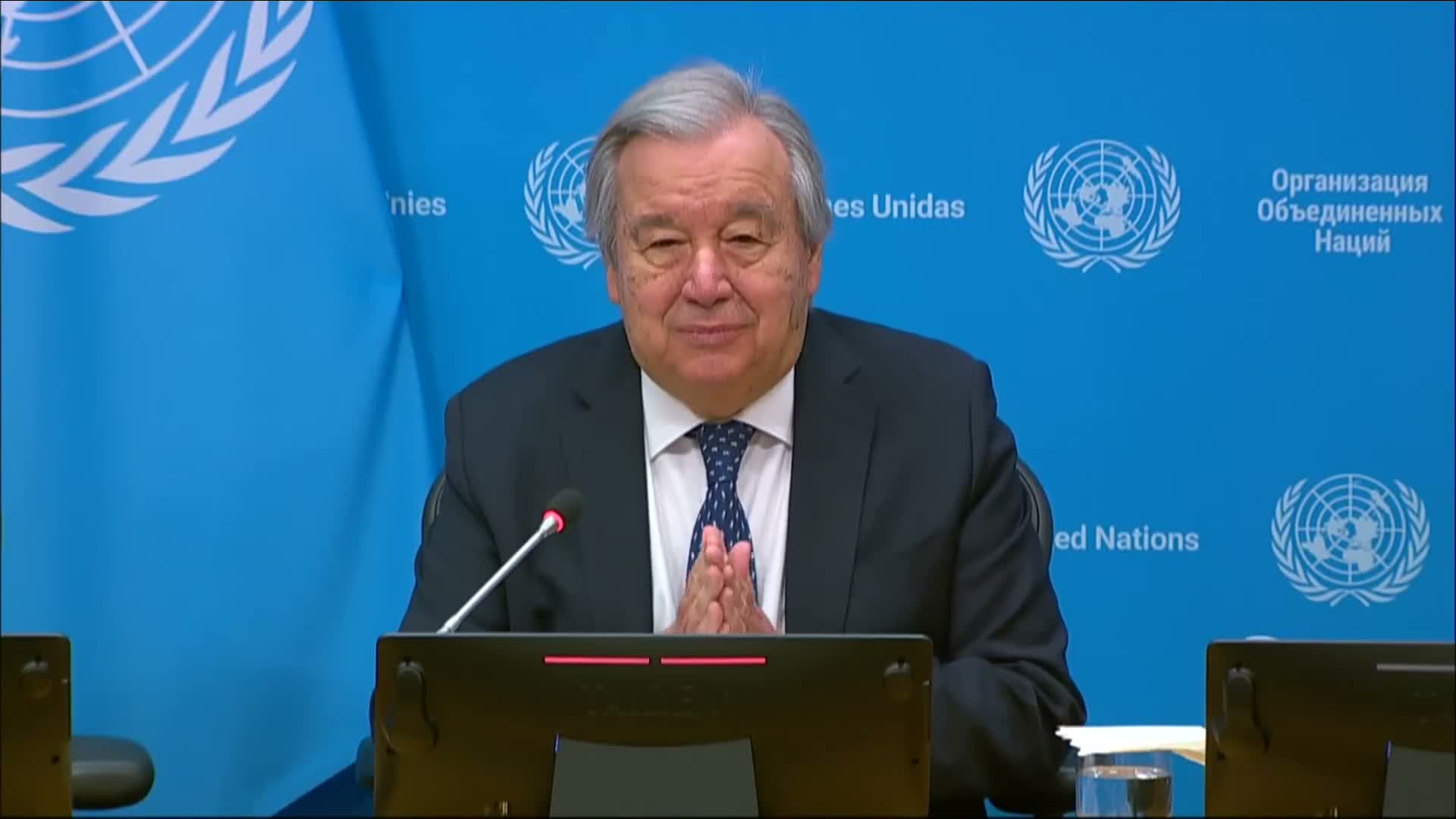
The United Nations Secretary‑General announced he has submitted a list of 40 individuals from every region to the General Assembly to form a new independent international scientific panel on artificial intelligence, and said the panel’s first report is expected in time to inform a July global dialogue on AI governance.
The panel, the Secretary‑General said, is intended as “the first global, fully independent scientific body” to help close the AI knowledge gap, assess impacts across economies and societies, and provide a neutral evidence base as policymakers discuss guardrails. “AI is moving at the speed of light,” he said, adding the panel will help “separate fact from fakes and science from slop.” He named the Office for Digital and Emerging Technologies, the International Telecommunication Union and UNESCO as providing members to the panel secretariat and said his special envoy Amandeep Gill will coordinate the secretariat.
Reporters pressed UN officials on several practical points. Sherwin Bryceby of the UN Correspondents Association asked how the panel will be funded when the organization faces shortfalls; the Secretary‑General replied that member‑state obligations — including payment of dues — must be met and said he expects rules to be changed to let the organization move forward. When asked, the UN official answering subsequent technical questions said the nomination window ran for about six weeks and drew roughly 2,700 applications.
On selection criteria, the UN official said candidates were assessed under the modalities set out in the relevant resolution with emphasis on outstanding expertise, interdisciplinarity and geographic and gender balance; he noted the slate includes 19 women and 21 men and contains two U.S. scientists. Panel members will serve in their personal capacities and, the official said, will not be compensated for this work — they are expected to contribute significant personal time under existing UN arrangements for independent experts.
Reporters also asked how the panel will handle issues ranging from AI’s role in conflict zones to private‑sector ties. Bissan Abbequik of Al Jazeera Arabic asked specifically about weaponization and the use of AI in places such as Gaza; the Secretary‑General said one major concern is weaponization and that the panel should clarify what technologies are available and how they are being used so risks can be minimized. The UN official said the process will involve bidirectional engagement with private research labs while implementing safeguards to address conflicts of interest, as the modalities resolution requires.
The UN official said the panel is not intended to be policy‑prescriptive: its work will provide scientific evidence to inform member‑state policymaking. In addition to the annual report due for the July dialogue, the official said the panel may produce thematic briefs over the next three years on issues such as labor markets and impacts on sustainable development.
The Secretary‑General’s submission of candidates is a recommendation to the General Assembly; reporters asked why the announcement was made before the GA’s formal approval. The session closed after officials reiterated the timeline and the panel’s intended role in informing the July global dialogue.
The panel, the Secretary‑General said, is intended as “the first global, fully independent scientific body” to help close the AI knowledge gap, assess impacts across economies and societies, and provide a neutral evidence base as policymakers discuss guardrails. “AI is moving at the speed of light,” he said, adding the panel will help “separate fact from fakes and science from slop.” He named the Office for Digital and Emerging Technologies, the International Telecommunication Union and UNESCO as providing members to the panel secretariat and said his special envoy Amandeep Gill will coordinate the secretariat.
Reporters pressed UN officials on several practical points. Sherwin Bryceby of the UN Correspondents Association asked how the panel will be funded when the organization faces shortfalls; the Secretary‑General replied that member‑state obligations — including payment of dues — must be met and said he expects rules to be changed to let the organization move forward. When asked, the UN official answering subsequent technical questions said the nomination window ran for about six weeks and drew roughly 2,700 applications.
On selection criteria, the UN official said candidates were assessed under the modalities set out in the relevant resolution with emphasis on outstanding expertise, interdisciplinarity and geographic and gender balance; he noted the slate includes 19 women and 21 men and contains two U.S. scientists. Panel members will serve in their personal capacities and, the official said, will not be compensated for this work — they are expected to contribute significant personal time under existing UN arrangements for independent experts.
Reporters also asked how the panel will handle issues ranging from AI’s role in conflict zones to private‑sector ties. Bissan Abbequik of Al Jazeera Arabic asked specifically about weaponization and the use of AI in places such as Gaza; the Secretary‑General said one major concern is weaponization and that the panel should clarify what technologies are available and how they are being used so risks can be minimized. The UN official said the process will involve bidirectional engagement with private research labs while implementing safeguards to address conflicts of interest, as the modalities resolution requires.
The UN official said the panel is not intended to be policy‑prescriptive: its work will provide scientific evidence to inform member‑state policymaking. In addition to the annual report due for the July dialogue, the official said the panel may produce thematic briefs over the next three years on issues such as labor markets and impacts on sustainable development.
The Secretary‑General’s submission of candidates is a recommendation to the General Assembly; reporters asked why the announcement was made before the GA’s formal approval. The session closed after officials reiterated the timeline and the panel’s intended role in informing the July global dialogue.
View the Full Meeting & All Its Details
This article offers just a summary. Unlock complete video, transcripts, and insights as a Founder Member.
✓
Watch full, unedited meeting videos
✓
Search every word spoken in unlimited transcripts
✓
AI summaries & real-time alerts (all government levels)
✓
Permanent access to expanding government content
30-day money-back guarantee
