House Foreign Affairs subcommittee hears bipartisan testimony on global religious persecution, presses administration on cuts and reporting
February 05, 2026 | House Committee on Foreign Affairs, House Committee, House, Legislative, Federal
This article was created by AI summarizing key points discussed. AI makes mistakes, so for full details and context, please refer to the video of the full meeting. Please report any errors so we can fix them. Report an error »
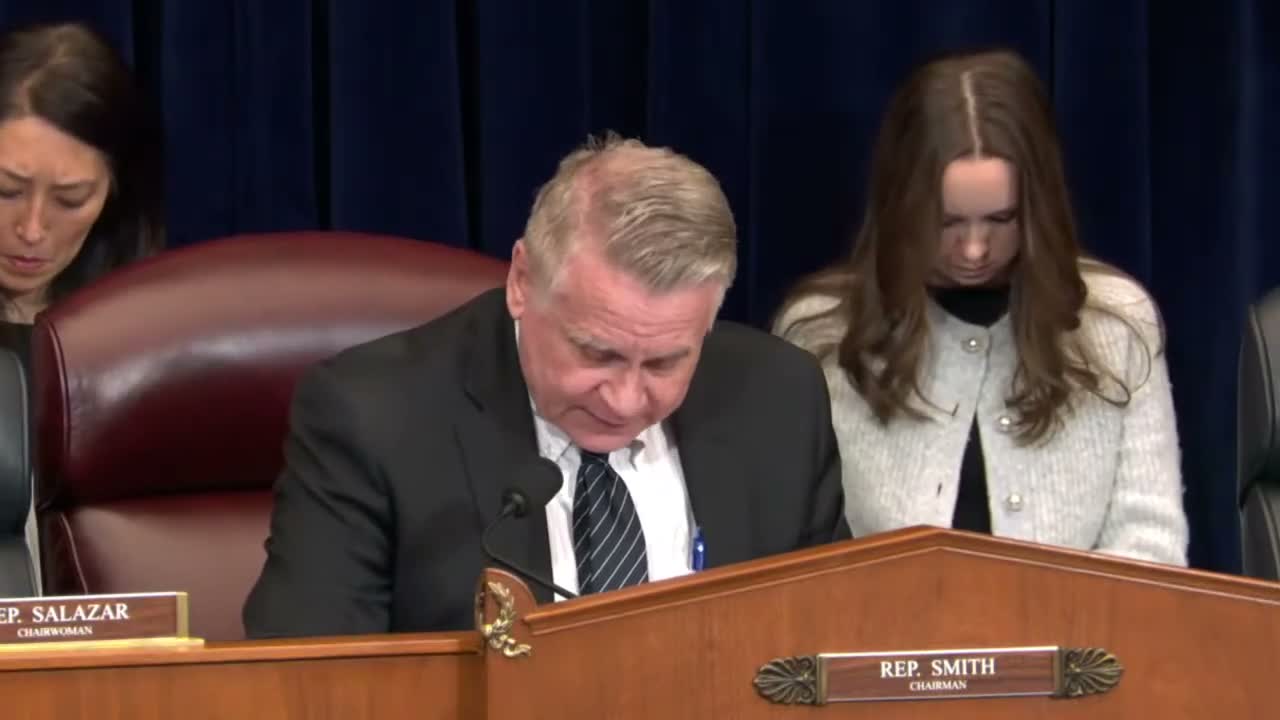
WASHINGTON — Lawmakers and experts told a House Foreign Affairs subcommittee on Thursday that religious freedom is under renewed attack across the globe and urged the United States to use diplomatic and targeted sanctions to protect persecuted communities.
"Religious freedom is universal," Ranking Member Ro Khanna said at the hearing, calling it a "fundamental human right." Members from both parties described what witnesses called an "unprecedented" global crisis driven by authoritarian regimes and religious nationalism.
The hearing featured testimony from former Ambassador at Large Sam Brownback and Dr. Steven Schneck, a former chair of the U.S. Commission on International Religious Freedom (USCIRF). Brownback described an "alliance of nations" that view faith communities as threats to dictatorship and warned that China has spent "billions" on surveillance technology to suppress religious activity and then exports those tools to other repressive governments. Schneck warned the subcommittee that longstanding U.S. tools for promoting religious freedom are weakening: he cited overdue annual reporting, unfilled commission seats and the unclear status of a Senate‑confirmed ambassador at large.
Several members pressed the administration over cuts to programs and the foreign‑assistance review. "This administration has completely gutted this toolkit that could help religious freedom defenders around the world," Ranking Member Jacobs said, citing Freedom House reporting that the administration terminated an Asia religious and ethnic freedom program and that some NGOs were left with hundreds of cases in limbo.
Members also criticized the State Department for failing to provide a senior witness: the panel had expected to hear from former Rep. Mark Walker, named in the hearing as principal adviser on global religious freedom, but the committee said the department notified them at the last minute that he would not testify.
Lawmakers and witnesses debated the use of designation and sanctions tools, particularly the "country of particular concern" (CPC) label in the International Religious Freedom Act and targeted measures such as Magnitsky sanctions. Dr. Schneck said the CPC designation has at times functioned primarily as a "name and shame" instrument and urged better linkage between designations and enforceable sanctions.
The hearing covered a range of regional concerns: China’s crackdown on Uyghurs and house churches; large‑scale violence in Nigeria, where members argued that both military strikes and reduced aid have had mixed effects; and repression in the Western Hemisphere, where speakers described expulsions of clergy and closures of faith‑based NGOs in Nicaragua.
Committee members requested follow‑up in writing and closed the hearing without voting on formal measures. "The members of the subcommittee may have some additional questions for the witnesses, and we will ask you to respond to these in writing," the acting chair said before adjourning.
The witnesses’ written statements were made part of the hearing record; the subcommittee did not announce immediate new action beyond follow‑up questions and requests for documents.
"Religious freedom is universal," Ranking Member Ro Khanna said at the hearing, calling it a "fundamental human right." Members from both parties described what witnesses called an "unprecedented" global crisis driven by authoritarian regimes and religious nationalism.
The hearing featured testimony from former Ambassador at Large Sam Brownback and Dr. Steven Schneck, a former chair of the U.S. Commission on International Religious Freedom (USCIRF). Brownback described an "alliance of nations" that view faith communities as threats to dictatorship and warned that China has spent "billions" on surveillance technology to suppress religious activity and then exports those tools to other repressive governments. Schneck warned the subcommittee that longstanding U.S. tools for promoting religious freedom are weakening: he cited overdue annual reporting, unfilled commission seats and the unclear status of a Senate‑confirmed ambassador at large.
Several members pressed the administration over cuts to programs and the foreign‑assistance review. "This administration has completely gutted this toolkit that could help religious freedom defenders around the world," Ranking Member Jacobs said, citing Freedom House reporting that the administration terminated an Asia religious and ethnic freedom program and that some NGOs were left with hundreds of cases in limbo.
Members also criticized the State Department for failing to provide a senior witness: the panel had expected to hear from former Rep. Mark Walker, named in the hearing as principal adviser on global religious freedom, but the committee said the department notified them at the last minute that he would not testify.
Lawmakers and witnesses debated the use of designation and sanctions tools, particularly the "country of particular concern" (CPC) label in the International Religious Freedom Act and targeted measures such as Magnitsky sanctions. Dr. Schneck said the CPC designation has at times functioned primarily as a "name and shame" instrument and urged better linkage between designations and enforceable sanctions.
The hearing covered a range of regional concerns: China’s crackdown on Uyghurs and house churches; large‑scale violence in Nigeria, where members argued that both military strikes and reduced aid have had mixed effects; and repression in the Western Hemisphere, where speakers described expulsions of clergy and closures of faith‑based NGOs in Nicaragua.
Committee members requested follow‑up in writing and closed the hearing without voting on formal measures. "The members of the subcommittee may have some additional questions for the witnesses, and we will ask you to respond to these in writing," the acting chair said before adjourning.
The witnesses’ written statements were made part of the hearing record; the subcommittee did not announce immediate new action beyond follow‑up questions and requests for documents.
Don't Miss a Word: See the Full Meeting!
Go beyond summaries. Unlock every video, transcript, and key insight with a Founder Membership.
✓
Get instant access to full meeting videos
✓
Search and clip any phrase from complete transcripts
✓
Receive AI-powered summaries & custom alerts
✓
Enjoy lifetime, unrestricted access to government data
30-day money-back guarantee
