Annapolis committee delays vote on 12-month moratorium for short-term rental licenses
February 05, 2026 | Annapolis, Anne Arundel County, Maryland
This article was created by AI summarizing key points discussed. AI makes mistakes, so for full details and context, please refer to the video of the full meeting. Please report any errors so we can fix them. Report an error »
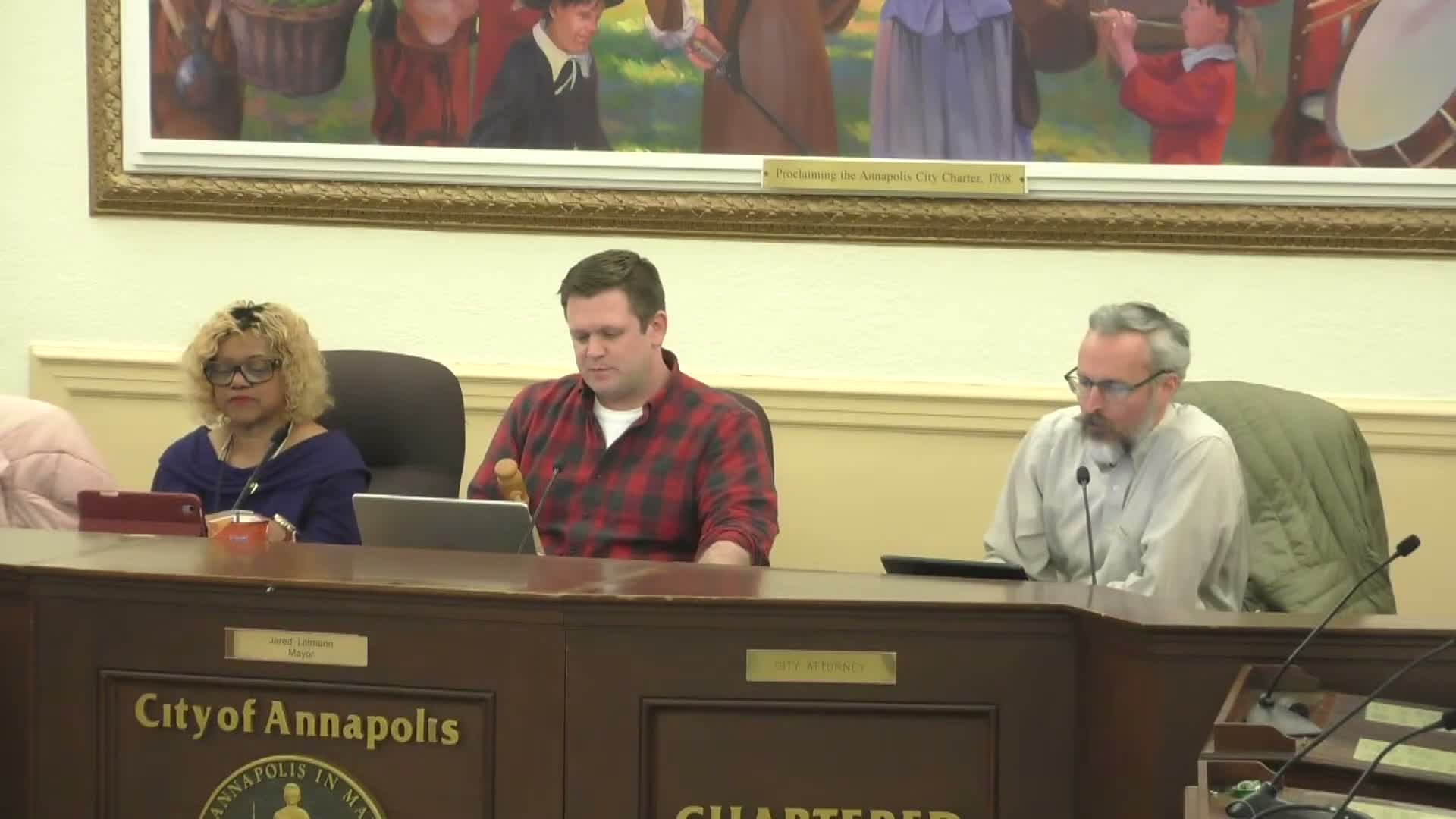
The Annapolis Economic Matters Committee on Feb. 4 postponed consideration of a proposed 12-month moratorium on new short-term rental (STR) licenses until its March 4 meeting to allow staff and council sponsors time to finalize amendments and gather more evidence.
Director Gretchen Kubiak told the committee the city’s first annual STR report initially suggested roughly “49%” of listings were not licensed, but that figure included many properties listed only for special events and not operated year-round. Kubiak said the number of active, licensed short-term rental units is 339 and is “in constant flux” as outreach prompted some owners to seek permits or stop operating. “We have 330. I think by tomorrow it'll be 340 short term rentals,” Kubiak said.
Alderman Savage asked why the moratorium would be 12 months rather than a shorter period and whether the work needed could be completed in weeks or a few months. Savage argued the ordinance’s stated purpose — to conduct a comprehensive study and review other jurisdictions’ regulations — overlaps with regular reporting and might not require a moratorium. “Moratorium kind of assumes the outcome,” Savage said, expressing concern the ordinance presumes changes the council may not ultimately adopt.
Kubiak and staff described how a longer pause could allow a fuller evaluation of housing supply impacts, zoning options and any text amendments to the city code. Kubiak noted that in Annapolis STRs are regulated by license rather than zoning and that some cities combine zoning and licensing to control concentration. “Where there’s concentration of short term rentals there is in fact a change of land use,” Kubiak said.
A member of the public, Katie McDermott of 50 Franklin Street, urged the committee to pass the moratorium without substantive narrowing, arguing STRs affect housing options and require time for study. “STRs do impact housing and housing options,” McDermott said, and the moratorium would provide that time, she told the committee.
Committee members also asked for enforcement and complaint data; Kubiak said staff will provide complaint lists and noted the department had brought roughly 40–50 properties into compliance during outreach. The committee acknowledged several amendments had been filed and were not yet finalized; the chair moved to postpone final action and the motion carried on a voice vote.
Next steps: the committee will review the submitted amendments, receive additional enforcement and complaint data, and re-open the moratorium measure at its March 4 meeting.
Director Gretchen Kubiak told the committee the city’s first annual STR report initially suggested roughly “49%” of listings were not licensed, but that figure included many properties listed only for special events and not operated year-round. Kubiak said the number of active, licensed short-term rental units is 339 and is “in constant flux” as outreach prompted some owners to seek permits or stop operating. “We have 330. I think by tomorrow it'll be 340 short term rentals,” Kubiak said.
Alderman Savage asked why the moratorium would be 12 months rather than a shorter period and whether the work needed could be completed in weeks or a few months. Savage argued the ordinance’s stated purpose — to conduct a comprehensive study and review other jurisdictions’ regulations — overlaps with regular reporting and might not require a moratorium. “Moratorium kind of assumes the outcome,” Savage said, expressing concern the ordinance presumes changes the council may not ultimately adopt.
Kubiak and staff described how a longer pause could allow a fuller evaluation of housing supply impacts, zoning options and any text amendments to the city code. Kubiak noted that in Annapolis STRs are regulated by license rather than zoning and that some cities combine zoning and licensing to control concentration. “Where there’s concentration of short term rentals there is in fact a change of land use,” Kubiak said.
A member of the public, Katie McDermott of 50 Franklin Street, urged the committee to pass the moratorium without substantive narrowing, arguing STRs affect housing options and require time for study. “STRs do impact housing and housing options,” McDermott said, and the moratorium would provide that time, she told the committee.
Committee members also asked for enforcement and complaint data; Kubiak said staff will provide complaint lists and noted the department had brought roughly 40–50 properties into compliance during outreach. The committee acknowledged several amendments had been filed and were not yet finalized; the chair moved to postpone final action and the motion carried on a voice vote.
Next steps: the committee will review the submitted amendments, receive additional enforcement and complaint data, and re-open the moratorium measure at its March 4 meeting.
View the Full Meeting & All Its Details
This article offers just a summary. Unlock complete video, transcripts, and insights as a Founder Member.
✓
Watch full, unedited meeting videos
✓
Search every word spoken in unlimited transcripts
✓
AI summaries & real-time alerts (all government levels)
✓
Permanent access to expanding government content
30-day money-back guarantee
