Senate Judiciary debates narrow exceptions, ID rules in mask-and-disguise bill
February 05, 2026 | Judiciary, SENATE, Committees, Legislative , Vermont
This article was created by AI summarizing key points discussed. AI makes mistakes, so for full details and context, please refer to the video of the full meeting. Please report any errors so we can fix them. Report an error »
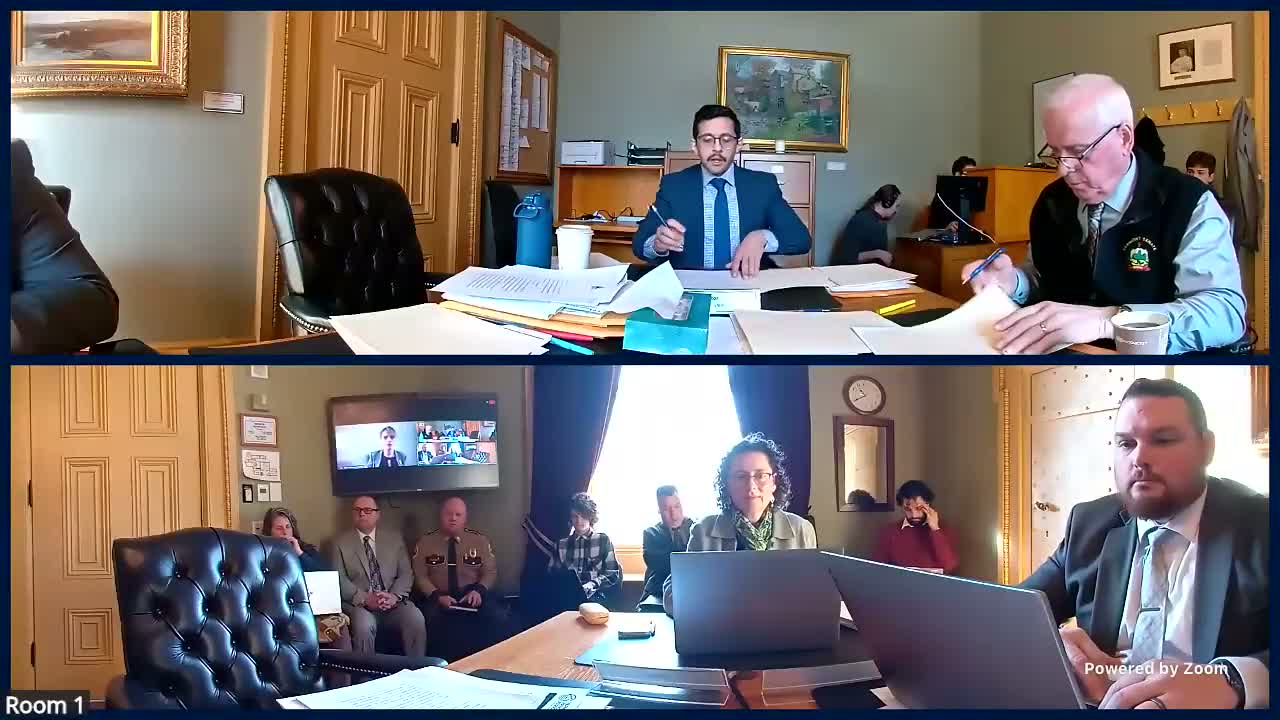
The Senate Judiciary committee on Feb. 4 reviewed draft 2.1 (dated 01/30/2026) of a bill that would generally prohibit masks and disguises used to conceal identity but carve out exceptions for undercover investigations and certain task‑force work.
Legislative counsel Sophie Zagatny told the panel the draft adds law‑enforcement exceptions for officers "working with or in conjunction with the Vermont Drug Task Force" and proposes a three‑tier penalty scheme: a first civil offense of up to $1,000, a second offense of $2,500, and third or subsequent offenses classified as criminal. Zagatny also said the draft assigns the judicial bureau jurisdiction over civil violations tied to the bill's identification standards.
Committee members and law‑enforcement witnesses focused on two fault lines: how narrowly to craft exceptions so legitimate undercover work is preserved, and whether criminal penalties should be included. "Creating an exhaustive list of agencies is very difficult," said Lieutenant Colonel Sean Long, deputy director of the State Police, arguing that exemptions tied to the conduct of "undercover investigations that require anonymity or disguise" would better protect necessary investigative activity such as child‑exploitation or drug cases while avoiding an open‑ended immunity.
Matt Raymond, commander of the Internet Crimes Against Children task force, described undercover practice in two phases: a covert investigative phase during which officers may need to conceal identity, and an execution phase when warrants or arrests are carried out and officers identify themselves. "We don't wear masks when we execute search warrants or, eventually, arrest," Raymond said, but he stressed that the investigative, plainclothes phase often relies on disguise for safety and effectiveness.
On identification, several witnesses and senators proposed operational requirements for nonuniform officers: display a name, badge number or unique radio identifier, and the officer's agency "visibly displayed on the officer's person" (for example, on a lanyard) so the public can identify officers when interaction occurs. Committee members debated whether the bill should require officers to reveal identity when "interacting with the public," and how to account for benign coverings needed for cold or sun exposure or occupational‑safety rules.
Several senators cited confrontations and tactics by masked federal agents as a motivating factor for the bill; others worried that broad exception language (for any agency that has "worked with" a task force) could swallow the prohibition. One senator urged caution, saying people will be reluctant to demand identification if they fear federal retaliation.
On penalties, lawmakers remained divided. Some said a tiered civil approach reduces constitutional risk while preserving enforcement discretion; others said repeated refusals to identify should carry criminal consequences. Committee members requested additional legal memoranda (including materials referenced by "Julio") before deciding whether to retain the criminal tier.
The committee left two decision points on the table for further work: whether to tie exceptions to particular investigative conduct (rather than listing agencies), and whether to keep the criminal penalty tier. Members asked staff to refine language for the exception and to check cross‑references (for example, to federal and state statutes and to occupational‑safety rules) to avoid unintended conflicts. The committee concluded the hearing after acknowledging continued disagreement and the need for targeted drafting and legal review.
No formal votes were recorded during the session; the committee asked for follow‑up materials and revisions before returning to the topic.
Legislative counsel Sophie Zagatny told the panel the draft adds law‑enforcement exceptions for officers "working with or in conjunction with the Vermont Drug Task Force" and proposes a three‑tier penalty scheme: a first civil offense of up to $1,000, a second offense of $2,500, and third or subsequent offenses classified as criminal. Zagatny also said the draft assigns the judicial bureau jurisdiction over civil violations tied to the bill's identification standards.
Committee members and law‑enforcement witnesses focused on two fault lines: how narrowly to craft exceptions so legitimate undercover work is preserved, and whether criminal penalties should be included. "Creating an exhaustive list of agencies is very difficult," said Lieutenant Colonel Sean Long, deputy director of the State Police, arguing that exemptions tied to the conduct of "undercover investigations that require anonymity or disguise" would better protect necessary investigative activity such as child‑exploitation or drug cases while avoiding an open‑ended immunity.
Matt Raymond, commander of the Internet Crimes Against Children task force, described undercover practice in two phases: a covert investigative phase during which officers may need to conceal identity, and an execution phase when warrants or arrests are carried out and officers identify themselves. "We don't wear masks when we execute search warrants or, eventually, arrest," Raymond said, but he stressed that the investigative, plainclothes phase often relies on disguise for safety and effectiveness.
On identification, several witnesses and senators proposed operational requirements for nonuniform officers: display a name, badge number or unique radio identifier, and the officer's agency "visibly displayed on the officer's person" (for example, on a lanyard) so the public can identify officers when interaction occurs. Committee members debated whether the bill should require officers to reveal identity when "interacting with the public," and how to account for benign coverings needed for cold or sun exposure or occupational‑safety rules.
Several senators cited confrontations and tactics by masked federal agents as a motivating factor for the bill; others worried that broad exception language (for any agency that has "worked with" a task force) could swallow the prohibition. One senator urged caution, saying people will be reluctant to demand identification if they fear federal retaliation.
On penalties, lawmakers remained divided. Some said a tiered civil approach reduces constitutional risk while preserving enforcement discretion; others said repeated refusals to identify should carry criminal consequences. Committee members requested additional legal memoranda (including materials referenced by "Julio") before deciding whether to retain the criminal tier.
The committee left two decision points on the table for further work: whether to tie exceptions to particular investigative conduct (rather than listing agencies), and whether to keep the criminal penalty tier. Members asked staff to refine language for the exception and to check cross‑references (for example, to federal and state statutes and to occupational‑safety rules) to avoid unintended conflicts. The committee concluded the hearing after acknowledging continued disagreement and the need for targeted drafting and legal review.
No formal votes were recorded during the session; the committee asked for follow‑up materials and revisions before returning to the topic.
Don't Miss a Word: See the Full Meeting!
Go beyond summaries. Unlock every video, transcript, and key insight with a Founder Membership.
✓
Get instant access to full meeting videos
✓
Search and clip any phrase from complete transcripts
✓
Receive AI-powered summaries & custom alerts
✓
Enjoy lifetime, unrestricted access to government data
30-day money-back guarantee
