Senate Judiciary weighs S.209 amendments to bar civil arrests at schools and other 'sensitive locations'
February 05, 2026 | Judiciary, SENATE, Committees, Legislative , Vermont
This article was created by AI summarizing key points discussed. AI makes mistakes, so for full details and context, please refer to the video of the full meeting. Please report any errors so we can fix them. Report an error »
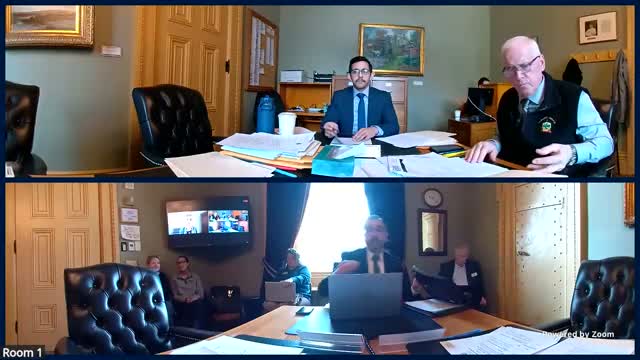
The Senate Judiciary committee on Feb. 4 examined a committee amendment to S.209 that would expand the state's list of "sensitive locations" where civil arrests are barred to include educational institutions, places of worship, polling places and a range of social‑service facilities.
The committee heard an hour of drafting detail from a bill presenter known in the hearing as Rick, who walked members through draft 1.1 of the amendment and highlighted changes from the introduced bill. "This is the sensitive location bill that I've walked through a few times," Rick said, describing additions to the prohibited‑location list and changes to remedies for noncourtroom arrests.
The amendment removes contempt as the sole remedy in many settings and adds a civil cause of action (false imprisonment) where a prohibited civil arrest occurs outside a courtroom, while preserving contempt only for courtroom arrests. The drafter told senators that the expanded list was intended to capture places where government services are provided and to include day camps and facilities regulated by the child development division.
Legislative counsel warned the committee of legal uncertainty. Dr. Anderson, legislative counsel, said federal immigration statutes and anti‑commandeering principles can limit a state's ability to constrain federal enforcement. He cited litigation stemming from New York's effort to adopt a similarly broad list and advised the committee to focus on the cohesion of enumerated items to reduce legal risk.
Committee members repeatedly urged narrowing or clearer drafting to avoid vagueness. Senators debated whether to use a fixed radius around covered sites or the traditional "traveling to and from" phrasing used for courthouses; several expressed concern that a broad travel rule could effectively extend protection across much of the state and might be vulnerable in court. "Providing the radius gives law enforcement some certainty," the drafter said, but noted the court‑proceeding language has worked in the past.
Education representatives testified about the practical consequences for students and families. A representative from education policy told the committee the department advises schools that law enforcement should be permitted on campus only if invited for educational or emergency reasons, when they present a judicial warrant, or when a subpoena or court order compels entry. The witness cited national survey figures collected before December showing that roughly half of surveyed principals and district leaders reported families expressing fear or anxiety related to federal immigration enforcement, and said that S.209 would help restore trust and attendance.
Members questioned whether the committee had Vermont‑specific data; the education witness said the figures cited were national and that she did not have raw Vermont data for December or January. Senators also raised public‑safety concerns about unmarked, armed federal agents entering schools and the potential for dangerous confrontations with school resource officers and staff. The committee discussed severability language to ensure that if one location were struck in litigation the rest of the statute could survive.
The committee did not take a final vote in the session. The chair said he would circulate drafting changes and intended to return later in the day to attempt a vote once members had reviewed the revisions.
Next procedural steps are circulation of amendment changes and a planned return vote; no formal action on S.209 was recorded in the hearing.
The committee heard an hour of drafting detail from a bill presenter known in the hearing as Rick, who walked members through draft 1.1 of the amendment and highlighted changes from the introduced bill. "This is the sensitive location bill that I've walked through a few times," Rick said, describing additions to the prohibited‑location list and changes to remedies for noncourtroom arrests.
The amendment removes contempt as the sole remedy in many settings and adds a civil cause of action (false imprisonment) where a prohibited civil arrest occurs outside a courtroom, while preserving contempt only for courtroom arrests. The drafter told senators that the expanded list was intended to capture places where government services are provided and to include day camps and facilities regulated by the child development division.
Legislative counsel warned the committee of legal uncertainty. Dr. Anderson, legislative counsel, said federal immigration statutes and anti‑commandeering principles can limit a state's ability to constrain federal enforcement. He cited litigation stemming from New York's effort to adopt a similarly broad list and advised the committee to focus on the cohesion of enumerated items to reduce legal risk.
Committee members repeatedly urged narrowing or clearer drafting to avoid vagueness. Senators debated whether to use a fixed radius around covered sites or the traditional "traveling to and from" phrasing used for courthouses; several expressed concern that a broad travel rule could effectively extend protection across much of the state and might be vulnerable in court. "Providing the radius gives law enforcement some certainty," the drafter said, but noted the court‑proceeding language has worked in the past.
Education representatives testified about the practical consequences for students and families. A representative from education policy told the committee the department advises schools that law enforcement should be permitted on campus only if invited for educational or emergency reasons, when they present a judicial warrant, or when a subpoena or court order compels entry. The witness cited national survey figures collected before December showing that roughly half of surveyed principals and district leaders reported families expressing fear or anxiety related to federal immigration enforcement, and said that S.209 would help restore trust and attendance.
Members questioned whether the committee had Vermont‑specific data; the education witness said the figures cited were national and that she did not have raw Vermont data for December or January. Senators also raised public‑safety concerns about unmarked, armed federal agents entering schools and the potential for dangerous confrontations with school resource officers and staff. The committee discussed severability language to ensure that if one location were struck in litigation the rest of the statute could survive.
The committee did not take a final vote in the session. The chair said he would circulate drafting changes and intended to return later in the day to attempt a vote once members had reviewed the revisions.
Next procedural steps are circulation of amendment changes and a planned return vote; no formal action on S.209 was recorded in the hearing.
Don't Miss a Word: See the Full Meeting!
Go beyond summaries. Unlock every video, transcript, and key insight with a Founder Membership.
✓
Get instant access to full meeting videos
✓
Search and clip any phrase from complete transcripts
✓
Receive AI-powered summaries & custom alerts
✓
Enjoy lifetime, unrestricted access to government data
30-day money-back guarantee
