Vermont farm groups urge clear statute to protect "right to grow food" after court ruling
February 05, 2026 | Agriculture, SENATE, Committees, Legislative , Vermont
This article was created by AI summarizing key points discussed. AI makes mistakes, so for full details and context, please refer to the video of the full meeting. Please report any errors so we can fix them. Report an error »
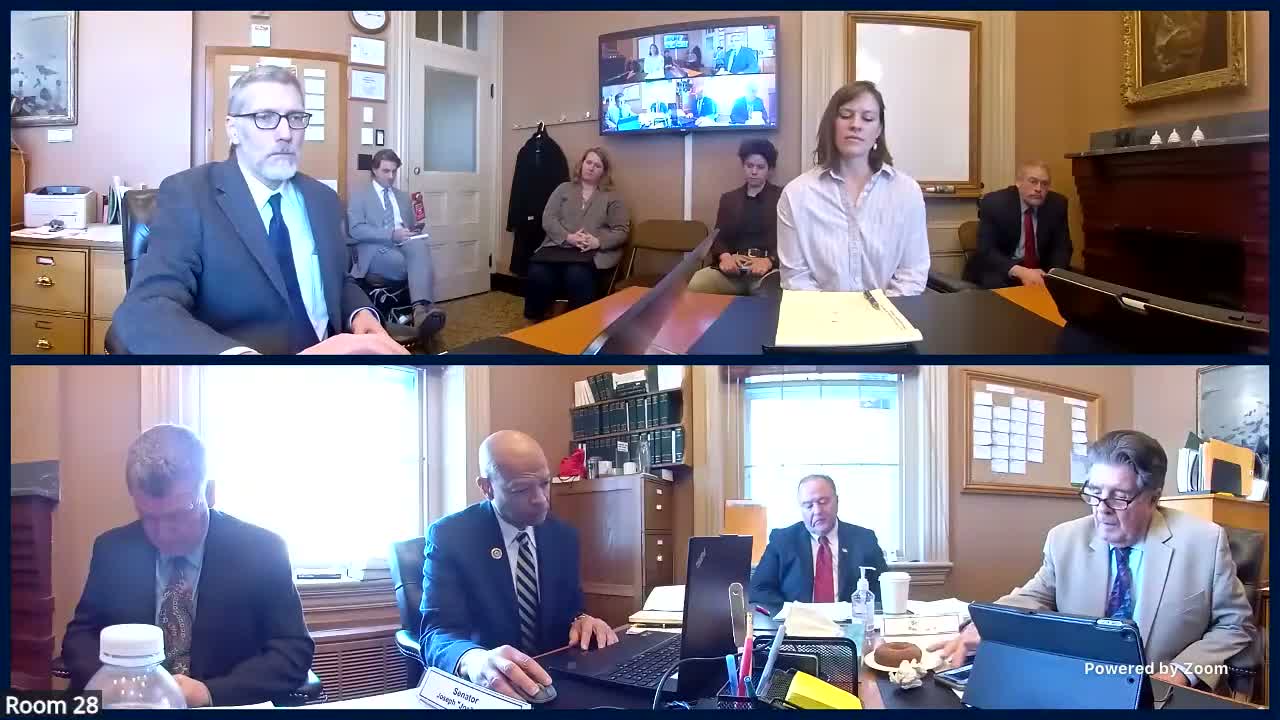
Stakeholders from Vermont's farm and food systems told a legislative committee that the state should respond to a recent Vermont Supreme Court ruling by clarifying statute rather than immediately reopening the Required Agricultural Practices (RAPs).
"We really wanna protect the right of people to grow food, including livestock," said Maddie Kepner, policy director for NOFA, during testimony supporting a legislative fix to title 24. Kepner and other witnesses urged the Legislature to preserve consistent statewide rules and avoid creating a patchwork of local regulation.
Why it matters: Witnesses said the court ruling has left uncertainty about whether towns may adopt differing rules that could restrict farming in town centers and other growth areas, risking farmland loss and complicating operations for small and beginning farmers. Coalitions representing producers, dairy groups and conservation organizations told the committee they want the municipal exemption reinstated as it was commonly understood since 1987 and for the law to explicitly protect a right to grow food.
Caroline Sherman Gordon, who identified herself as legislative director in testimony, pressed the point that the coalition's proposal would "reinstate the municipal exemption as it was understood since 1987" and codify protections so towns cannot pass zoning that effectively bars farming. Gordon cited research she said was from American Farmland Trust showing significant historic farmland loss and referenced a New England Feeding New England projection of acreage needed to meet regional food demands by 2030.
Several witnesses raised specific drafting issues the committee will need to weigh. Kepner objected to a proposed carve-out for farms smaller than 1 acre, saying "there are farms that are operating commercial[ly] on that acreage." Witnesses also questioned a proposed increase in the income threshold from 2,000 to 5,000, asking whether the higher number would exclude start-up or small-scale farms and noting that farm revenues have not kept pace with inflation in many sectors.
A personal example underscored those concerns. Gordon described starting a sheep farm in 2022 and said she invested "about 15 to $20,000 a year" before producing marketable animals, and that a farm determination from the agency allowed her to secure a best-management-practices (BMP) grant in 2024 to remedy a barnyard runoff problem.
On private covenants and homeowners associations, a committee member asked whether restrictive covenants could block agricultural activity on subdivided parcels. "Homeowners associations can't enforce covenant requirements and prohibited land uses that are not consistent with municipal or state regulation," said Samantha Shannon, who answered during the hearing, while also noting that covenants are commonly enforced and that there are bills pending that would address some HOA restrictions.
Multiple witnesses urged that the agency committed to revisit RAPs through a formal, inclusive rulemaking process after the session rather than immediately reopening rules. Amber Perry, introduced in testimony as administrator and policy director, told the committee that amending RAPs now could "introduce unnecessary confusion" and that clear statutory language in title 24 would better reflect legislative intent after the court ruling.
Where it goes next: The committee did not take a formal vote. Chair Ingalls closed by thanking witnesses and saying the committee will continue discussions. "We are going to protect farmers as as hard as we can," the chair said, and the panel signaled it will weigh statutory language to reinstate municipal exemptions and to define the right to grow food while coordinating subsequent agency rulemaking.
(Details in testimony: speakers recommended retaining the RAPs framework where possible, debated a 1-acre carve-out and contested raising a qualifying income threshold from 2,000 to 5,000; witnesses asked for explicit statutory language protecting livestock housekeeping and for an inclusive rulemaking process.)
"We really wanna protect the right of people to grow food, including livestock," said Maddie Kepner, policy director for NOFA, during testimony supporting a legislative fix to title 24. Kepner and other witnesses urged the Legislature to preserve consistent statewide rules and avoid creating a patchwork of local regulation.
Why it matters: Witnesses said the court ruling has left uncertainty about whether towns may adopt differing rules that could restrict farming in town centers and other growth areas, risking farmland loss and complicating operations for small and beginning farmers. Coalitions representing producers, dairy groups and conservation organizations told the committee they want the municipal exemption reinstated as it was commonly understood since 1987 and for the law to explicitly protect a right to grow food.
Caroline Sherman Gordon, who identified herself as legislative director in testimony, pressed the point that the coalition's proposal would "reinstate the municipal exemption as it was understood since 1987" and codify protections so towns cannot pass zoning that effectively bars farming. Gordon cited research she said was from American Farmland Trust showing significant historic farmland loss and referenced a New England Feeding New England projection of acreage needed to meet regional food demands by 2030.
Several witnesses raised specific drafting issues the committee will need to weigh. Kepner objected to a proposed carve-out for farms smaller than 1 acre, saying "there are farms that are operating commercial[ly] on that acreage." Witnesses also questioned a proposed increase in the income threshold from 2,000 to 5,000, asking whether the higher number would exclude start-up or small-scale farms and noting that farm revenues have not kept pace with inflation in many sectors.
A personal example underscored those concerns. Gordon described starting a sheep farm in 2022 and said she invested "about 15 to $20,000 a year" before producing marketable animals, and that a farm determination from the agency allowed her to secure a best-management-practices (BMP) grant in 2024 to remedy a barnyard runoff problem.
On private covenants and homeowners associations, a committee member asked whether restrictive covenants could block agricultural activity on subdivided parcels. "Homeowners associations can't enforce covenant requirements and prohibited land uses that are not consistent with municipal or state regulation," said Samantha Shannon, who answered during the hearing, while also noting that covenants are commonly enforced and that there are bills pending that would address some HOA restrictions.
Multiple witnesses urged that the agency committed to revisit RAPs through a formal, inclusive rulemaking process after the session rather than immediately reopening rules. Amber Perry, introduced in testimony as administrator and policy director, told the committee that amending RAPs now could "introduce unnecessary confusion" and that clear statutory language in title 24 would better reflect legislative intent after the court ruling.
Where it goes next: The committee did not take a formal vote. Chair Ingalls closed by thanking witnesses and saying the committee will continue discussions. "We are going to protect farmers as as hard as we can," the chair said, and the panel signaled it will weigh statutory language to reinstate municipal exemptions and to define the right to grow food while coordinating subsequent agency rulemaking.
(Details in testimony: speakers recommended retaining the RAPs framework where possible, debated a 1-acre carve-out and contested raising a qualifying income threshold from 2,000 to 5,000; witnesses asked for explicit statutory language protecting livestock housekeeping and for an inclusive rulemaking process.)
View the Full Meeting & All Its Details
This article offers just a summary. Unlock complete video, transcripts, and insights as a Founder Member.
✓
Watch full, unedited meeting videos
✓
Search every word spoken in unlimited transcripts
✓
AI summaries & real-time alerts (all government levels)
✓
Permanent access to expanding government content
30-day money-back guarantee
