Committee reviews redraft of H.583 that would bar private‑equity and REIT ownership of certain health facilities
February 05, 2026 | Health Care, HOUSE OF REPRESENTATIVES, Committees, Legislative , Vermont
This article was created by AI summarizing key points discussed. AI makes mistakes, so for full details and context, please refer to the video of the full meeting. Please report any errors so we can fix them. Report an error »
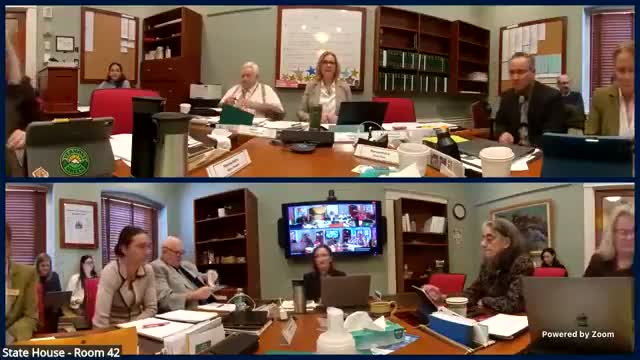
A legislative committee on Feb. 4 reviewed a strike‑all draft of H.583 that would refocus the bill from limiting particular financial transactions to restricting ownership structures of health care facilities and strengthening protections for clinical decision‑making.
Jen Garvey of the Office of Legislative Council presented the revised draft, saying it replaces transaction‑based limits with prohibitions on certain ownership models. "Beginning on 01/01/2027, the following healthcare facility ownership structures are prohibited," Garvey told the committee, listing ownership or control of core operations by a private equity company or a real estate investment trust, and certain for‑profit ownership except professional corporations or professional limited liability companies formed under Title 11 provisions.
The draft would also bar state licensing agencies from issuing a new or renewal license after 01/01/2027 to facilities with those ownership structures; Garvey said facilities operating on 07/01/2026 would have until 07/01/2029 to come into compliance, and that penalties and a private right of action modeled on national recommendations are included but subject to further refinement. She urged the committee to consult licensing bodies about implementation and enforcement.
Why it matters: supporters of the redraft said the changes are designed to protect clinical autonomy and community access by preventing ownership arrangements they say can exert financial pressures on care delivery. Opponents and some stakeholders warned the bill as written could create new administrative burdens and unintentionally limit access to services.
Representatives of federally qualified health centers urged caution. "FQHCs are designated in federal statute" and face detailed federal oversight, Georgina Harris of Bi‑State Primary Care Association told the committee, warning that duplicate state reporting and unclear exclusions could impose substantial administrative work on health centers. Harris noted FQHCs operate under a federal governance model with patient‑majority boards and prior federal approval for mergers or major transactions.
Kayla Davis, co‑executive director of Battenkill Valley Health Center, described how community health centers rely on debt financing and said broad language banning certain transactions or financing could hinder planned expansion or absorption of retiring private practices. "This bill also imposes duplicate oversight on FQHCs," Davis said, urging the committee to consider operational impacts and to coordinate with federal regulators and provider organizations on workable exemptions.
A registered nurse, Audrey Sprague, who worked at hospitals later owned by Steward Healthcare, told the committee she witnessed staffing reductions, deferred maintenance and vendor nonpayment after a private‑equity acquisition and credited those changes with long‑term harm to patient care and community access. She gave a personal account of caring for her critically ill son amid acute staffing shortages and urged lawmakers to adopt strong guardrails: "Don't let them in," Sprague said of private‑equity owners.
Committee members pressed staff and witnesses on several technical and policy questions: whether pharmacy benefit managers and insurers should be included in the bill's definition of "health care entity," how the draft's "meaningful ownership" requirement — which says each licensee owner must be "duly licensed and present in this state" — could affect telehealth providers and out‑of‑state organizations, and what transition assistance or public investment options might be available for facilities forced to change ownership structures.
Garvey said many details remain subject to revision and that the draft borrows enforcement and auditing language from model statutes, including a two‑year reporting cycle for ownership disclosures, an audit authority for the attorney general and the Green Mountain Care Board, and placeholder penalty amounts that the committee can adjust.
What’s next: committee members asked for additional input from licensing agencies, the attorney general, the Green Mountain Care Board and affected providers to clarify implementation, telehealth implications and possible financing or transition support for facilities that might be affected. No vote was taken at the Feb. 4 meeting; the bill is expected to return for further committee discussion.
Jen Garvey of the Office of Legislative Council presented the revised draft, saying it replaces transaction‑based limits with prohibitions on certain ownership models. "Beginning on 01/01/2027, the following healthcare facility ownership structures are prohibited," Garvey told the committee, listing ownership or control of core operations by a private equity company or a real estate investment trust, and certain for‑profit ownership except professional corporations or professional limited liability companies formed under Title 11 provisions.
The draft would also bar state licensing agencies from issuing a new or renewal license after 01/01/2027 to facilities with those ownership structures; Garvey said facilities operating on 07/01/2026 would have until 07/01/2029 to come into compliance, and that penalties and a private right of action modeled on national recommendations are included but subject to further refinement. She urged the committee to consult licensing bodies about implementation and enforcement.
Why it matters: supporters of the redraft said the changes are designed to protect clinical autonomy and community access by preventing ownership arrangements they say can exert financial pressures on care delivery. Opponents and some stakeholders warned the bill as written could create new administrative burdens and unintentionally limit access to services.
Representatives of federally qualified health centers urged caution. "FQHCs are designated in federal statute" and face detailed federal oversight, Georgina Harris of Bi‑State Primary Care Association told the committee, warning that duplicate state reporting and unclear exclusions could impose substantial administrative work on health centers. Harris noted FQHCs operate under a federal governance model with patient‑majority boards and prior federal approval for mergers or major transactions.
Kayla Davis, co‑executive director of Battenkill Valley Health Center, described how community health centers rely on debt financing and said broad language banning certain transactions or financing could hinder planned expansion or absorption of retiring private practices. "This bill also imposes duplicate oversight on FQHCs," Davis said, urging the committee to consider operational impacts and to coordinate with federal regulators and provider organizations on workable exemptions.
A registered nurse, Audrey Sprague, who worked at hospitals later owned by Steward Healthcare, told the committee she witnessed staffing reductions, deferred maintenance and vendor nonpayment after a private‑equity acquisition and credited those changes with long‑term harm to patient care and community access. She gave a personal account of caring for her critically ill son amid acute staffing shortages and urged lawmakers to adopt strong guardrails: "Don't let them in," Sprague said of private‑equity owners.
Committee members pressed staff and witnesses on several technical and policy questions: whether pharmacy benefit managers and insurers should be included in the bill's definition of "health care entity," how the draft's "meaningful ownership" requirement — which says each licensee owner must be "duly licensed and present in this state" — could affect telehealth providers and out‑of‑state organizations, and what transition assistance or public investment options might be available for facilities forced to change ownership structures.
Garvey said many details remain subject to revision and that the draft borrows enforcement and auditing language from model statutes, including a two‑year reporting cycle for ownership disclosures, an audit authority for the attorney general and the Green Mountain Care Board, and placeholder penalty amounts that the committee can adjust.
What’s next: committee members asked for additional input from licensing agencies, the attorney general, the Green Mountain Care Board and affected providers to clarify implementation, telehealth implications and possible financing or transition support for facilities that might be affected. No vote was taken at the Feb. 4 meeting; the bill is expected to return for further committee discussion.
Don't Miss a Word: See the Full Meeting!
Go beyond summaries. Unlock every video, transcript, and key insight with a Founder Membership.
✓
Get instant access to full meeting videos
✓
Search and clip any phrase from complete transcripts
✓
Receive AI-powered summaries & custom alerts
✓
Enjoy lifetime, unrestricted access to government data
30-day money-back guarantee
