Appeals court hears challenge to denial of plea-withdrawal where prosecutor’s DNA statements are disputed
February 05, 2026 | Judicial - Appeals Court Oral Arguments, Judicial, Massachusetts
This article was created by AI summarizing key points discussed. AI makes mistakes, so for full details and context, please refer to the video of the full meeting. Please report any errors so we can fix them. Report an error »
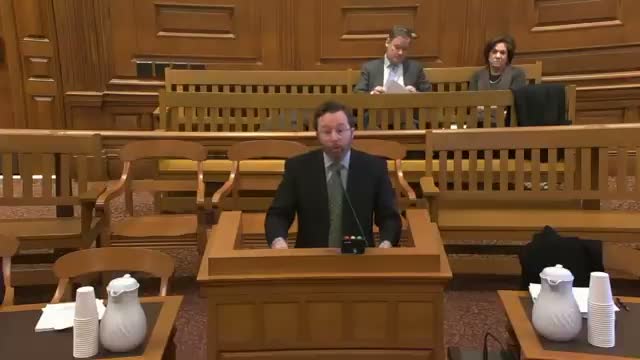
Andrew Crouch, arguing for defendant Michael Andrews, told the appeals panel that the trial judge rested her denial of his client’s motion to withdraw a guilty plea on two contested documents — a fax cover sheet and a signed (“wet”) letter — while failing to account for testimonial and discovery material that, defense counsel said, showed the prosecutor had told defense counsel of DNA results on Feb. 29, 2000.
Crouch urged the court to review documentary evidence de novo, contending the motion judge made incomplete findings, ignored case-progress notes and the discovery timeline, and did not explain how she evaluated conflicting affidavits from defense counsel Scott Skolnick. He also argued that parts of the defendant’s testimony were corroborated by Skolnick and that the court’s silence on those points left material gaps.
The Commonwealth, represented by Michael Locke, said the motion judge conducted an evidentiary hearing, heard testimony, and made findings supported by the record. Locke acknowledged some inaccuracies in the wet letter’s description of the DNA profile but pointed out a lab report and contemporaneous notations (including a 03/07 “spoke to Scott” entry) that, he said, undercut the defense theory. He argued that the judge’s credibility determinations were within her discretion and not clearly erroneous.
The justices pressed both sides on the governing Scott framework for plea withdrawal — whether there was egregious government misconduct and, separately, whether any misconduct was material to the plea — and on whether the judge’s exclusive focus on the first prong foreclosed meaningful appellate review of materiality. The panel also examined whether permitting broad inquiry into attorney-client communications when a plea-withdrawal motion is filed imperils privilege.
After extended questioning of both advocates, the court marked the case submitted for decision.
Crouch urged the court to review documentary evidence de novo, contending the motion judge made incomplete findings, ignored case-progress notes and the discovery timeline, and did not explain how she evaluated conflicting affidavits from defense counsel Scott Skolnick. He also argued that parts of the defendant’s testimony were corroborated by Skolnick and that the court’s silence on those points left material gaps.
The Commonwealth, represented by Michael Locke, said the motion judge conducted an evidentiary hearing, heard testimony, and made findings supported by the record. Locke acknowledged some inaccuracies in the wet letter’s description of the DNA profile but pointed out a lab report and contemporaneous notations (including a 03/07 “spoke to Scott” entry) that, he said, undercut the defense theory. He argued that the judge’s credibility determinations were within her discretion and not clearly erroneous.
The justices pressed both sides on the governing Scott framework for plea withdrawal — whether there was egregious government misconduct and, separately, whether any misconduct was material to the plea — and on whether the judge’s exclusive focus on the first prong foreclosed meaningful appellate review of materiality. The panel also examined whether permitting broad inquiry into attorney-client communications when a plea-withdrawal motion is filed imperils privilege.
After extended questioning of both advocates, the court marked the case submitted for decision.
Don't Miss a Word: See the Full Meeting!
Go beyond summaries. Unlock every video, transcript, and key insight with a Founder Membership.
✓
Get instant access to full meeting videos
✓
Search and clip any phrase from complete transcripts
✓
Receive AI-powered summaries & custom alerts
✓
Enjoy lifetime, unrestricted access to government data
30-day money-back guarantee
