Eagle Pass staff outlines zoning changes to allow smaller lots, triplexes and fourplexes to increase housing options
February 05, 2026 | Eagle Pass, Maverick County, Texas
This article was created by AI summarizing key points discussed. AI makes mistakes, so for full details and context, please refer to the video of the full meeting. Please report any errors so we can fix them. Report an error »
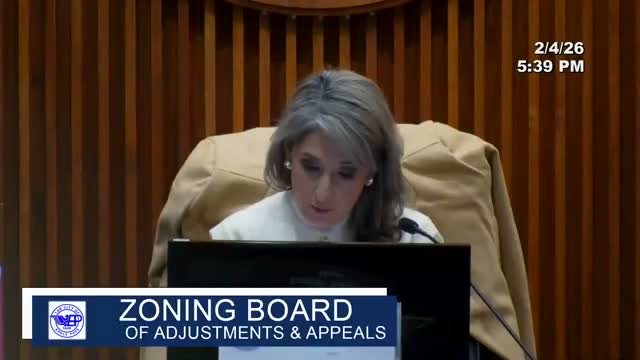
Temporary planner Gabriel Castaneda presented a summary of zoning ordinance amendments that city staff said are intended to expand housing options by lowering lot‑size minimums and allowing more units on single lots.
"This is a presentation on some of the ordinance amendments that were pushed forward yesterday," Castaneda said, describing changes to R‑1, R‑2 and R‑3 districts that reduce minimum lot widths and depths, and noting a new category for duplexes, triplexes and fourplexes. He said the amendments give developers more flexibility to design smaller, more affordable units.
Key changes outlined by staff include reducing an R‑3 lot minimum from 7,000 to 6,000 square feet with front setback changes (front setback from 25 to 22 feet in some districts and minimum depth reductions from 110 to 90 feet), creation of R‑6 and R‑7 districts lowering minimum lot sizes progressively (R‑6 down to 4,000 sq ft; R‑7 to 3,000 sq ft), and an R‑8 high‑density single‑family district with a minimum lot size of 1,800 sq ft and a three‑story or 42‑foot height cap.
Castaneda said the amendment adds allowance for triplexes and fourplexes on individual lots to increase unit supply, and noted townhouse height limits were adjusted in some districts. The presentation also explained reductions to parking requirements: generally two spaces per unit for most multi‑unit districts and in some smallest‑unit zones a single parking space requirement. Staff said on‑street parking and off‑street options are considered during plan review.
Board members questioned feasibility on narrow streets and whether the city could effectively limit projects that technically meet ordinance standards but create circulation or parking problems. Member (S3) pressed staff: "If the ordinance says they can do it, what does the plan review have to do with anything?" Staff replied that plan review and engineering assessments identify site‑specific constraints and that, while the ordinance sets allowable development, some proposals may be reconsidered if they create practical problems. Staff acknowledged an earlier contradictory explanation and apologized for the confusion.
On accessibility, a board member noted the proposed reductions would reduce onsite handicap parking in some cases. Staff responded that ADA or TDLR accessibility triggers are situation‑specific and not automatically required for every small residential project, but they will consider state standards and program requirements where applicable.
Staff emphasized the presentation was informational: the amendments had been considered at city council and the presentation explained how the changes would be implemented through plan review and engineering checks. The meeting closed with a reminder that each application must still comply with ordinance criteria and pass plan review before construction can proceed. The board adjourned at 5:58 p.m.
"This is a presentation on some of the ordinance amendments that were pushed forward yesterday," Castaneda said, describing changes to R‑1, R‑2 and R‑3 districts that reduce minimum lot widths and depths, and noting a new category for duplexes, triplexes and fourplexes. He said the amendments give developers more flexibility to design smaller, more affordable units.
Key changes outlined by staff include reducing an R‑3 lot minimum from 7,000 to 6,000 square feet with front setback changes (front setback from 25 to 22 feet in some districts and minimum depth reductions from 110 to 90 feet), creation of R‑6 and R‑7 districts lowering minimum lot sizes progressively (R‑6 down to 4,000 sq ft; R‑7 to 3,000 sq ft), and an R‑8 high‑density single‑family district with a minimum lot size of 1,800 sq ft and a three‑story or 42‑foot height cap.
Castaneda said the amendment adds allowance for triplexes and fourplexes on individual lots to increase unit supply, and noted townhouse height limits were adjusted in some districts. The presentation also explained reductions to parking requirements: generally two spaces per unit for most multi‑unit districts and in some smallest‑unit zones a single parking space requirement. Staff said on‑street parking and off‑street options are considered during plan review.
Board members questioned feasibility on narrow streets and whether the city could effectively limit projects that technically meet ordinance standards but create circulation or parking problems. Member (S3) pressed staff: "If the ordinance says they can do it, what does the plan review have to do with anything?" Staff replied that plan review and engineering assessments identify site‑specific constraints and that, while the ordinance sets allowable development, some proposals may be reconsidered if they create practical problems. Staff acknowledged an earlier contradictory explanation and apologized for the confusion.
On accessibility, a board member noted the proposed reductions would reduce onsite handicap parking in some cases. Staff responded that ADA or TDLR accessibility triggers are situation‑specific and not automatically required for every small residential project, but they will consider state standards and program requirements where applicable.
Staff emphasized the presentation was informational: the amendments had been considered at city council and the presentation explained how the changes would be implemented through plan review and engineering checks. The meeting closed with a reminder that each application must still comply with ordinance criteria and pass plan review before construction can proceed. The board adjourned at 5:58 p.m.
Don't Miss a Word: See the Full Meeting!
Go beyond summaries. Unlock every video, transcript, and key insight with a Founder Membership.
✓
Get instant access to full meeting videos
✓
Search and clip any phrase from complete transcripts
✓
Receive AI-powered summaries & custom alerts
✓
Enjoy lifetime, unrestricted access to government data
30-day money-back guarantee
