Appeals court hears complex beachfront easement fight over merger, relocation and overloading
February 05, 2026 | Judicial - Appeals Court Oral Arguments, Judicial, Massachusetts
This article was created by AI summarizing key points discussed. AI makes mistakes, so for full details and context, please refer to the video of the full meeting. Please report any errors so we can fix them. Report an error »
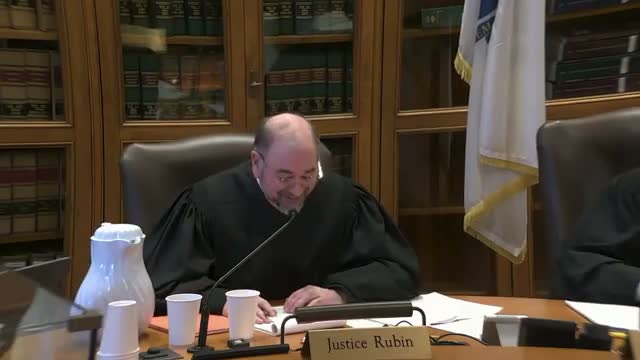
Appellant David Liberdoni argued that partial merger and later conveyances limited the scope of historic easement rights, and that where after‑acquired parcels were added the court should recognize overloading or, alternatively, enjoin certain uses of the easement that unreasonably burden the servient estate. Liberdoni urged remand for factual development on overburdening and alleged relocation of easement rights present in chain-of-title deeds.
Appellees’ counsel, including Giles Krill and Mary Catadella, urged deference to the land court’s factual findings and argued that established Massachusetts merger law (Cheever and related authorities) does not support the sweeping servient-estate extinguishment the appellant proposes. They emphasized recorded deeds and chain-of-title language granting rights “to the beach in front of the lot” and said relocation was not briefed below and should not be considered by the appellate court.
The panel examined practical consequences — how a land court should identify precise pass-and-repass corridors, whether the judge can tailor remedies, and whether an owner who once held both dominant and servient parcels may choose to limit beach use when reselling parts of the former dominant estate. The justices took the arguments under advisement.
Appellees’ counsel, including Giles Krill and Mary Catadella, urged deference to the land court’s factual findings and argued that established Massachusetts merger law (Cheever and related authorities) does not support the sweeping servient-estate extinguishment the appellant proposes. They emphasized recorded deeds and chain-of-title language granting rights “to the beach in front of the lot” and said relocation was not briefed below and should not be considered by the appellate court.
The panel examined practical consequences — how a land court should identify precise pass-and-repass corridors, whether the judge can tailor remedies, and whether an owner who once held both dominant and servient parcels may choose to limit beach use when reselling parts of the former dominant estate. The justices took the arguments under advisement.
Don't Miss a Word: See the Full Meeting!
Go beyond summaries. Unlock every video, transcript, and key insight with a Founder Membership.
✓
Get instant access to full meeting videos
✓
Search and clip any phrase from complete transcripts
✓
Receive AI-powered summaries & custom alerts
✓
Enjoy lifetime, unrestricted access to government data
30-day money-back guarantee
