Matanuska-Susitna planning board recommends denial of proposal to reduce minimum lot size to 30,000 sq ft
February 05, 2026 | Matanuska-Susitna Borough, Alaska
This article was created by AI summarizing key points discussed. AI makes mistakes, so for full details and context, please refer to the video of the full meeting. Please report any errors so we can fix them. Report an error »
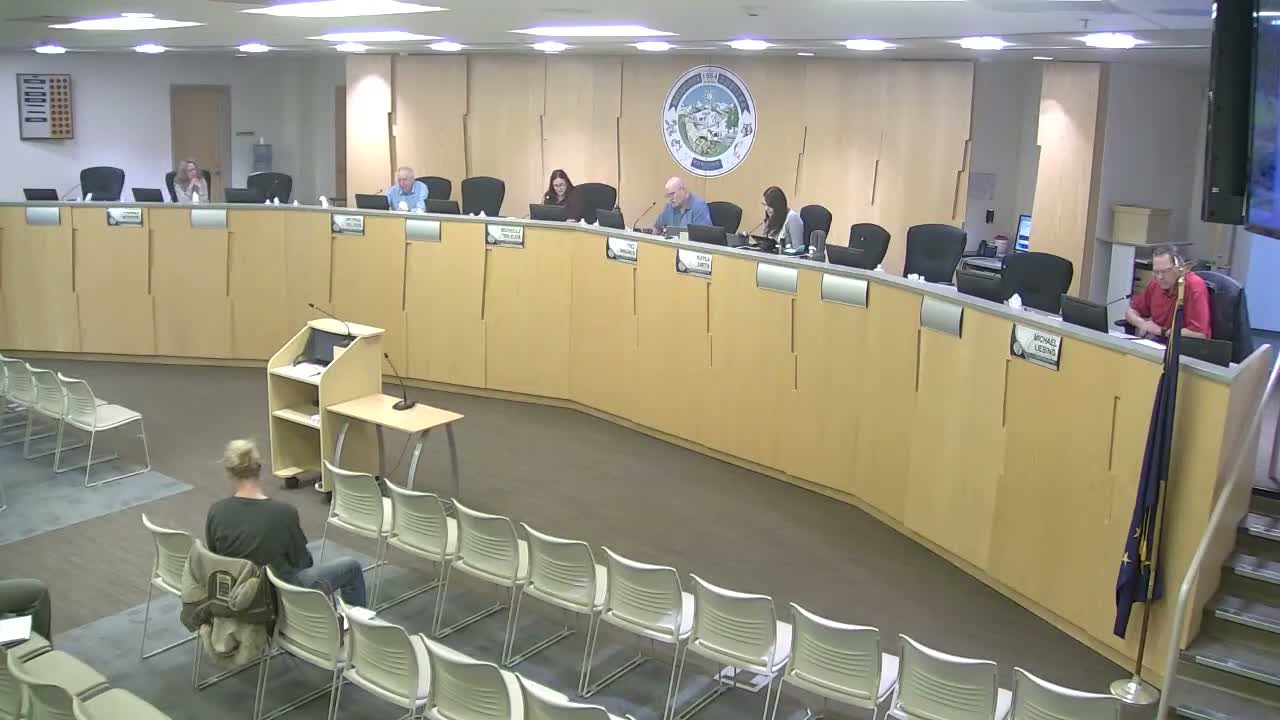
The Matanuska-Susitna Borough Planning Board on Tuesday recommended that the Borough Assembly deny a proposed ordinance that would allow lots in single-family residential districts to be reduced to 30,000 square feet.
The board approved an amendment to its written recommendation that states the planning board "does not agree that the proposed standards support the goals and objectives of the Matanuska-Susitna Borough comprehensive plan," citing public-safety and water-quality concerns, potential conflict with the borough's open-space provisions, and unresolved questions about how the change would interact with multifamily permitting.
The issue was the central item of the meeting after the board voted to reopen public comment on an item that had been postponed from a prior hearing. Resident Sandra Krieger asked that plats show "a relocation area for future septic systems and future water well systems" and urged requiring wider road frontages so lots are not long and narrow. She said such measures would make it easier to relocate failing septic systems in the future.
"I would like to see also on the plats that a relocation area for future septic systems and future water well systems be put on the plat," Krieger said.
Chuck Lee, president and owner of Alaska Rim Engineering, told the board increasing density can raise nitrates from septic systems and questioned local enforcement capacity. Lee said advanced septic treatment with denitrification can reduce leach-field size roughly by half but costs "somewhere between $30,000 and $60,000." He also said when effluent exceeds 2,500 gallons it can trigger a federal injection-well permit requirement.
"The nitrates that come from our septic systems. Nitrates are on the rise," Lee said, adding that enforcement by the Alaska Department of Environmental Conservation (ADEC) has been reduced in his view.
A surveyor, Ellery Gibbs, also testified in opposition, saying the current 40,000-square-foot standard better controls how many wells and septic systems would be created compared with reducing minimum lots to 30,000 square feet.
Planning Director Alex Strong told the board the proposed ordinance is intended as an "alternative way" to increase density while limiting developments to single-family residences; staff emphasized that multifamily permitting remains a separate route that can deliver higher density under the existing code. Planning Officer Fred Wagner and staff also explained the open-space option in current code that allows smaller lots when open space is provided, and they discussed how the proposed change could be confused with or compound those provisions.
"I will say that's not the intent," Strong said of compounding reductions, and he added the planning department could expect a future ordinance to address multifamily permitting more directly.
After discussion and a brief recess to draft language, Fred Wagner read the amendment that replaced a recommendation of approval with language recommending denial and enumerated the planning board's reasons, including potential conflicts with the open-space section (as read into the record) and concerns about protecting groundwater and aquifers.
A board member moved to adopt the amendment; it was seconded and approved by voice vote. The main motion, with the amendment in place, then passed by assent. No roll-call vote or individual vote tallies were recorded in the transcript.
The board's written recommendation will go to the Borough Assembly for final action. Planning Officer Fred Wagner told the board there are four cases scheduled for the next meeting. The chair adjourned the session at 2:11 PM.
The board approved an amendment to its written recommendation that states the planning board "does not agree that the proposed standards support the goals and objectives of the Matanuska-Susitna Borough comprehensive plan," citing public-safety and water-quality concerns, potential conflict with the borough's open-space provisions, and unresolved questions about how the change would interact with multifamily permitting.
The issue was the central item of the meeting after the board voted to reopen public comment on an item that had been postponed from a prior hearing. Resident Sandra Krieger asked that plats show "a relocation area for future septic systems and future water well systems" and urged requiring wider road frontages so lots are not long and narrow. She said such measures would make it easier to relocate failing septic systems in the future.
"I would like to see also on the plats that a relocation area for future septic systems and future water well systems be put on the plat," Krieger said.
Chuck Lee, president and owner of Alaska Rim Engineering, told the board increasing density can raise nitrates from septic systems and questioned local enforcement capacity. Lee said advanced septic treatment with denitrification can reduce leach-field size roughly by half but costs "somewhere between $30,000 and $60,000." He also said when effluent exceeds 2,500 gallons it can trigger a federal injection-well permit requirement.
"The nitrates that come from our septic systems. Nitrates are on the rise," Lee said, adding that enforcement by the Alaska Department of Environmental Conservation (ADEC) has been reduced in his view.
A surveyor, Ellery Gibbs, also testified in opposition, saying the current 40,000-square-foot standard better controls how many wells and septic systems would be created compared with reducing minimum lots to 30,000 square feet.
Planning Director Alex Strong told the board the proposed ordinance is intended as an "alternative way" to increase density while limiting developments to single-family residences; staff emphasized that multifamily permitting remains a separate route that can deliver higher density under the existing code. Planning Officer Fred Wagner and staff also explained the open-space option in current code that allows smaller lots when open space is provided, and they discussed how the proposed change could be confused with or compound those provisions.
"I will say that's not the intent," Strong said of compounding reductions, and he added the planning department could expect a future ordinance to address multifamily permitting more directly.
After discussion and a brief recess to draft language, Fred Wagner read the amendment that replaced a recommendation of approval with language recommending denial and enumerated the planning board's reasons, including potential conflicts with the open-space section (as read into the record) and concerns about protecting groundwater and aquifers.
A board member moved to adopt the amendment; it was seconded and approved by voice vote. The main motion, with the amendment in place, then passed by assent. No roll-call vote or individual vote tallies were recorded in the transcript.
The board's written recommendation will go to the Borough Assembly for final action. Planning Officer Fred Wagner told the board there are four cases scheduled for the next meeting. The chair adjourned the session at 2:11 PM.
View the Full Meeting & All Its Details
This article offers just a summary. Unlock complete video, transcripts, and insights as a Founder Member.
✓
Watch full, unedited meeting videos
✓
Search every word spoken in unlimited transcripts
✓
AI summaries & real-time alerts (all government levels)
✓
Permanent access to expanding government content
30-day money-back guarantee
