Boston City Council adopts new rules after hours of debate over education authority and debate limits
February 05, 2026 | Boston City, Suffolk County, Massachusetts
This article was created by AI summarizing key points discussed. AI makes mistakes, so for full details and context, please refer to the video of the full meeting. Please report any errors so we can fix them. Report an error »
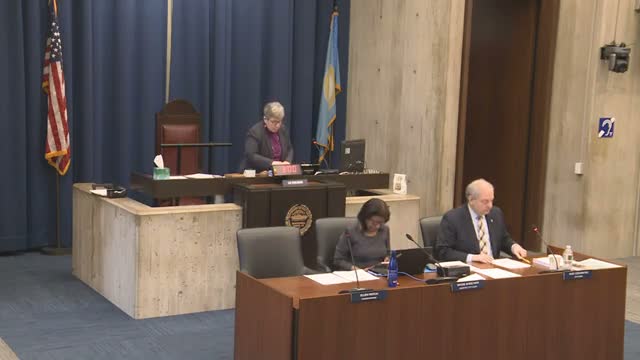
The Boston City Council adopted a revised set of internal rules for the 2026–2027 municipal years after an hours‑long debate over committee authority and debate limits.
Council President announced the Committee of the Whole report on Docket 0157 and recommended the rules be moved to the full council in a new draft. The discussion focused in particular on Rule 36 (the Committee on Education) and Rule 40a (voting procedures). Councilor Maheer Mejia offered a package of amendments that would explicitly expand the education committee’s description to include Boston Public Schools facilities, early childhood and higher education (including historically Black colleges and community colleges), and references to appropriations and budget items related to BPS.
Supporters of Mejia’s amendments said they would give the council sustained oversight over education policy and the budgets that affect student outcomes. “Moving this work to the education committee allows us to slow down, ask better questions, follow issues across the year, and directly connect spending decisions to student outcomes,” Councilor Murphy said. Opponents warned that removing substantial budget review from Ways and Means could fragment fiscal oversight and complicate the city’s existing budget process; Councilor Weber argued the change risked turning budget assignments into political play.
Councilors also debated a procedural motion from Councilor Durkin to limit debate on the rules to one hour. That motion was seconded and briefly passed by a simple roll‑call tally, but the clerk later advised that under parliamentary precedents a motion to limit or extend debate requires a two‑thirds vote; the clerk therefore recorded that the one‑hour motion failed on the higher threshold.
On individual amendments, the council approved several of Mejia’s line edits. Amendment A — which inserted explicit language about the education committee’s oversight of equitable educational services and references to BPS teachers, staff and administrators — passed by roll call, 12–1. Other amendments were tabled, amended, or defeated in subsequent votes. After the line‑by‑line work, the council took a final roll call on Docket 0157 as amended. The measure was adopted 11–2.
The rules package included changes meant to increase transparency and clarify committee jurisdictions, and the council’s leaders said they hope the updated language will guide committee work through the next two‑year municipal term. The president and several councilors urged colleagues to use newly codified committee tools — including a new “public testimony sessions” event type — to move policy work into hearings rather than relying solely on council floor debate.
The rules vote closes a contentious early‑term chapter for the council. Several councilors expressed a desire to keep working on process issues and to schedule committee hearings where technical or interagency questions require deeper review; in several exchanges members specifically asked that complicated items be scheduled for committee review rather than decided in a single council meeting.
What happens next: the newly adopted rules will guide committee assignments and hearing procedures for the coming municipal years. Councilors who asked for hearings said they plan to use the committees to test how the rules operate in practice and to request additional clarifications if needed.
Council President announced the Committee of the Whole report on Docket 0157 and recommended the rules be moved to the full council in a new draft. The discussion focused in particular on Rule 36 (the Committee on Education) and Rule 40a (voting procedures). Councilor Maheer Mejia offered a package of amendments that would explicitly expand the education committee’s description to include Boston Public Schools facilities, early childhood and higher education (including historically Black colleges and community colleges), and references to appropriations and budget items related to BPS.
Supporters of Mejia’s amendments said they would give the council sustained oversight over education policy and the budgets that affect student outcomes. “Moving this work to the education committee allows us to slow down, ask better questions, follow issues across the year, and directly connect spending decisions to student outcomes,” Councilor Murphy said. Opponents warned that removing substantial budget review from Ways and Means could fragment fiscal oversight and complicate the city’s existing budget process; Councilor Weber argued the change risked turning budget assignments into political play.
Councilors also debated a procedural motion from Councilor Durkin to limit debate on the rules to one hour. That motion was seconded and briefly passed by a simple roll‑call tally, but the clerk later advised that under parliamentary precedents a motion to limit or extend debate requires a two‑thirds vote; the clerk therefore recorded that the one‑hour motion failed on the higher threshold.
On individual amendments, the council approved several of Mejia’s line edits. Amendment A — which inserted explicit language about the education committee’s oversight of equitable educational services and references to BPS teachers, staff and administrators — passed by roll call, 12–1. Other amendments were tabled, amended, or defeated in subsequent votes. After the line‑by‑line work, the council took a final roll call on Docket 0157 as amended. The measure was adopted 11–2.
The rules package included changes meant to increase transparency and clarify committee jurisdictions, and the council’s leaders said they hope the updated language will guide committee work through the next two‑year municipal term. The president and several councilors urged colleagues to use newly codified committee tools — including a new “public testimony sessions” event type — to move policy work into hearings rather than relying solely on council floor debate.
The rules vote closes a contentious early‑term chapter for the council. Several councilors expressed a desire to keep working on process issues and to schedule committee hearings where technical or interagency questions require deeper review; in several exchanges members specifically asked that complicated items be scheduled for committee review rather than decided in a single council meeting.
What happens next: the newly adopted rules will guide committee assignments and hearing procedures for the coming municipal years. Councilors who asked for hearings said they plan to use the committees to test how the rules operate in practice and to request additional clarifications if needed.
Don't Miss a Word: See the Full Meeting!
Go beyond summaries. Unlock every video, transcript, and key insight with a Founder Membership.
✓
Get instant access to full meeting videos
✓
Search and clip any phrase from complete transcripts
✓
Receive AI-powered summaries & custom alerts
✓
Enjoy lifetime, unrestricted access to government data
30-day money-back guarantee
