Appeals court hears challenge to officers' immunity claims after Plymouth shooting
February 05, 2026 | Judicial - Appeals Court Oral Arguments, Judicial, Massachusetts
This article was created by AI summarizing key points discussed. AI makes mistakes, so for full details and context, please refer to the video of the full meeting. Please report any errors so we can fix them. Report an error »
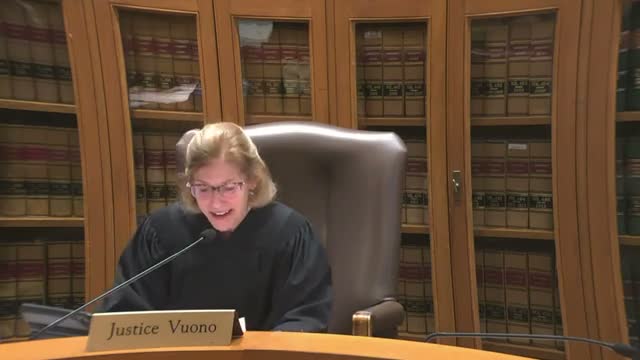
Counsel for the Plymouth police officers asked the appeals panel to reverse the superior court’s denial of summary judgment and grant immunity, arguing the officers’ use of deadly force was objectively reasonable in a rapidly evolving shooting and that doctrines such as Heck v. Humphrey and Tinsley bar relitigation of facts inconsistent with the criminal plea. "... there’s only one single dispositive issue for this appeal, whether the officer's use of deadly force was objectively reasonable as a matter of law," counsel Francesca Papia told the court.
Plaintiff’s counsel Robert Johnson countered that factual disputes remain regarding whether officers shot the plaintiff after an order to "ceasefire," whether the plaintiff had dropped or discharged his pistol before later shots, and whether officers used inappropriate weaponry against a known-mentally-ill person. "There are genuine issues of material fact which should be decided by this court," Johnson said, urging affirmation of the trial judge.
Why it matters: The appeal raises two interrelated questions: (1) whether factual disputes visible on video or in witness accounts preclude summary judgment, and (2) whether qualified and common-law immunity apply when an officer’s split-second decision may be mistaken but reasonable under existing precedent.
Key details: Counsel debated which portions of surveillance video are admissible or were before the trial judge, whether portions were deleted, and how prior guilty pleas (and admissions) affect relitigation of facts. The panel asked about the timing between an officer’s shouted "hold your fire" and a subsequent shot, and about the reasonableness of deploying semiautomatic rifles when a subject is known to have mental illness.
Next steps: The panel recessed after argument and took the case under advisement.
Plaintiff’s counsel Robert Johnson countered that factual disputes remain regarding whether officers shot the plaintiff after an order to "ceasefire," whether the plaintiff had dropped or discharged his pistol before later shots, and whether officers used inappropriate weaponry against a known-mentally-ill person. "There are genuine issues of material fact which should be decided by this court," Johnson said, urging affirmation of the trial judge.
Why it matters: The appeal raises two interrelated questions: (1) whether factual disputes visible on video or in witness accounts preclude summary judgment, and (2) whether qualified and common-law immunity apply when an officer’s split-second decision may be mistaken but reasonable under existing precedent.
Key details: Counsel debated which portions of surveillance video are admissible or were before the trial judge, whether portions were deleted, and how prior guilty pleas (and admissions) affect relitigation of facts. The panel asked about the timing between an officer’s shouted "hold your fire" and a subsequent shot, and about the reasonableness of deploying semiautomatic rifles when a subject is known to have mental illness.
Next steps: The panel recessed after argument and took the case under advisement.
View the Full Meeting & All Its Details
This article offers just a summary. Unlock complete video, transcripts, and insights as a Founder Member.
✓
Watch full, unedited meeting videos
✓
Search every word spoken in unlimited transcripts
✓
AI summaries & real-time alerts (all government levels)
✓
Permanent access to expanding government content
30-day money-back guarantee
