Senate Health & Welfare reviews S.157's rule allowing certified recovery residences to immediately remove residents who violate program rules
February 05, 2026 | Health & Welfare, SENATE, Committees, Legislative , Vermont
This article was created by AI summarizing key points discussed. AI makes mistakes, so for full details and context, please refer to the video of the full meeting. Please report any errors so we can fix them. Report an error »
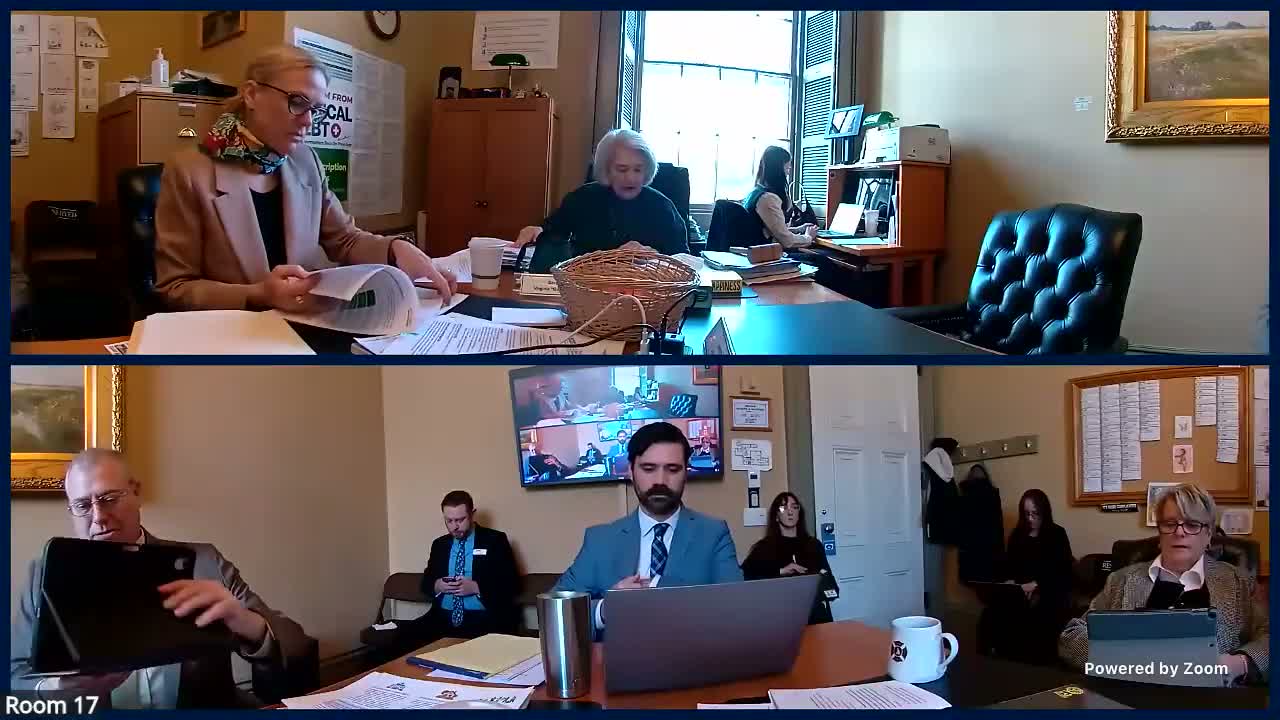
Cameron Wood of the Office of Legislative Council told the Senate Health & Welfare Committee on Feb. 4 that Title 9, Chapter 137 (residential rental agreements) already contains narrow exclusions that, when conditions are met, allow certified recovery residences to immediately exit or transfer residents who violate program rules.
Wood, who advised the committee on S.157 and related renter-rights provisions, said the exclusion in subdivision (b) applies only if the recovery residence adopts a written exit-and-transfer policy approved by the Vermont Alliance for Recovery Residences or another certifier approved by the Department of Health, obtains the resident's written consent (reaffirmed after seven days), and provides for contingency housing and the retention of a resident's possessions for not less than 60 days on permanent removal. "If they have all of this information, and the agreement contains all of this information that has been signed off...and then they violate the policy, they can be removed and exited immediately," Wood said.
Why it matters: the exemption short-circuits statutory termination-notice and certain eviction-protection provisions that otherwise govern tenant removals. Under the general law Wood described, termination notices can require 14 days' notice for nonpayment or criminal activity and may run as high as 90 days for other termination reasons; if a tenant remains after termination, a landlord must bring an ejectment action in court under Title 12 to obtain a writ of possession.
Committee members immediately pressed on operational concerns. The committee chair said the language "feels a little draconian to me," and asked what contingency plans look like when beds are scarce. Wood deferred many operational questions to recovery-residence operators and advocates, saying the statutory text limits what may be excluded but does not relieve a recovery residence of habitability obligations: residents still have remedies if units lack heat, hot water, or other habitability standards.
Access, consent and enforcement: Wood summarized related sections the committee has considered. Section 4460 (access) allows a landlord to enter between 9 a.m. and 9 p.m. with no less than 48 hours' notice for enumerated purposes (inspection, repairs, supply services, showing to purchasers), but he said verification of compliance with a substance-use policy would generally require the resident's consent because access is limited to those specified reasons. Wood also noted the statutory prohibition on illegal evictions (for example, denying tenant access) would be excluded for recovery residences acting under the subdivision-b authority when all agreement conditions are satisfied.
Proposed expansions and limits: committee members reviewed proposed bill language that would add immediate-exit grounds to include regularly refusing to engage in services or programming, committing crimes, theft, or materially interfering with other residents' recovery. Wood emphasized that the exclusion is narrow and that habitability enforcement was transferred to the Department of Public Safety, Division of Fire Safety in 2022; habitability requirements remain enforceable even for recovery residences.
Next steps and public testimony: the committee agreed to invite people with lived experience in recovery residences to testify at a joint hearing next Wednesday (Recovery Day). The committee paused the session and planned to reconvene shortly.
Ending: No formal motion or vote was taken during this meeting; the committee scheduled further testimony and follow-up discussion.
Wood, who advised the committee on S.157 and related renter-rights provisions, said the exclusion in subdivision (b) applies only if the recovery residence adopts a written exit-and-transfer policy approved by the Vermont Alliance for Recovery Residences or another certifier approved by the Department of Health, obtains the resident's written consent (reaffirmed after seven days), and provides for contingency housing and the retention of a resident's possessions for not less than 60 days on permanent removal. "If they have all of this information, and the agreement contains all of this information that has been signed off...and then they violate the policy, they can be removed and exited immediately," Wood said.
Why it matters: the exemption short-circuits statutory termination-notice and certain eviction-protection provisions that otherwise govern tenant removals. Under the general law Wood described, termination notices can require 14 days' notice for nonpayment or criminal activity and may run as high as 90 days for other termination reasons; if a tenant remains after termination, a landlord must bring an ejectment action in court under Title 12 to obtain a writ of possession.
Committee members immediately pressed on operational concerns. The committee chair said the language "feels a little draconian to me," and asked what contingency plans look like when beds are scarce. Wood deferred many operational questions to recovery-residence operators and advocates, saying the statutory text limits what may be excluded but does not relieve a recovery residence of habitability obligations: residents still have remedies if units lack heat, hot water, or other habitability standards.
Access, consent and enforcement: Wood summarized related sections the committee has considered. Section 4460 (access) allows a landlord to enter between 9 a.m. and 9 p.m. with no less than 48 hours' notice for enumerated purposes (inspection, repairs, supply services, showing to purchasers), but he said verification of compliance with a substance-use policy would generally require the resident's consent because access is limited to those specified reasons. Wood also noted the statutory prohibition on illegal evictions (for example, denying tenant access) would be excluded for recovery residences acting under the subdivision-b authority when all agreement conditions are satisfied.
Proposed expansions and limits: committee members reviewed proposed bill language that would add immediate-exit grounds to include regularly refusing to engage in services or programming, committing crimes, theft, or materially interfering with other residents' recovery. Wood emphasized that the exclusion is narrow and that habitability enforcement was transferred to the Department of Public Safety, Division of Fire Safety in 2022; habitability requirements remain enforceable even for recovery residences.
Next steps and public testimony: the committee agreed to invite people with lived experience in recovery residences to testify at a joint hearing next Wednesday (Recovery Day). The committee paused the session and planned to reconvene shortly.
Ending: No formal motion or vote was taken during this meeting; the committee scheduled further testimony and follow-up discussion.
View the Full Meeting & All Its Details
This article offers just a summary. Unlock complete video, transcripts, and insights as a Founder Member.
✓
Watch full, unedited meeting videos
✓
Search every word spoken in unlimited transcripts
✓
AI summaries & real-time alerts (all government levels)
✓
Permanent access to expanding government content
30-day money-back guarantee
