Witnesses urge stronger oversight, rulemaking authority in H.841 animal-welfare bill
February 05, 2026 | Government Operations & Military Affairs, HOUSE OF REPRESENTATIVES, Committees, Legislative , Vermont
This article was created by AI summarizing key points discussed. AI makes mistakes, so for full details and context, please refer to the video of the full meeting. Please report any errors so we can fix them. Report an error »
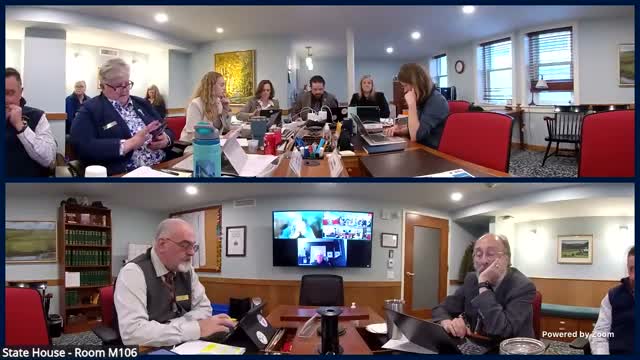
House Committee members heard more than three hours of testimony on H.841 on animal-welfare procedures, with shelter operators, clinic directors and animal-response trainers urging clearer statutory language and more resources to allow a new Division of Animal Welfare to function.
Erica Hall, co-executive director of the Central Vermont Humane Society and chairperson of the Animal Cruelty Investigation Advisory Board, told the committee the new director should be given explicit rulemaking authority so many routine standards could be set by regulation rather than repeatedly returned to the Legislature. "We would really like to see our new director of the division of animal welfare ... be given authority for rulemaking," Hall said, adding rulemaking would still include public hearings and outside input.
Hall and other witnesses pressed for registration and inspection of shelters and rescues. "We don't know how many [rescues] there are. We don't know who they are," Hall said, arguing that registration would let the division track organizations bringing animals into Vermont and require basic health, vaccination and behavioral information for imported animals.
Clinic and shelter witnesses urged changes to vaccination rules. Pamela Krauss, executive director of Vermont Companion Animal Neutering (VT CAN), said most shelters can give distemper and other combo vaccines but cannot legally administer rabies without a veterinarian present; she and others recommended a Maine-style vaccinator program that would allow trained shelter or veterinary staff to give rabies shots under veterinary oversight. "The intent ... was to have trained veterinary employees and brick-and-mortar shelter staff who are trained and trained to keep records," Krauss said, warning that cold-chain handling and recordkeeping are essential for vaccine effectiveness.
Several witnesses expressed concern about language in the draft that could be read as prohibiting compensation for vaccinators. Hall asked the committee to clarify that the bill does not require nonprofits to provide free vaccinations if compensation or fee schedules are needed to sustain clinics and mobile programs.
Witnesses also sought clearer definitions distinguishing owned indoor/outdoor cats from feral or community cats, saying the bill should not treat unowned colonies as owned animals. "We're not talking about feral cat colonies, because in statute those are not owned animals," Hall said.
Large-animal advocates asked the committee to consider oversight and training for livestock situations. The executive director of Merrimack Farm Sanctuary (testifying remotely) recounted recent rescues involving pigs, goats and other livestock during extreme cold and urged standard guidance and training for game wardens and animal-control officers so they can assess body condition and housing needs consistently.
Joanne Borbo of Humane World for Animals recommended adding a clear letter to the bill giving the Division of Animal Welfare authority to develop rules for shelter and rescue management and to consider importation regulations for animals coming into Vermont. Borbo also flagged a potential drafting gap: she said the bill uses terms such as "kennel" and refers to the secretary of agriculture as enforcement authority, but existing statutes may not define those terms or give the secretary current inspection powers over shelters and rescues.
Committee members asked procedural questions and flagged practical problems such as shelter capacity, stray-hold periods, and how housing evictions leave animals behind. Several witnesses said stray holds in practice often last about three days at shelters but that town ordinances sometimes require up to 10 days, a difference that affects shelter capacity.
The committee recessed to a short break and planned to return later in the day to consider other business. No formal votes were taken on H.841 during this session; witnesses urged the committee and legislative counsel to work with stakeholders to tighten definitions, funding language and the vaccinator provisions before moving the bill forward.
The committee is scheduled to reconvene after a committee-of-conference meeting and to take up H.669 later in the day.
Erica Hall, co-executive director of the Central Vermont Humane Society and chairperson of the Animal Cruelty Investigation Advisory Board, told the committee the new director should be given explicit rulemaking authority so many routine standards could be set by regulation rather than repeatedly returned to the Legislature. "We would really like to see our new director of the division of animal welfare ... be given authority for rulemaking," Hall said, adding rulemaking would still include public hearings and outside input.
Hall and other witnesses pressed for registration and inspection of shelters and rescues. "We don't know how many [rescues] there are. We don't know who they are," Hall said, arguing that registration would let the division track organizations bringing animals into Vermont and require basic health, vaccination and behavioral information for imported animals.
Clinic and shelter witnesses urged changes to vaccination rules. Pamela Krauss, executive director of Vermont Companion Animal Neutering (VT CAN), said most shelters can give distemper and other combo vaccines but cannot legally administer rabies without a veterinarian present; she and others recommended a Maine-style vaccinator program that would allow trained shelter or veterinary staff to give rabies shots under veterinary oversight. "The intent ... was to have trained veterinary employees and brick-and-mortar shelter staff who are trained and trained to keep records," Krauss said, warning that cold-chain handling and recordkeeping are essential for vaccine effectiveness.
Several witnesses expressed concern about language in the draft that could be read as prohibiting compensation for vaccinators. Hall asked the committee to clarify that the bill does not require nonprofits to provide free vaccinations if compensation or fee schedules are needed to sustain clinics and mobile programs.
Witnesses also sought clearer definitions distinguishing owned indoor/outdoor cats from feral or community cats, saying the bill should not treat unowned colonies as owned animals. "We're not talking about feral cat colonies, because in statute those are not owned animals," Hall said.
Large-animal advocates asked the committee to consider oversight and training for livestock situations. The executive director of Merrimack Farm Sanctuary (testifying remotely) recounted recent rescues involving pigs, goats and other livestock during extreme cold and urged standard guidance and training for game wardens and animal-control officers so they can assess body condition and housing needs consistently.
Joanne Borbo of Humane World for Animals recommended adding a clear letter to the bill giving the Division of Animal Welfare authority to develop rules for shelter and rescue management and to consider importation regulations for animals coming into Vermont. Borbo also flagged a potential drafting gap: she said the bill uses terms such as "kennel" and refers to the secretary of agriculture as enforcement authority, but existing statutes may not define those terms or give the secretary current inspection powers over shelters and rescues.
Committee members asked procedural questions and flagged practical problems such as shelter capacity, stray-hold periods, and how housing evictions leave animals behind. Several witnesses said stray holds in practice often last about three days at shelters but that town ordinances sometimes require up to 10 days, a difference that affects shelter capacity.
The committee recessed to a short break and planned to return later in the day to consider other business. No formal votes were taken on H.841 during this session; witnesses urged the committee and legislative counsel to work with stakeholders to tighten definitions, funding language and the vaccinator provisions before moving the bill forward.
The committee is scheduled to reconvene after a committee-of-conference meeting and to take up H.669 later in the day.
View the Full Meeting & All Its Details
This article offers just a summary. Unlock complete video, transcripts, and insights as a Founder Member.
✓
Watch full, unedited meeting videos
✓
Search every word spoken in unlimited transcripts
✓
AI summaries & real-time alerts (all government levels)
✓
Permanent access to expanding government content
30-day money-back guarantee
