Phoenix DVFRT presents 2025 case review; recommends early‑intervention research, training and possible sentencing changes
February 05, 2026 | Phoenix, Maricopa County, Arizona
This article was created by AI summarizing key points discussed. AI makes mistakes, so for full details and context, please refer to the video of the full meeting. Please report any errors so we can fix them. Report an error »
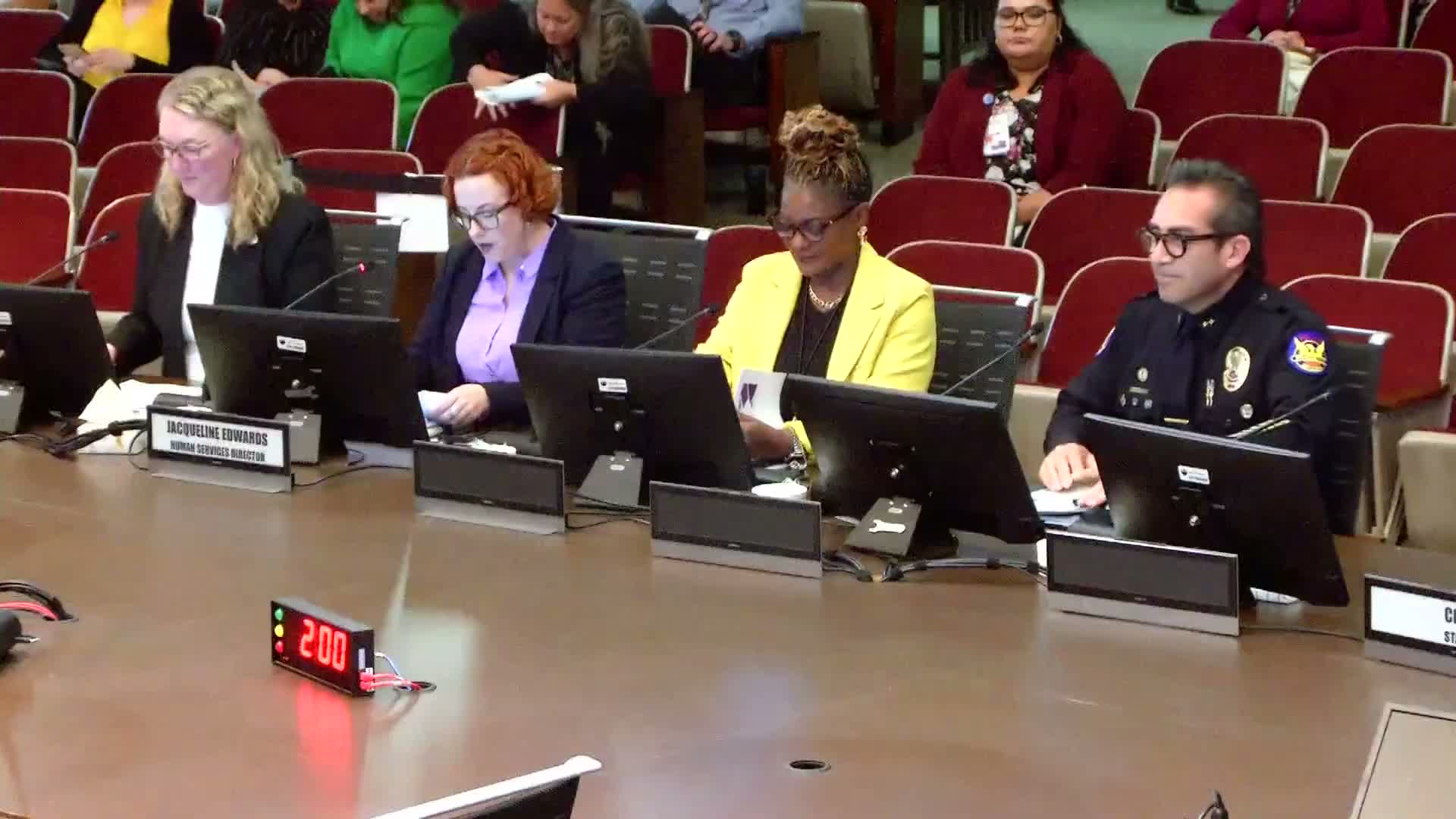
The Phoenix Domestic Violence Fatality Review Team (DVFRT) presented its 2025 case review and follow‑up on prior recommendations to the Public Safety & Justice Subcommittee, calling for expanded prevention programs, improved data collection and consideration of sentencing changes for domestic‑violence‑related homicides.
Human Services Director Jacqueline Edwards and Assistant Director Tracy Hall summarized city and regional statistics and described the case that spurred the 2025 review: a complex homicide arising from stalking by a spouse who used a geo‑tracking device, culminating in the fatal shooting of the spouse’s new partner. Edwards said Phoenix Police Department data for 2024 showed 33,408 domestic violence calls for service and 23,889 incident reports; the DVFRT identified opportunities to improve system‑wide responses and tracking.
The team reported five recommendations from the 2024 review and described progress: protocols to integrate Crisis Response Team (CRT) responses into police and fire dispatch, medical follow‑up calls by HonorHealth, paramedic and EMT strangulation training, and an added records‑management drop‑down to capture strangulation incidents for future reporting. The human services department is moving to a new case‑management system that will further standardize victim‑service tracking.
Commander Steve Martos and Tracy Hall outlined four new or ongoing recommendations from the 2025 review: research youth prevention and healthy‑relationship programming and build a resource library; expand domestic‑violence education and awareness campaigns; study potential legislative options for enhanced sentencing when homicide elements meet domestic‑violence definitions (the team suggested researching 2–5‑year sentencing ranges as one possible approach); and present the DVFRT report to local partner agencies to broaden implementation.
Councilmembers pressed for clarity about whether greater penalties or earlier interventions would be more effective. Councilman Waring emphasized the value of preventing escalation—identifying precursor crimes (for example, strangulation or repeated arrests) and stronger interventions before homicide occurs—while acknowledging sentencing changes are often a later‑stage remedy. Staff responded that the team will include prevention and earlier‑stage penalties as part of research on legislative options and will report back.
Presenters said several items are already in progress (training, data fields and CRT protocols) and committed to continued outreach to schools and community partners, bilingual materials, and broader distribution of the annual report. They said more detailed age‑breakdowns and other statistics could be provided on request.
Human Services Director Jacqueline Edwards and Assistant Director Tracy Hall summarized city and regional statistics and described the case that spurred the 2025 review: a complex homicide arising from stalking by a spouse who used a geo‑tracking device, culminating in the fatal shooting of the spouse’s new partner. Edwards said Phoenix Police Department data for 2024 showed 33,408 domestic violence calls for service and 23,889 incident reports; the DVFRT identified opportunities to improve system‑wide responses and tracking.
The team reported five recommendations from the 2024 review and described progress: protocols to integrate Crisis Response Team (CRT) responses into police and fire dispatch, medical follow‑up calls by HonorHealth, paramedic and EMT strangulation training, and an added records‑management drop‑down to capture strangulation incidents for future reporting. The human services department is moving to a new case‑management system that will further standardize victim‑service tracking.
Commander Steve Martos and Tracy Hall outlined four new or ongoing recommendations from the 2025 review: research youth prevention and healthy‑relationship programming and build a resource library; expand domestic‑violence education and awareness campaigns; study potential legislative options for enhanced sentencing when homicide elements meet domestic‑violence definitions (the team suggested researching 2–5‑year sentencing ranges as one possible approach); and present the DVFRT report to local partner agencies to broaden implementation.
Councilmembers pressed for clarity about whether greater penalties or earlier interventions would be more effective. Councilman Waring emphasized the value of preventing escalation—identifying precursor crimes (for example, strangulation or repeated arrests) and stronger interventions before homicide occurs—while acknowledging sentencing changes are often a later‑stage remedy. Staff responded that the team will include prevention and earlier‑stage penalties as part of research on legislative options and will report back.
Presenters said several items are already in progress (training, data fields and CRT protocols) and committed to continued outreach to schools and community partners, bilingual materials, and broader distribution of the annual report. They said more detailed age‑breakdowns and other statistics could be provided on request.
Don't Miss a Word: See the Full Meeting!
Go beyond summaries. Unlock every video, transcript, and key insight with a Founder Membership.
✓
Get instant access to full meeting videos
✓
Search and clip any phrase from complete transcripts
✓
Receive AI-powered summaries & custom alerts
✓
Enjoy lifetime, unrestricted access to government data
30-day money-back guarantee
