Phoenix expands behavioral‑health responses: 9 BH units active, 98% increase in transfers to BH teams
February 05, 2026 | Phoenix, Maricopa County, Arizona
This article was created by AI summarizing key points discussed. AI makes mistakes, so for full details and context, please refer to the video of the full meeting. Please report any errors so we can fix them. Report an error »
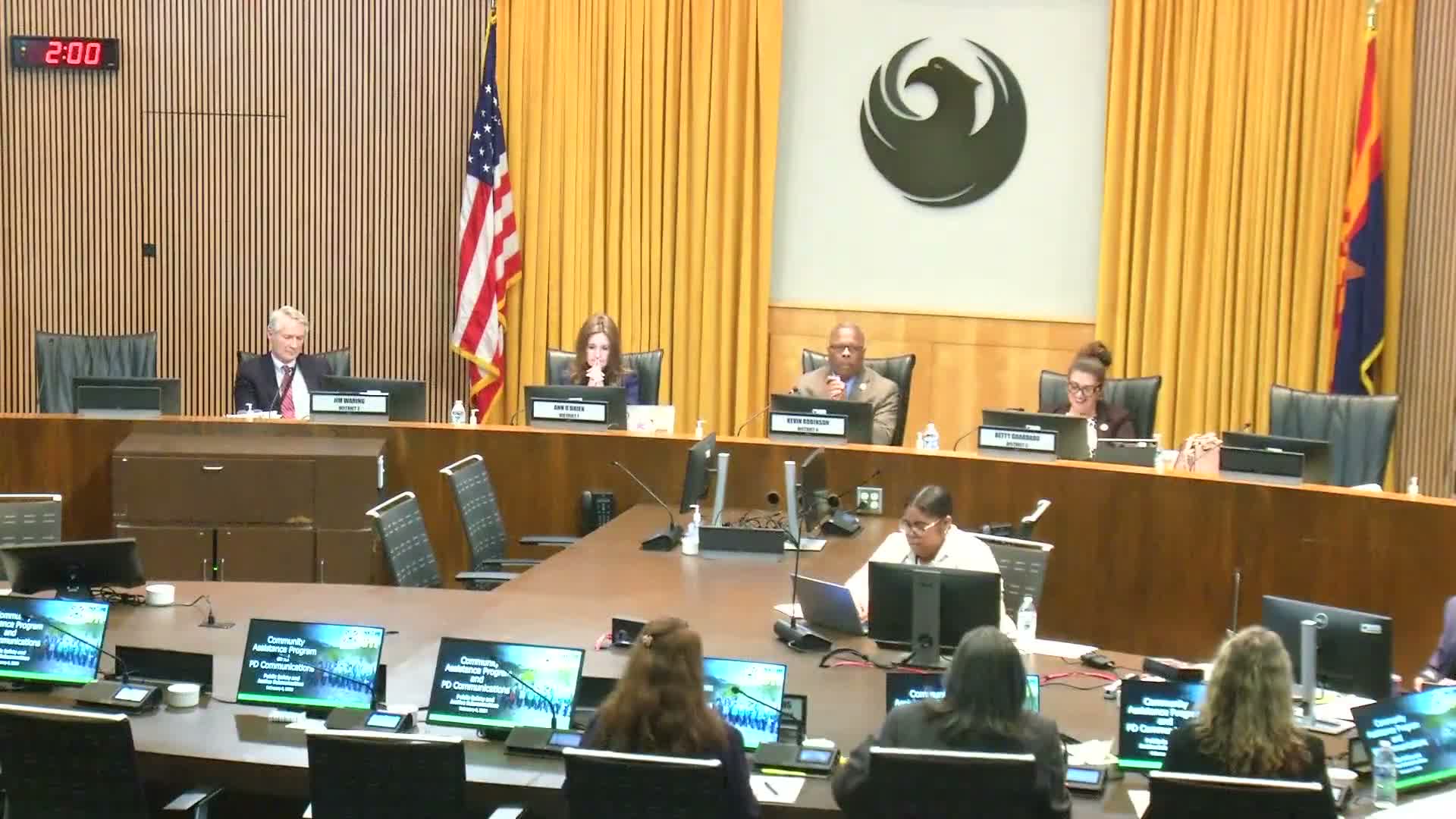
City officials updated the subcommittee on the Community Assistance Program’s progress hiring crisis and behavioral‑health teams and on a new 9‑1‑1 triage protocol to route calls to police, fire or behavioral‑health responders.
CAP administrators said the first 2026 class is under way and noted a recent recruitment with more than 170 applicants. The department converted a number of part‑time positions into full‑time roles, which temporarily reduced the published fill rate to 79% while those positions are recruited and onboarded.
Police communications and CAP staff described a triage change on 12/15/2025: 9‑1‑1 operators now ask callers whether they need police, fire or behavioral health, and supplemental screening questions help route ambiguous calls. The change substantially increased transfers to behavioral‑health units: staff reported a 98% year‑over‑year increase in transferred calls for the comparable eight‑month period, 701 transfers in December 2025, and more than 1,000 behavioral‑health unit calls in a single month.
CAP staff said they reached a milestone of nine behavioral‑health units available 24/7, and that crisis response teams have expanded availability through reallocated shifts to ensure citywide coverage. They also said average response times remain under target (behavioral‑health units around 20 minutes in December), and that CAP will return with research on alternative contact methods for crisis response used in other jurisdictions.
Councilmembers praised the expansion but asked staff to monitor workload, retention and response times as call volumes increase. Officials said they will present further benchmarking and options for achieving the target of ten crisis response units and sustaining co‑response models.
CAP administrators said the first 2026 class is under way and noted a recent recruitment with more than 170 applicants. The department converted a number of part‑time positions into full‑time roles, which temporarily reduced the published fill rate to 79% while those positions are recruited and onboarded.
Police communications and CAP staff described a triage change on 12/15/2025: 9‑1‑1 operators now ask callers whether they need police, fire or behavioral health, and supplemental screening questions help route ambiguous calls. The change substantially increased transfers to behavioral‑health units: staff reported a 98% year‑over‑year increase in transferred calls for the comparable eight‑month period, 701 transfers in December 2025, and more than 1,000 behavioral‑health unit calls in a single month.
CAP staff said they reached a milestone of nine behavioral‑health units available 24/7, and that crisis response teams have expanded availability through reallocated shifts to ensure citywide coverage. They also said average response times remain under target (behavioral‑health units around 20 minutes in December), and that CAP will return with research on alternative contact methods for crisis response used in other jurisdictions.
Councilmembers praised the expansion but asked staff to monitor workload, retention and response times as call volumes increase. Officials said they will present further benchmarking and options for achieving the target of ten crisis response units and sustaining co‑response models.
View the Full Meeting & All Its Details
This article offers just a summary. Unlock complete video, transcripts, and insights as a Founder Member.
✓
Watch full, unedited meeting videos
✓
Search every word spoken in unlimited transcripts
✓
AI summaries & real-time alerts (all government levels)
✓
Permanent access to expanding government content
30-day money-back guarantee
