Committee considers broad noncompete restrictions in amended HB205; hospitals and unions asked for testimony
February 05, 2026 | Commerce & Economic Development, HOUSE OF REPRESENTATIVES, Committees, Legislative , Vermont
This article was created by AI summarizing key points discussed. AI makes mistakes, so for full details and context, please refer to the video of the full meeting. Please report any errors so we can fix them. Report an error »
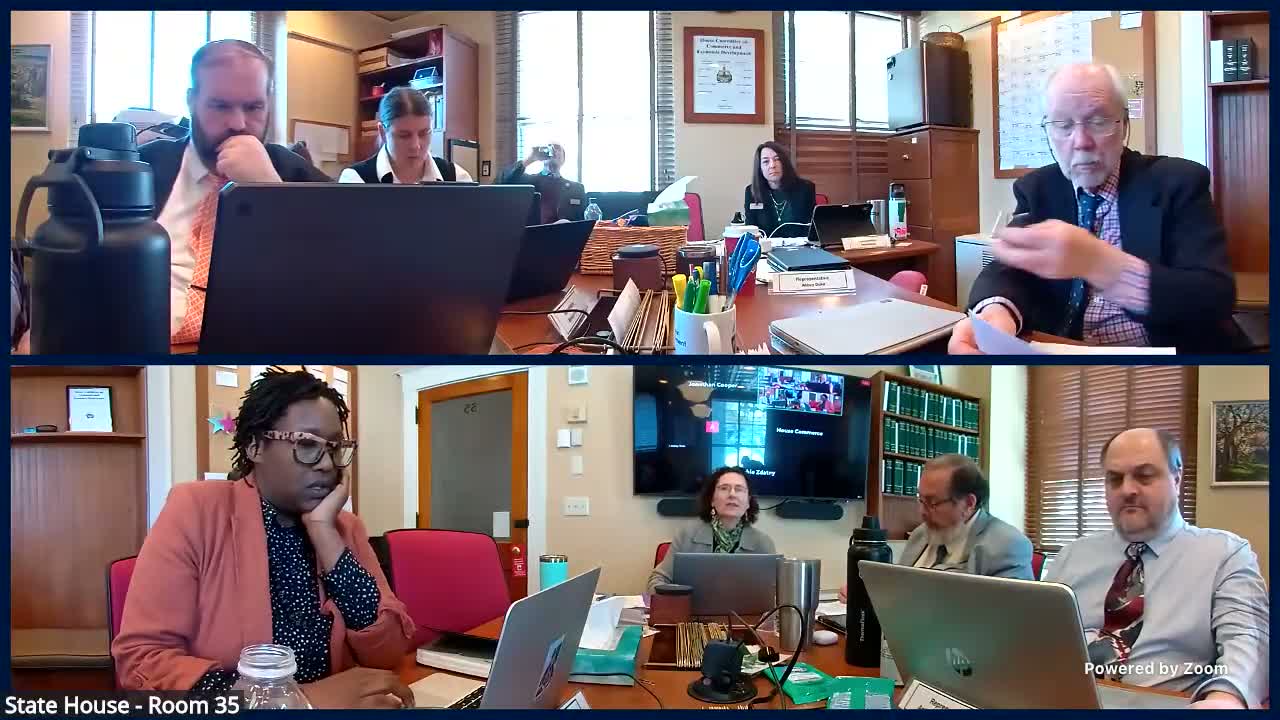
Committee staff presented proposed amendments to House Bill 205 on Feb. 4, offering a reworked draft that would broadly prohibit agreements not to compete for most employees while preserving limited carve-outs for defined senior executives and certain startup employees. Sophie, the presenter, told the House Commerce and Economic Development committee the draft discourages noncompetes for nonexempt employees and clarifies definitions and exceptions.
Key changes in draft 2.3 include: defining "health care services" broadly to cover diagnosis, treatment, counseling, devices and related products; excluding teacher contracts governed by 16 V.S.A. §1752 from the noncompete ban; permitting reasonable non-solicitation agreements (but limited to one year); creating a notice requirement and giving employees at least three business days to review prospective agreements; and preserving collective-bargaining terms negotiated by unions.
The draft adopts an earnings threshold to limit the senior-executive exception: a senior executive would be an employee with policymaking authority and access to proprietary information who earns at least 150% of the FLSA highly compensated threshold (Sophie showed the current calculation would be about $161,148). A separate startup-employee carve-out would apply to employees of newly established businesses who earn at least 250% of the Vermont minimum wage (Sophie used a working example near $75,000). Sophie also explained the definition of total annual compensation and enumerated what is excluded (board lodging, insurance payments, retirement contributions).
The bill adds a blanket prohibition on noncompetes for health-care providers and a clause voiding choice-of-law or forum-selection provisions that would force Vermont providers to litigate under another state's laws — language modeled on a New Mexico statute and intended to protect traveling nurses. Several committee members voiced concern that such a clause could hamper recruitment of traveling nurses or otherwise impede hospitals’ ability to contract for needed staff. Members asked staff to take additional testimony from hospitals, unions and stakeholders to flesh out operational impacts before advancing the bill.
Sophie also explained the "stay-or-pay" provisions for repayment of employer training investments and clarified that repayment obligations would apply only when an employee voluntarily separates; committee members discussed whether to add "for cause" language for terminations and expressed interest in clearer duration or revenue-based definitions for startup carve-outs.
The committee recessed and said it would schedule further testimony on health-care and union impacts before voting on amendments or sending the bill forward.
Key changes in draft 2.3 include: defining "health care services" broadly to cover diagnosis, treatment, counseling, devices and related products; excluding teacher contracts governed by 16 V.S.A. §1752 from the noncompete ban; permitting reasonable non-solicitation agreements (but limited to one year); creating a notice requirement and giving employees at least three business days to review prospective agreements; and preserving collective-bargaining terms negotiated by unions.
The draft adopts an earnings threshold to limit the senior-executive exception: a senior executive would be an employee with policymaking authority and access to proprietary information who earns at least 150% of the FLSA highly compensated threshold (Sophie showed the current calculation would be about $161,148). A separate startup-employee carve-out would apply to employees of newly established businesses who earn at least 250% of the Vermont minimum wage (Sophie used a working example near $75,000). Sophie also explained the definition of total annual compensation and enumerated what is excluded (board lodging, insurance payments, retirement contributions).
The bill adds a blanket prohibition on noncompetes for health-care providers and a clause voiding choice-of-law or forum-selection provisions that would force Vermont providers to litigate under another state's laws — language modeled on a New Mexico statute and intended to protect traveling nurses. Several committee members voiced concern that such a clause could hamper recruitment of traveling nurses or otherwise impede hospitals’ ability to contract for needed staff. Members asked staff to take additional testimony from hospitals, unions and stakeholders to flesh out operational impacts before advancing the bill.
Sophie also explained the "stay-or-pay" provisions for repayment of employer training investments and clarified that repayment obligations would apply only when an employee voluntarily separates; committee members discussed whether to add "for cause" language for terminations and expressed interest in clearer duration or revenue-based definitions for startup carve-outs.
The committee recessed and said it would schedule further testimony on health-care and union impacts before voting on amendments or sending the bill forward.
View the Full Meeting & All Its Details
This article offers just a summary. Unlock complete video, transcripts, and insights as a Founder Member.
✓
Watch full, unedited meeting videos
✓
Search every word spoken in unlimited transcripts
✓
AI summaries & real-time alerts (all government levels)
✓
Permanent access to expanding government content
30-day money-back guarantee
