Advocates urge continued funding for recovery residences; bill would extend $500,000 annual appropriation
February 05, 2026 | Budget and Taxation Committee, SENATE, SENATE, Committees, Legislative, Maryland
This article was created by AI summarizing key points discussed. AI makes mistakes, so for full details and context, please refer to the video of the full meeting. Please report any errors so we can fix them. Report an error »
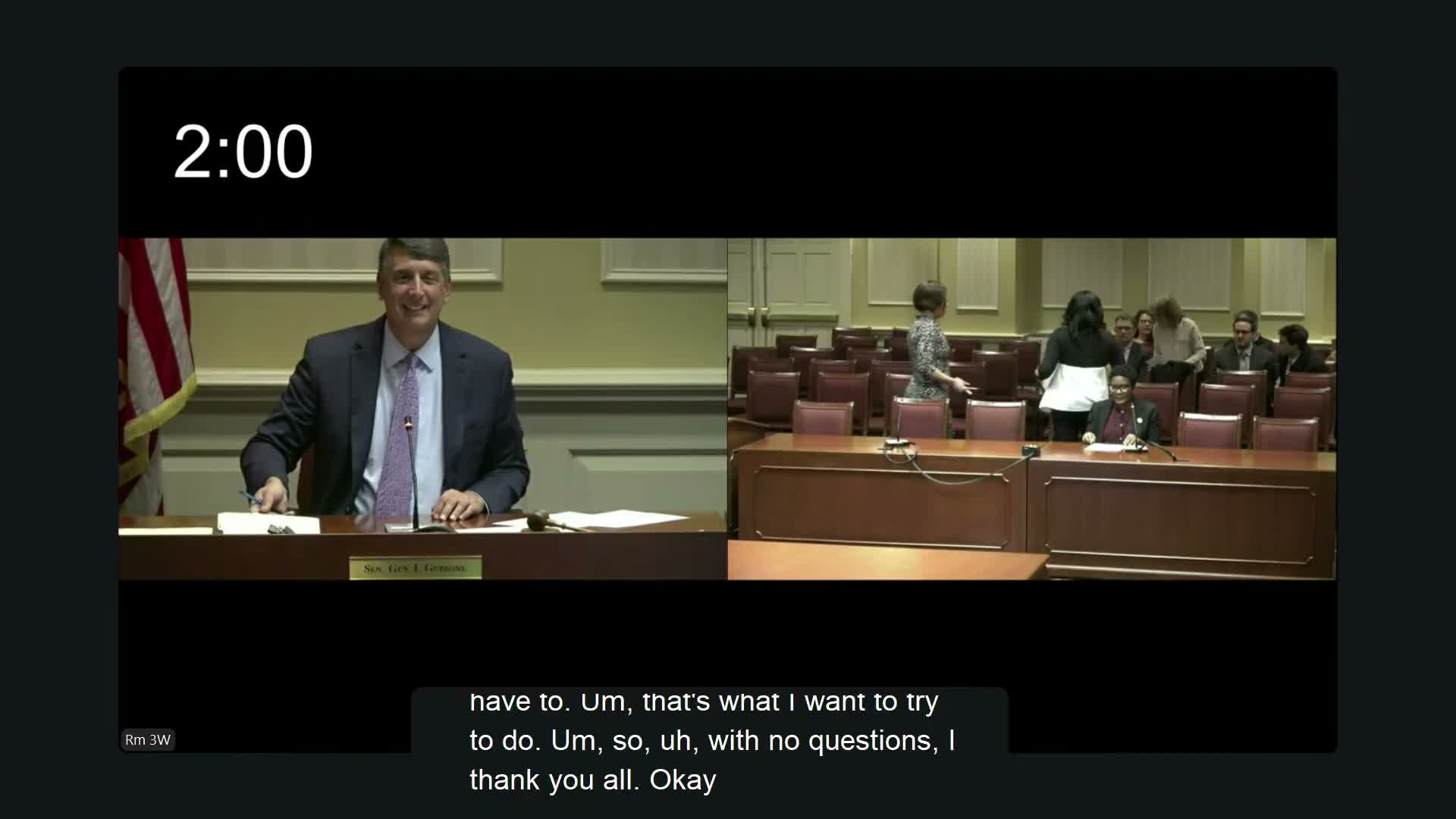
Micaiah Polk presented Senate Bill 379, which would extend through fiscal year 2030 the requirement that an annual appropriation of $500,000 be included in the state budget for the Recovery Residence Grant Program in the Maryland Department of Health.
"SB 379 would further strengthen these efforts by extending through fiscal year 2030 the requirement that an annual appropriation of $500,000 be included in the state budget for the recovery residence grant program," Polk said.
Thomas Higdon of the Maryland Alliance for Sensible Drug Policy testified remotely about his lived experience: after treatment he received a scholarship and a month in a recovery house that helped him find stability, employment and housing. Higdon said recovery residences served as a crucial bridge for people leaving treatment.
Representatives from Living in Recovery (Tammy Nemiroff and Roger Hoff) described program structure, typical stays of six to 12 months, peer-support practices, and service gaps—transportation, employment readiness and access to health and mental-health care. They said grant funding helps smaller, independent recovery operators provide evidence-based, peer-led services and build pathways to independent living.
Supporters asked the committee to issue a favorable report; no committee vote was taken at this hearing.
"SB 379 would further strengthen these efforts by extending through fiscal year 2030 the requirement that an annual appropriation of $500,000 be included in the state budget for the recovery residence grant program," Polk said.
Thomas Higdon of the Maryland Alliance for Sensible Drug Policy testified remotely about his lived experience: after treatment he received a scholarship and a month in a recovery house that helped him find stability, employment and housing. Higdon said recovery residences served as a crucial bridge for people leaving treatment.
Representatives from Living in Recovery (Tammy Nemiroff and Roger Hoff) described program structure, typical stays of six to 12 months, peer-support practices, and service gaps—transportation, employment readiness and access to health and mental-health care. They said grant funding helps smaller, independent recovery operators provide evidence-based, peer-led services and build pathways to independent living.
Supporters asked the committee to issue a favorable report; no committee vote was taken at this hearing.
View the Full Meeting & All Its Details
This article offers just a summary. Unlock complete video, transcripts, and insights as a Founder Member.
✓
Watch full, unedited meeting videos
✓
Search every word spoken in unlimited transcripts
✓
AI summaries & real-time alerts (all government levels)
✓
Permanent access to expanding government content
30-day money-back guarantee
