Vermont hearing spotlights H.753 to curb utility shutoffs, expand medical protections and require plans to reduce disconnections
February 05, 2026 | Environment & Energy, HOUSE OF REPRESENTATIVES, Committees, Legislative , Vermont
This article was created by AI summarizing key points discussed. AI makes mistakes, so for full details and context, please refer to the video of the full meeting. Please report any errors so we can fix them. Report an error »
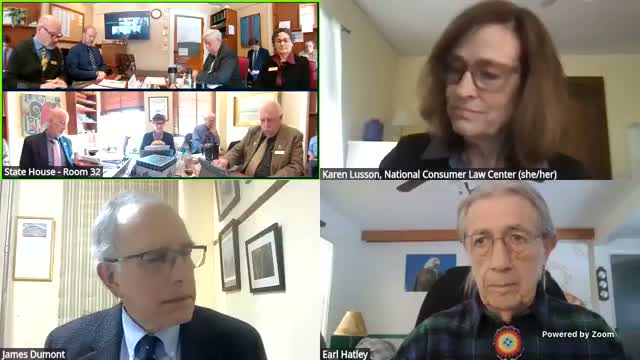
MONTPELIER — Lawmakers heard broadly aligned testimony Feb. 4 in favor of House Bill H.753, a proposal to tighten protections against utility service disconnections by expanding medical‑certification rules, adding safeguards during extreme heat events and requiring gas, electric and water utilities to file plans showing how they will minimize involuntary residential shutoffs.
Supporters said the proposal, which would change existing PUC rules and utility reporting, is a first step toward reducing the social and public‑health harms of disconnection and improving affordability for low‑income and medically vulnerable Vermonters.
"House Bill 7 53 is one of the most important ones," said Earl Hatley, an enrolled citizen of the Abenaki Nation and president of the Odukeechee Water Protectors Association, who described the bill as part of a just‑transition approach that must address both environmental and affordability harms. "We need to minimize mining and reduce energy use, but we also need to ensure people can afford to stay connected."
Hatley told the committee he supports statutory limits on the share of household income spent on utilities — citing 6 percent to 10 percent caps used elsewhere — and described personal difficulty accessing weatherization assistance after being denied Efficiency Vermont aid for being about $5,000 over the program cutoff.
Jim Dumont, a Bristol attorney testifying as a private citizen, told the House Energy and Digital Infrastructure Committee that the Vermont Public Utility Commission (PUC) has been unlikely to enact wide‑ranging reforms without clearer legislative direction. Dumont urged H.753's two main regulatory changes: (1) require utilities to include measures to reduce disconnections in their service quality and reliability plans (SQRP), and (2) add reduction of disconnections as an incentivized goal under alternative regulation plans for investor‑owned utilities.
Dumont cited Green Mountain Power reports submitted to the PUC showing that in one winter month in 2025 "one out of every six Green Mountain Power customers received notice of disconnection," and said hundreds of customers were disconnected in 2025 for arrears of $300 or less. He also said GMP's Energy Assistance Program provides only a 25 percent discount and that a 2018 consultant review found roughly 30 percent of eligible customers used the program.
"We are not making progress," Dumont said, arguing H.753 would enable low‑cost, non‑subsidy reforms such as changing disconnect rules and using performance incentives in alternative regulation to push utilities to reduce shutoffs.
Karen Lesson, senior attorney at the National Consumer Law Center, told lawmakers H.753 would strengthen three protections. First, it would expand which licensed health‑care providers may certify that a customer faces a serious health risk if disconnected (current Rule 3.301(G) lists physicians only), and would change certificate validity and renewal limits so medical protection follows the patient's needs rather than arbitrary 30‑day expirations. "For medically vulnerable populations, a disconnection can be the difference between life and death," Lesson said.
Second, Lesson said H.753 would protect customers from disconnection during periods of "extreme heat," a condition the PUC would define by rule. She argued Vermont currently lacks a seasonal protection for extreme heat similar to winter protections in many other states and that extreme heat is a growing public‑health threat.
Third, Lesson described the SQRP requirement in H.753, saying utilities should be required to submit plans that "strategically achieve the lowest prudently feasible number of monthly and annual involuntary residential service disconnections within a utility service territory," with alternative‑regulation frameworks including metrics that reward or penalize utilities based on disconnection outcomes. She pointed to an Illinois Commerce Commission example where a performance‑based affordability metric targeted ZIP codes with high disconnection rates.
Committee members asked whether programs used in other states are comparable to Vermont given differences in how rates are regulated. Several members noted Vermont's fully regulated structure and relatively low rates, and witnesses responded that the important comparison is the share of household income that customers pay and the "whole bill" approach: whether supply is deregulated or not, discount or percentage‑of‑income programs can be designed to limit household energy burdens.
Members also requested the Department of Public Service and the PUC provide the committee with underlying data on disconnections (including pre‑ and post‑COVID comparisons) and other materials the witnesses cited.
No formal vote was taken during the hearing. Representative Kathleen James recessed the live session briefly; the committee indicated it would continue testimony and follow up with PUC and DPS witnesses in subsequent hearings.
What’s next: The committee will receive additional testimony and materials from the Department of Public Service and the PUC as it considers H.753; if advanced, the bill would direct rule changes and reporting requirements designed to reduce involuntary residential service disconnections and expand protections for medical vulnerability and extreme‑heat events.
Direct quotes in this report come from the public hearing transcript of the House Energy and Digital Infrastructure Committee on Feb. 4, 2026.
Supporters said the proposal, which would change existing PUC rules and utility reporting, is a first step toward reducing the social and public‑health harms of disconnection and improving affordability for low‑income and medically vulnerable Vermonters.
"House Bill 7 53 is one of the most important ones," said Earl Hatley, an enrolled citizen of the Abenaki Nation and president of the Odukeechee Water Protectors Association, who described the bill as part of a just‑transition approach that must address both environmental and affordability harms. "We need to minimize mining and reduce energy use, but we also need to ensure people can afford to stay connected."
Hatley told the committee he supports statutory limits on the share of household income spent on utilities — citing 6 percent to 10 percent caps used elsewhere — and described personal difficulty accessing weatherization assistance after being denied Efficiency Vermont aid for being about $5,000 over the program cutoff.
Jim Dumont, a Bristol attorney testifying as a private citizen, told the House Energy and Digital Infrastructure Committee that the Vermont Public Utility Commission (PUC) has been unlikely to enact wide‑ranging reforms without clearer legislative direction. Dumont urged H.753's two main regulatory changes: (1) require utilities to include measures to reduce disconnections in their service quality and reliability plans (SQRP), and (2) add reduction of disconnections as an incentivized goal under alternative regulation plans for investor‑owned utilities.
Dumont cited Green Mountain Power reports submitted to the PUC showing that in one winter month in 2025 "one out of every six Green Mountain Power customers received notice of disconnection," and said hundreds of customers were disconnected in 2025 for arrears of $300 or less. He also said GMP's Energy Assistance Program provides only a 25 percent discount and that a 2018 consultant review found roughly 30 percent of eligible customers used the program.
"We are not making progress," Dumont said, arguing H.753 would enable low‑cost, non‑subsidy reforms such as changing disconnect rules and using performance incentives in alternative regulation to push utilities to reduce shutoffs.
Karen Lesson, senior attorney at the National Consumer Law Center, told lawmakers H.753 would strengthen three protections. First, it would expand which licensed health‑care providers may certify that a customer faces a serious health risk if disconnected (current Rule 3.301(G) lists physicians only), and would change certificate validity and renewal limits so medical protection follows the patient's needs rather than arbitrary 30‑day expirations. "For medically vulnerable populations, a disconnection can be the difference between life and death," Lesson said.
Second, Lesson said H.753 would protect customers from disconnection during periods of "extreme heat," a condition the PUC would define by rule. She argued Vermont currently lacks a seasonal protection for extreme heat similar to winter protections in many other states and that extreme heat is a growing public‑health threat.
Third, Lesson described the SQRP requirement in H.753, saying utilities should be required to submit plans that "strategically achieve the lowest prudently feasible number of monthly and annual involuntary residential service disconnections within a utility service territory," with alternative‑regulation frameworks including metrics that reward or penalize utilities based on disconnection outcomes. She pointed to an Illinois Commerce Commission example where a performance‑based affordability metric targeted ZIP codes with high disconnection rates.
Committee members asked whether programs used in other states are comparable to Vermont given differences in how rates are regulated. Several members noted Vermont's fully regulated structure and relatively low rates, and witnesses responded that the important comparison is the share of household income that customers pay and the "whole bill" approach: whether supply is deregulated or not, discount or percentage‑of‑income programs can be designed to limit household energy burdens.
Members also requested the Department of Public Service and the PUC provide the committee with underlying data on disconnections (including pre‑ and post‑COVID comparisons) and other materials the witnesses cited.
No formal vote was taken during the hearing. Representative Kathleen James recessed the live session briefly; the committee indicated it would continue testimony and follow up with PUC and DPS witnesses in subsequent hearings.
What’s next: The committee will receive additional testimony and materials from the Department of Public Service and the PUC as it considers H.753; if advanced, the bill would direct rule changes and reporting requirements designed to reduce involuntary residential service disconnections and expand protections for medical vulnerability and extreme‑heat events.
Direct quotes in this report come from the public hearing transcript of the House Energy and Digital Infrastructure Committee on Feb. 4, 2026.
Don't Miss a Word: See the Full Meeting!
Go beyond summaries. Unlock every video, transcript, and key insight with a Founder Membership.
✓
Get instant access to full meeting videos
✓
Search and clip any phrase from complete transcripts
✓
Receive AI-powered summaries & custom alerts
✓
Enjoy lifetime, unrestricted access to government data
30-day money-back guarantee
