Parents urge cameras in self‑contained special‑education classrooms after assault case; experts and advocates disagree on cost and effectiveness
January 19, 2026 | Education, Energy, and the Environment Committee, SENATE, SENATE, Committees, Legislative, Maryland
This article was created by AI summarizing key points discussed. AI makes mistakes, so for full details and context, please refer to the video of the full meeting. Please report any errors so we can fix them. Report an error »
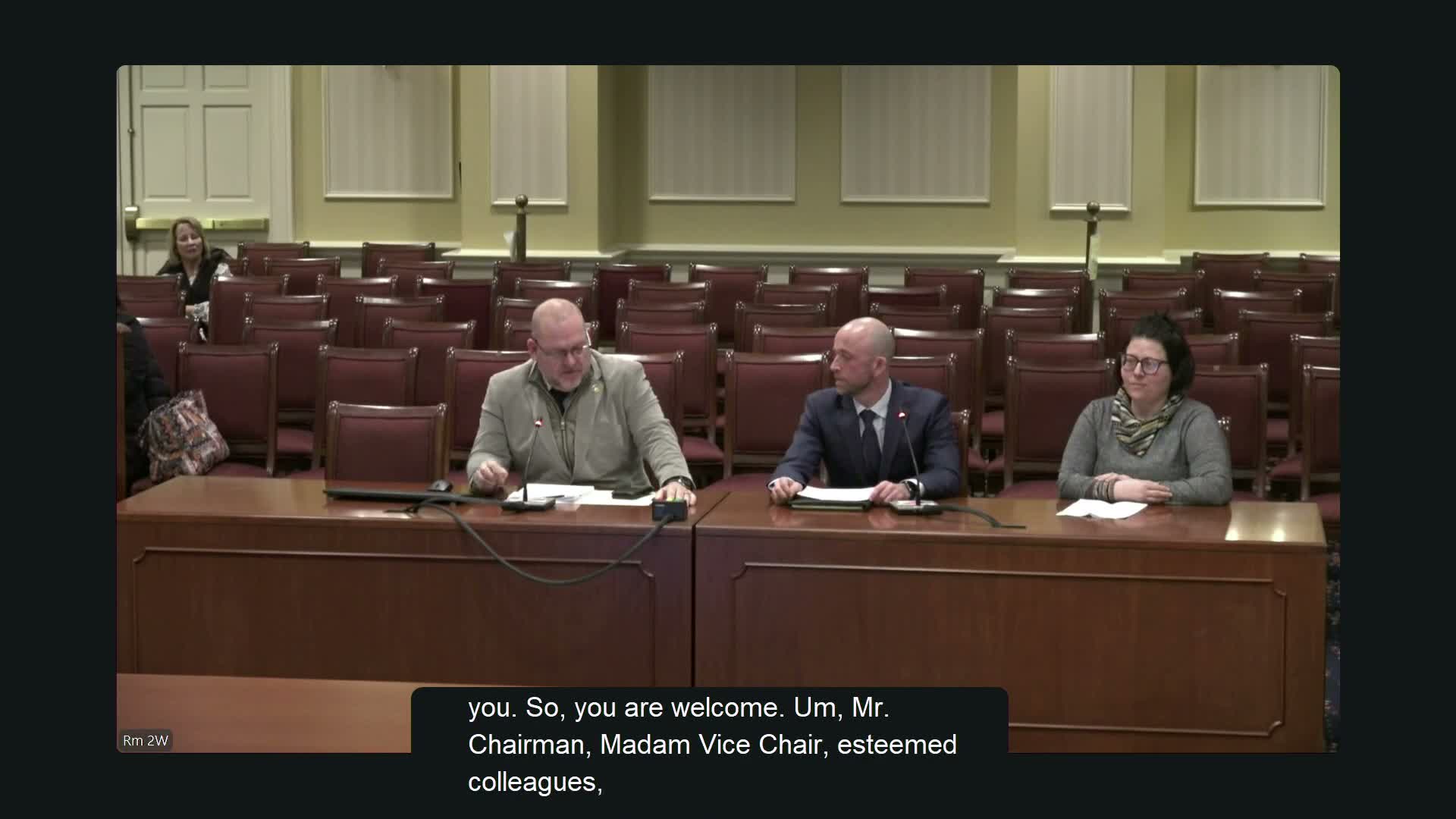
Senator William Foulden introduced Senate Bill 51, proposing that each self‑contained special‑education classroom be equipped with one video recording device during school hours, with recordings retained for six months and families given notice. The senator said the measure was prompted by a recent case in Frederick County in which a student was allegedly assaulted and argued that live footage can improve accountability and aid investigations.
The bill’s sponsor framed the proposal as a narrowly targeted safety step for the state’s most vulnerable students and said he planned a Frederick County pilot before any statewide roll‑out. “It would allow for 1 video recording device in each self contained special education classroom,” he said, noting existing fiber infrastructure could limit startup costs.
Parents and caregivers gave pointed testimony in support. Dustin Bain described his son, a nonverbal autistic child, and recounted prior incidents he said went unexplained until a classroom aide was later arrested. “If there was cameras in that classroom, this could have been prevented,” Bain testified, arguing that cameras serve as both deterrent and evidence.
Other parents described delayed responses from school staff to injuries or worrying reports and said recorded footage would provide clarity and faster accountability. Jenny Murphy, a parent of a child who receives special‑education services, told the committee that when her daughter returned from school with an injury the school’s explanation was delayed and incomplete.
Opponents included a registered behavior technician who said investment priorities should focus on staffing, training and supervision rather than surveillance equipment. Diana Bergman warned that cameras could be expensive to deploy and maintain and that footage can retraumatize students and staff or be used in ways that do not improve student outcomes. She urged investments in professional supports and better supervision instead.
Committee members pressed sponsors on costs and funding. Vice Chair Kagan asked whether county executives and councils had been consulted about paying for initial installation and ongoing subscriptions; the sponsor said Frederick County had a pilot funded through the end of the year but additional funding would be required to sustain or expand the program.
The bill drew a mix of sympathy and procedural questions: lawmakers expressed urgency about protecting nonverbal and otherwise vulnerable students, while some asked for cost comparisons between cameras and alternatives such as increased skilled staff or training. No formal action or vote was recorded during the hearing.
The committee is expected to weigh technical amendments on scope, funding and retention policies before deciding whether to advance the measure.
The bill’s sponsor framed the proposal as a narrowly targeted safety step for the state’s most vulnerable students and said he planned a Frederick County pilot before any statewide roll‑out. “It would allow for 1 video recording device in each self contained special education classroom,” he said, noting existing fiber infrastructure could limit startup costs.
Parents and caregivers gave pointed testimony in support. Dustin Bain described his son, a nonverbal autistic child, and recounted prior incidents he said went unexplained until a classroom aide was later arrested. “If there was cameras in that classroom, this could have been prevented,” Bain testified, arguing that cameras serve as both deterrent and evidence.
Other parents described delayed responses from school staff to injuries or worrying reports and said recorded footage would provide clarity and faster accountability. Jenny Murphy, a parent of a child who receives special‑education services, told the committee that when her daughter returned from school with an injury the school’s explanation was delayed and incomplete.
Opponents included a registered behavior technician who said investment priorities should focus on staffing, training and supervision rather than surveillance equipment. Diana Bergman warned that cameras could be expensive to deploy and maintain and that footage can retraumatize students and staff or be used in ways that do not improve student outcomes. She urged investments in professional supports and better supervision instead.
Committee members pressed sponsors on costs and funding. Vice Chair Kagan asked whether county executives and councils had been consulted about paying for initial installation and ongoing subscriptions; the sponsor said Frederick County had a pilot funded through the end of the year but additional funding would be required to sustain or expand the program.
The bill drew a mix of sympathy and procedural questions: lawmakers expressed urgency about protecting nonverbal and otherwise vulnerable students, while some asked for cost comparisons between cameras and alternatives such as increased skilled staff or training. No formal action or vote was recorded during the hearing.
The committee is expected to weigh technical amendments on scope, funding and retention policies before deciding whether to advance the measure.
View the Full Meeting & All Its Details
This article offers just a summary. Unlock complete video, transcripts, and insights as a Founder Member.
✓
Watch full, unedited meeting videos
✓
Search every word spoken in unlimited transcripts
✓
AI summaries & real-time alerts (all government levels)
✓
Permanent access to expanding government content
30-day money-back guarantee
