Committee hears sponsor presentations and testimony on a suite of education bills on civic programs, transparency, sidewalks and appeals timelines
January 19, 2026 | Education, Energy, and the Environment Committee, SENATE, SENATE, Committees, Legislative, Maryland
This article was created by AI summarizing key points discussed. AI makes mistakes, so for full details and context, please refer to the video of the full meeting. Please report any errors so we can fix them. Report an error »
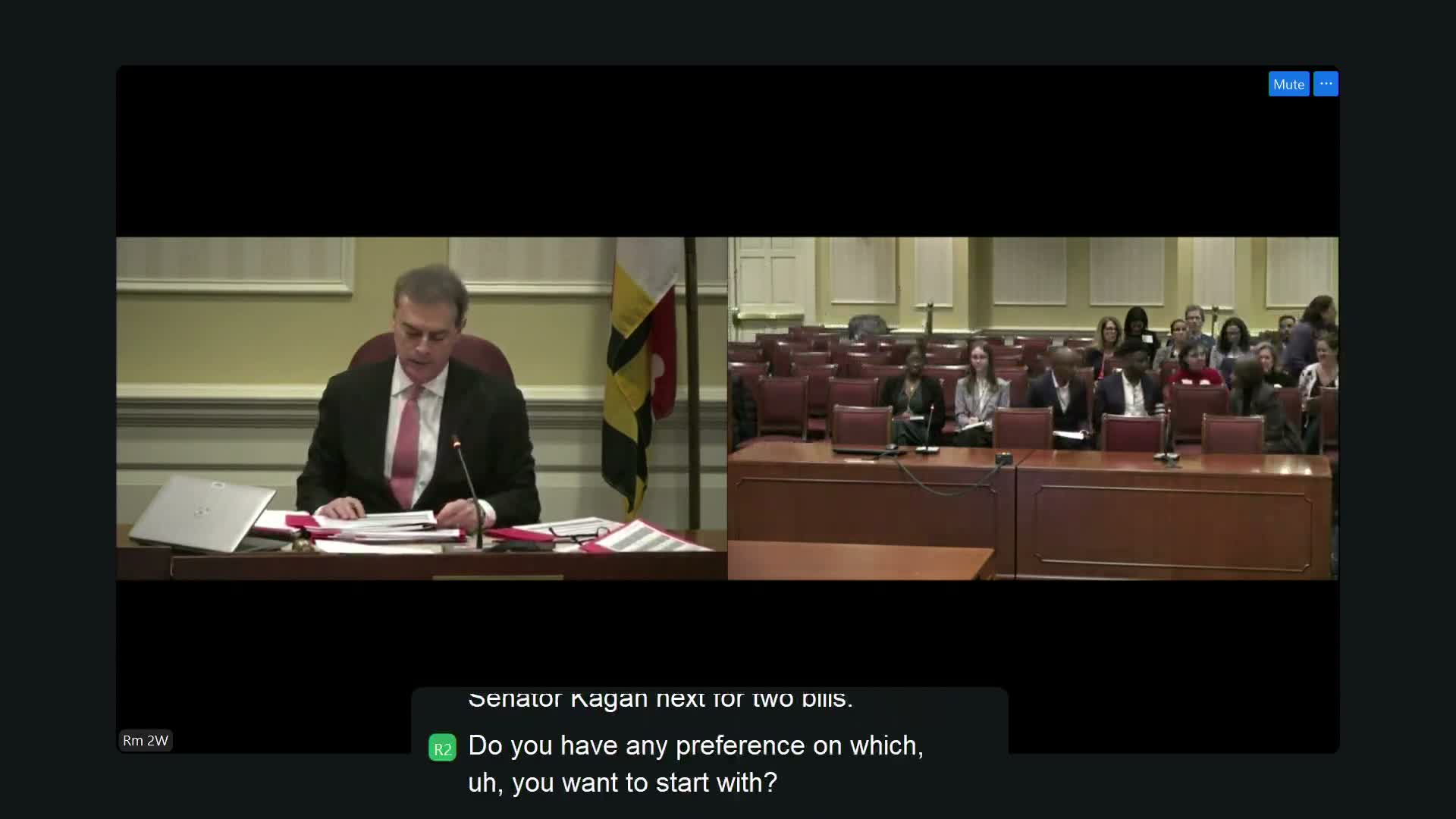
The committee heard several additional sponsor‑led items and associated testimony.
SB204 (Vice Chair Cheryl Kagan) was presented as an optional civic excellence framework that would empower the State Superintendent to provide a substantive, optional framework districts could adopt to bolster youth civic engagement; Kagan said the bill remains optional and is designed to be light touch.
SB99 (Kagan) would require consistent transparency standards across local boards of education: posting agendas and materials, livestreaming meetings and posting minutes within two business days. Rebecca Snyder of the Maryland‑Delaware‑DC Press Association urged a favorable report, saying archived meeting materials are essential for journalists and civic oversight. Sponsors said modest amendments from superintendents and MABE were acceptable for privacy or specific operational situations.
SB71 (Senator Arthur Ellis) would form a commission to identify funding and plans for safe pedestrian access to schools; Ellis cited large deferred infrastructure estimates and recent pedestrian fatalities and asked the committee to work on committee placement and minor tweaks.
SB174 (Senator Mary Beth Carozza) would impose a presumptive 90‑day timeline — with exceptions for due process — for appeals of the removal of local superintendents or board members to reduce prolonged uncertainty that can disrupt school systems; MABE and other stakeholders described readiness to work on an expedited but workable timeline.
Committee members asked operational and placement questions (appropriate committee referrals, timeline realism, and privacy carve‑outs). No committee votes were recorded on these bills during the hearing.
SB204 (Vice Chair Cheryl Kagan) was presented as an optional civic excellence framework that would empower the State Superintendent to provide a substantive, optional framework districts could adopt to bolster youth civic engagement; Kagan said the bill remains optional and is designed to be light touch.
SB99 (Kagan) would require consistent transparency standards across local boards of education: posting agendas and materials, livestreaming meetings and posting minutes within two business days. Rebecca Snyder of the Maryland‑Delaware‑DC Press Association urged a favorable report, saying archived meeting materials are essential for journalists and civic oversight. Sponsors said modest amendments from superintendents and MABE were acceptable for privacy or specific operational situations.
SB71 (Senator Arthur Ellis) would form a commission to identify funding and plans for safe pedestrian access to schools; Ellis cited large deferred infrastructure estimates and recent pedestrian fatalities and asked the committee to work on committee placement and minor tweaks.
SB174 (Senator Mary Beth Carozza) would impose a presumptive 90‑day timeline — with exceptions for due process — for appeals of the removal of local superintendents or board members to reduce prolonged uncertainty that can disrupt school systems; MABE and other stakeholders described readiness to work on an expedited but workable timeline.
Committee members asked operational and placement questions (appropriate committee referrals, timeline realism, and privacy carve‑outs). No committee votes were recorded on these bills during the hearing.
Don't Miss a Word: See the Full Meeting!
Go beyond summaries. Unlock every video, transcript, and key insight with a Founder Membership.
✓
Get instant access to full meeting videos
✓
Search and clip any phrase from complete transcripts
✓
Receive AI-powered summaries & custom alerts
✓
Enjoy lifetime, unrestricted access to government data
30-day money-back guarantee
